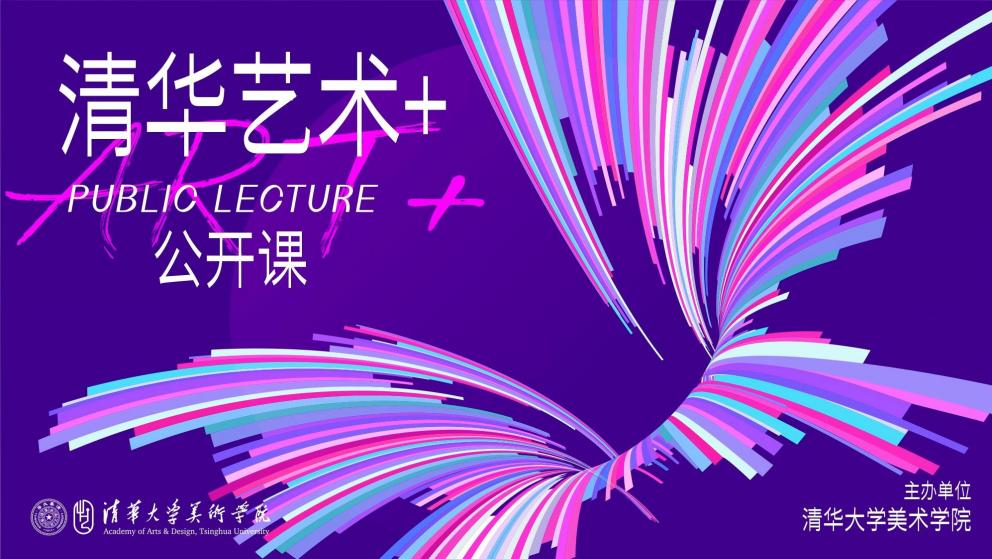
June 24, the Tsinghua Art Public Lecture, hosted by the Academy of Arts & Design, Tsinghua University (AADTHU), organized by its Training Center, and co-sponsored by the Tsinghua Alumni Association and the Institute for Interdisciplinary Information Sciences (IIIS), took place in Lecture Hall A301 of the Academy. Centered on the theme "AI and Painting," the event explored new pathways for integrating art and science in the artificial intelligence era.
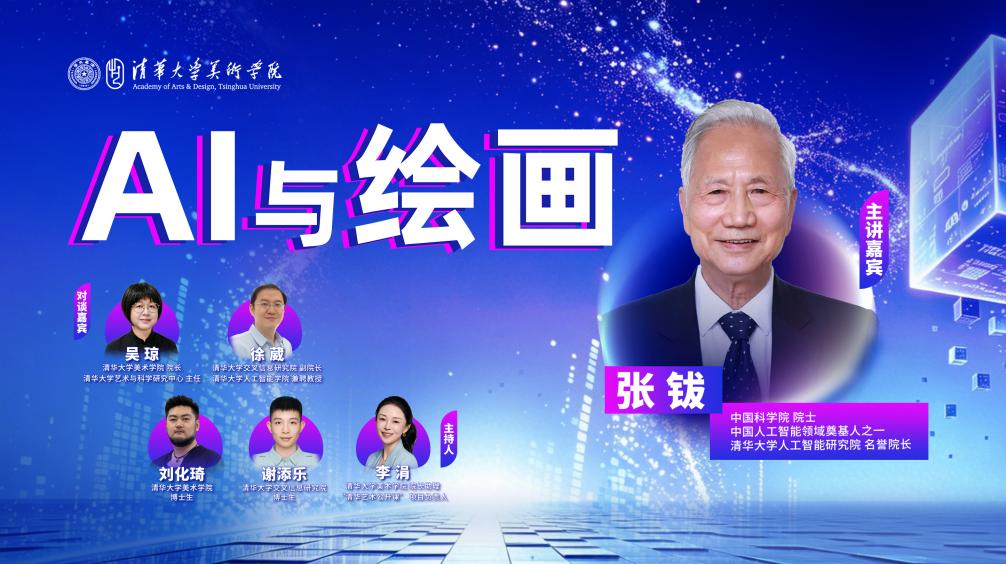
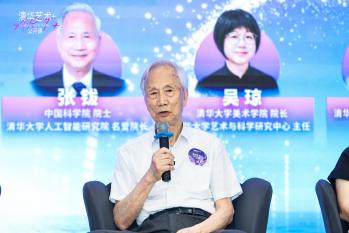
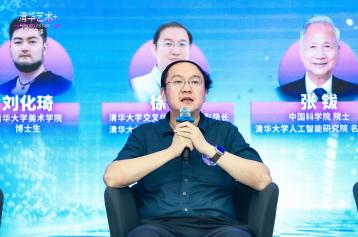
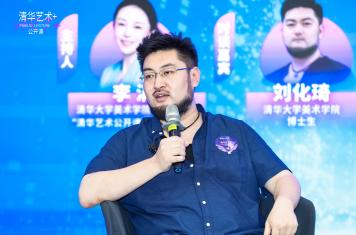
The keynote address was delivered by Academician Zhang Bo, a member of the Chinese Academy of Sciences, a pioneer in China’s artificial intelligence field, and Honorary Director of the Tsinghua University Institute for Artificial Intelligence. The panel discussion featured distinguished guests: Professor Wu Qiong, Dean of AADTHU and Director of the Tsinghua University Art & Science Research Center; Professor Xu Wei, Vice Dean of IIIS and Adjunct Professor at the Tsinghua University School of Artificial Intelligence; Xie Tianle, PhD candidate at IIIS; and Liu Huaqi, PhD candidate at AADTHU. The session was moderated by Li Juan, Dean’s Assistant at AADTHU and Project Lead of the “Tsinghua Art Public Lecture” series.
The lecture addressed core concerns in art education amid rapid AI advancement, building consensus for deepening the practice of “art-science integration.” Attendees included Qin Chuan, Party Secretary of AADTHU; Wang Xiaomo, Vice Dean of AADTHU; Wen Zhongyan, Chair of the Department of Painting; Wang Tieniu, Professor of Painting; and Liu Juanfeng, Director of the Training Center.
Keynote: AI’s Impact on Art in the Era of Silicon-Carbon Symbiosis
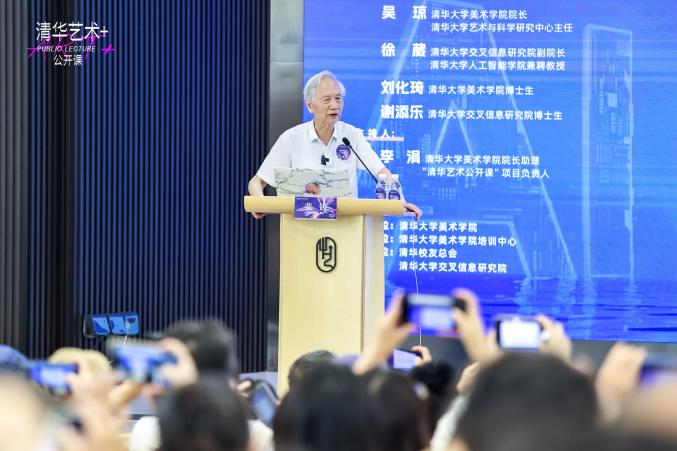
In his lecture Artistic Creation in the AI Age: AI and Painting, Academician Zhang Bo systematically elaborated on AI’s profound influence on artistic creation against the backdrop of symbiosis between silicon-based intelligence and carbon-based life. Citing Théâtre d'Opéra Spatial, an AI-generated artwork that won international art awards, he emphasized that human control over aesthetic judgment and creative direction is the core determinant of authorship in human-machine collaborative creation.
Zhang noted that silicon-based intelligence represented by large models has now approached human-level capabilities in behavioral terms, presenting dual challenges to artistic creation: first, AI’s ability to mass-produce high-quality works undermines the scarcity of artworks and blurs the boundaries of creative subjectivity and copyright; second, it reshapes human-machine relationships, forcing a reexamination of the core value of creation. He predicted three coexisting forms of future painting: machine-led standardized production, human-led creation rooted in traditional techniques, and human-machine collaborative co-creation. To evaluate such works, he proposed a “dual-track assessment” system that considers both the final artwork and the creative process.
For art talent cultivation in the AI era, Zhang stressed the need to integrate AI into general education while strengthening art history literacy, humanistic cultivation, and aesthetic judgment. He pointed out the trend that “those who cannot use AI tools will be replaced by those who master them.” Regarding the dialectical relationship between art and science, he moved beyond the one-sided view of “technology empowering art unilaterally” to propose the core thesis of “bidirectional symbiosis”: science provides art with a rational, decomposable, and iterative analytical framework, enabling systematic research into perceptual creation; art, in turn, anchors technology to humanistic values, imbuing cold algorithms with empathy, spiritual warmth, and a sense of purpose. “Technology without humanistic guidance will eventually lose its direction,” he warned.
Addressing the widespread industry concern about aesthetic homogenization, Zhang adopted a dialectical perspective: while algorithmic models tend to produce homogeneous visual styles, the coexistence of machine mass production, handcrafted original creation, and human-machine collaboration actually enriches the contemporary art ecosystem and expands the possibilities of diverse visual expression.
Panel Discussion: Practical Pathways for Art-Science Integration
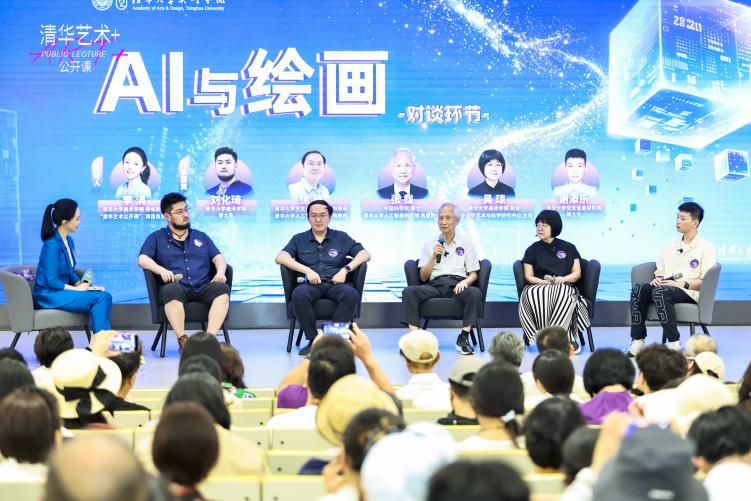
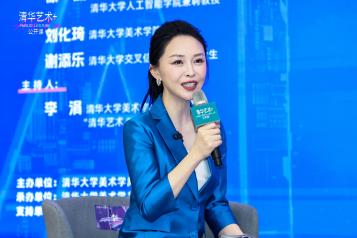
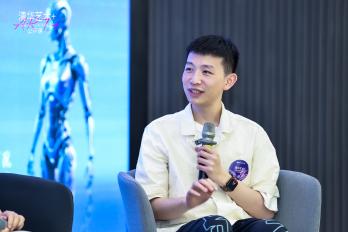
The dialogue focused on translating “art-science integration” into practice. Dean Wu Qiong stated that the rapid development of AI will bring profound changes to educational models and teaching methods. AADTHU will respond proactively and make strategic arrangements, adhering to the core goals of fostering aesthetic ability, humanistic care, innovative thinking, and critical spirit. She emphasized that the Academy has long committed itself to art-science integration, which has been internalized as its educational compass and academic resolve to cultivate talent with “discriminating vision and masterful execution” in the new era. Using the Academy’s ceramic art program as an example, she explained how artistic sensitivity and humanistic insight drive the expansion of material boundaries and expressive dimensions, seamlessly integrating cultural beauty, the essence of craftsmanship, and daily utility to meet people’s demand for a high-quality life.
Professor Xu Wei analyzed AI’s inclusive value for art from the perspective of technological development. He noted that AI lowers the threshold for artistic creation, helping to expand the aesthetic education market, but warned against the risk of algorithm-induced aesthetic uniformity. “The focus of art-science integration is not to teach artists programming skills,” he said, “but to leverage technology to expand the overall scale of the art industry, enabling more people to access, appreciate, and create art.”
Two young representatives shared interdisciplinary insights based on their practices. Xie Tianle argued that the current AI boom is the result of the combined forces of theoretical innovation and engineering practice, which support and advance each other. He noted that computer science focuses on quantitative performance evaluation, while art emphasizes emotional expression and conceptual communication; the collision of these two perspectives is the core driving force of art-science integration. In the face of technological iteration, he urged young students to cultivate independent judgment to anchor their creative direction and value pursuit amid the expanded choices offered by AI.
Liu Huaqi, drawing on over a decade of painting experience, identified “embodiment, processuality, and contingency” as core qualities of painting that AI cannot replicate. She pointed out that museums and collectors’ focus on original works essentially reflects recognition of artists’ individual experiences and academic value. To counter “fast-food aesthetics,” she stressed that creators must maintain authentic expressions of themselves and their lives.
In his concluding remarks, Zhang Bo clarified that current AI follows a technological path distinct from human civilization. Subjective motivation and emotional experience, essential to artistic creation, remain beyond AI’s reach, ensuring that artists will not be replaced by technology. Looking ahead, he stated that the core task of art-science integration is to restructure the talent cultivation system: upholding the intrinsic laws of art while rationally embracing the advantages of technological tools to drive mutual empowerment between scientific rationality and artistic creation. During the Q&A session, the audience raised questions about AI literacy education, career paths for art talent, and how art history research can support AI development, all of which were addressed by the guests.
A Resonant Exploration of Technology, Humanity, and Artistic Value
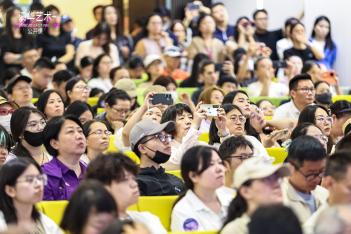
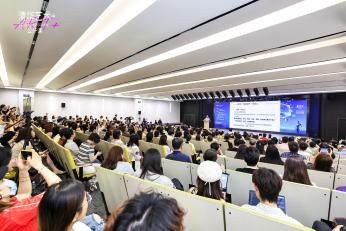
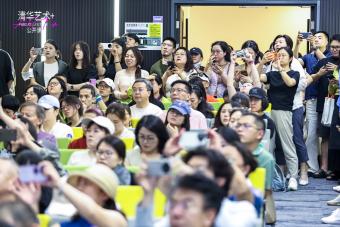
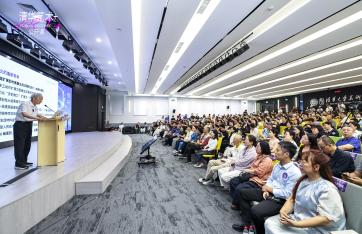
The lecture concluded amid lively discussions, but the reflections on technology, embodiment, authenticity, and artistic value continue. From rational analyses of algorithmic media to the defense of painting’s embodied and humanistic foundations, from rethinking aesthetic education paradigms to optimistic prospects for inclusive technological development, the event reached a clear consensus: AI is not the terminator of art, but a catalyst for expanding visual boundaries.
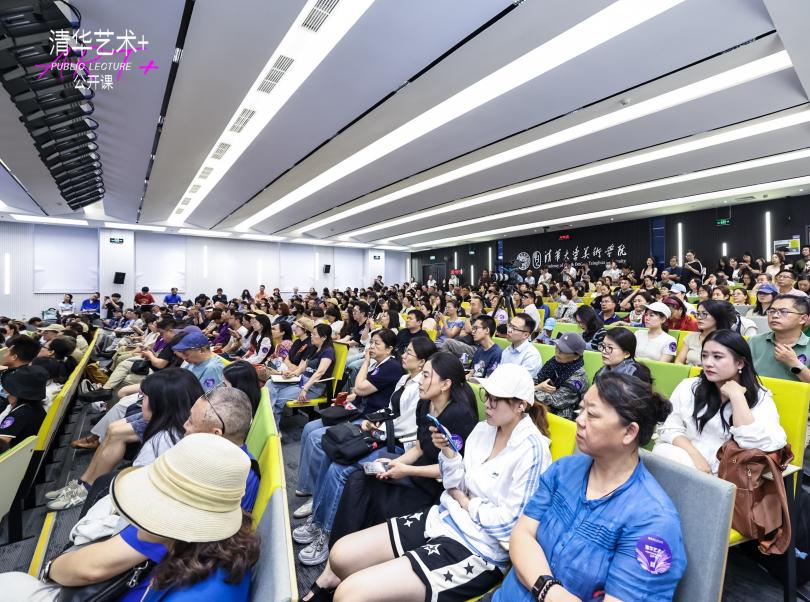
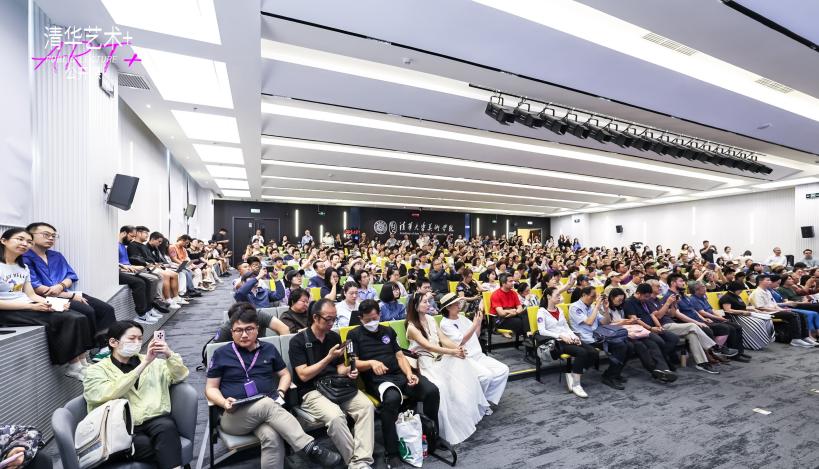
Over 400 students and faculty from Tsinghua and other institutions attended the lecture, filling the hall to capacity. Many listened from aisles, steps, and windowsills, demonstrating strong interest and high attention to the topic of “art-science integration.”
A representative of AADTHU stated that the Academy will continue to build the Tsinghua Art Public Lecture as a platform for art-science exchange. Upholding the fundamental task of fostering virtue through education, it will explore a “Tsinghua Academy of Arts & Design Approach” to art development in the intelligent era, contributing to the national strategy of cultural digitization, enhancing public aesthetic taste, and applying artistic achievements to better serve people’s demand for a high-quality life.