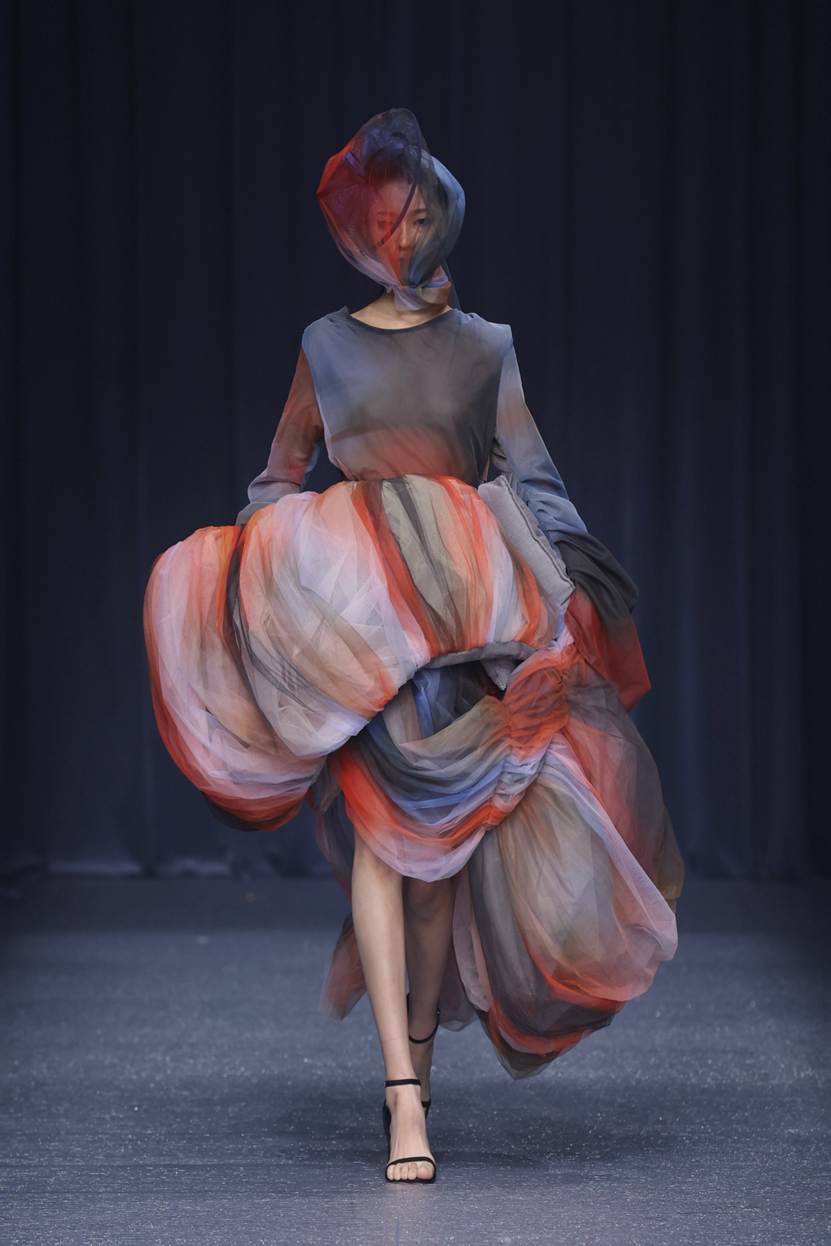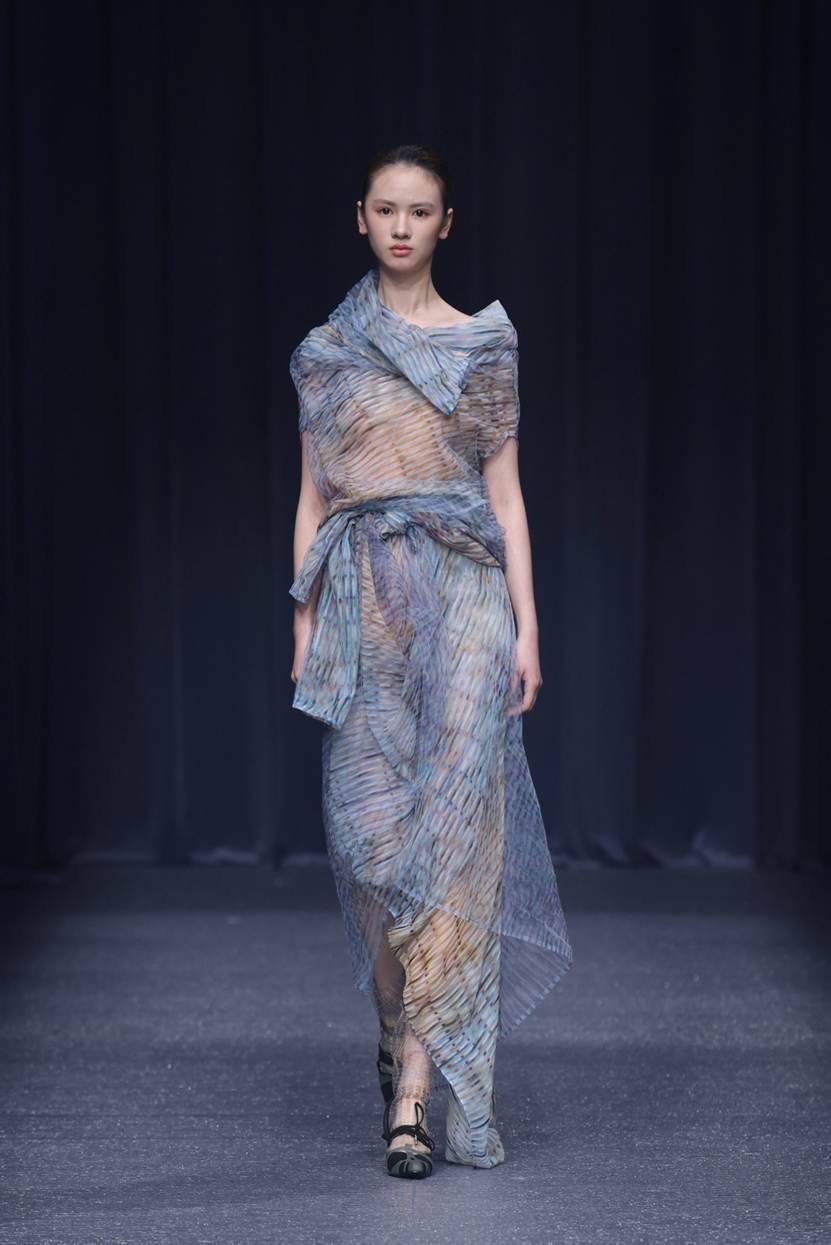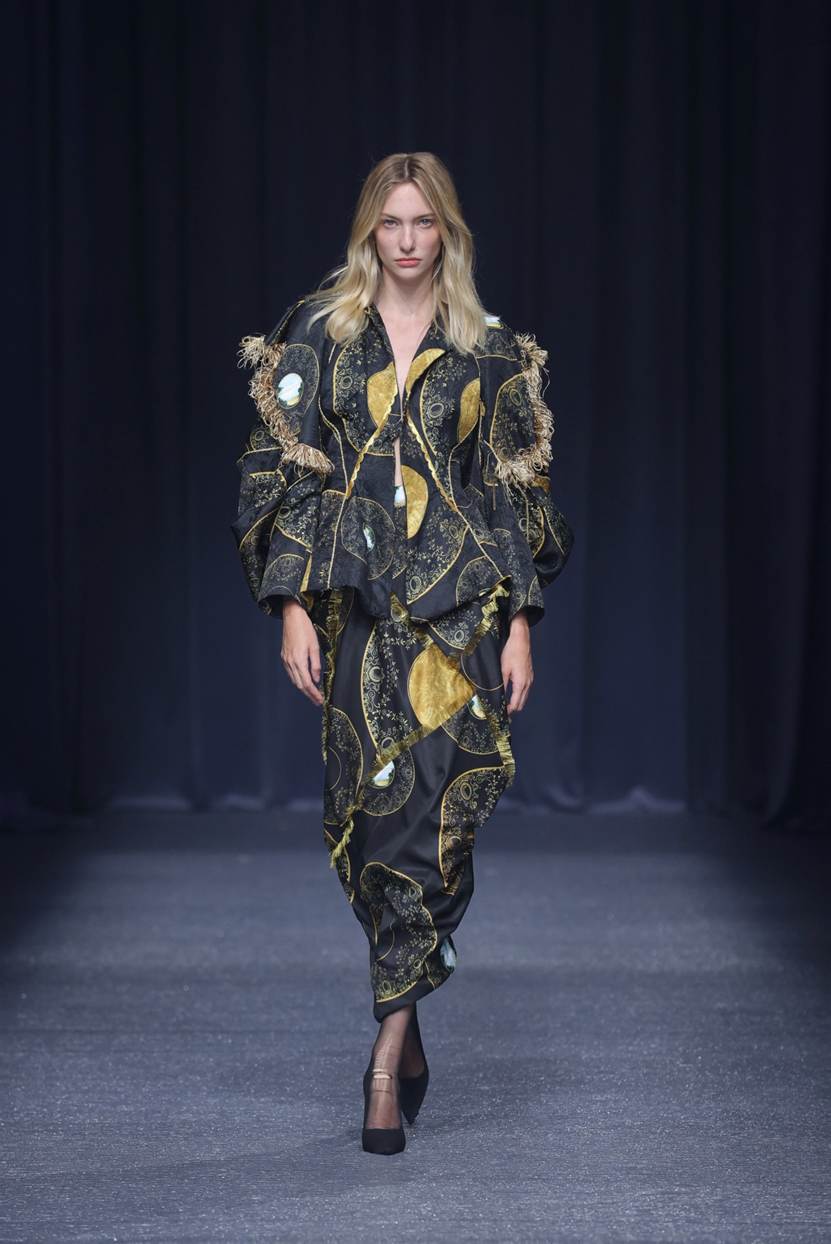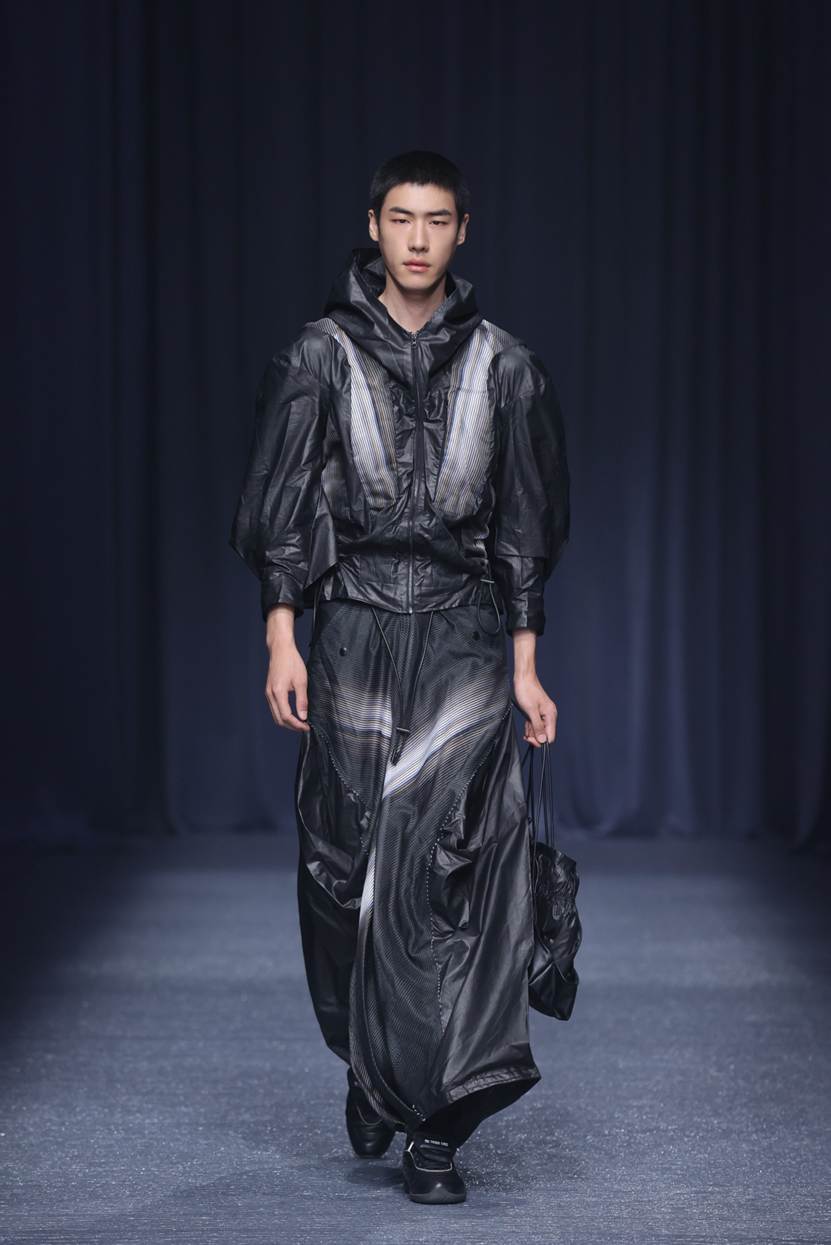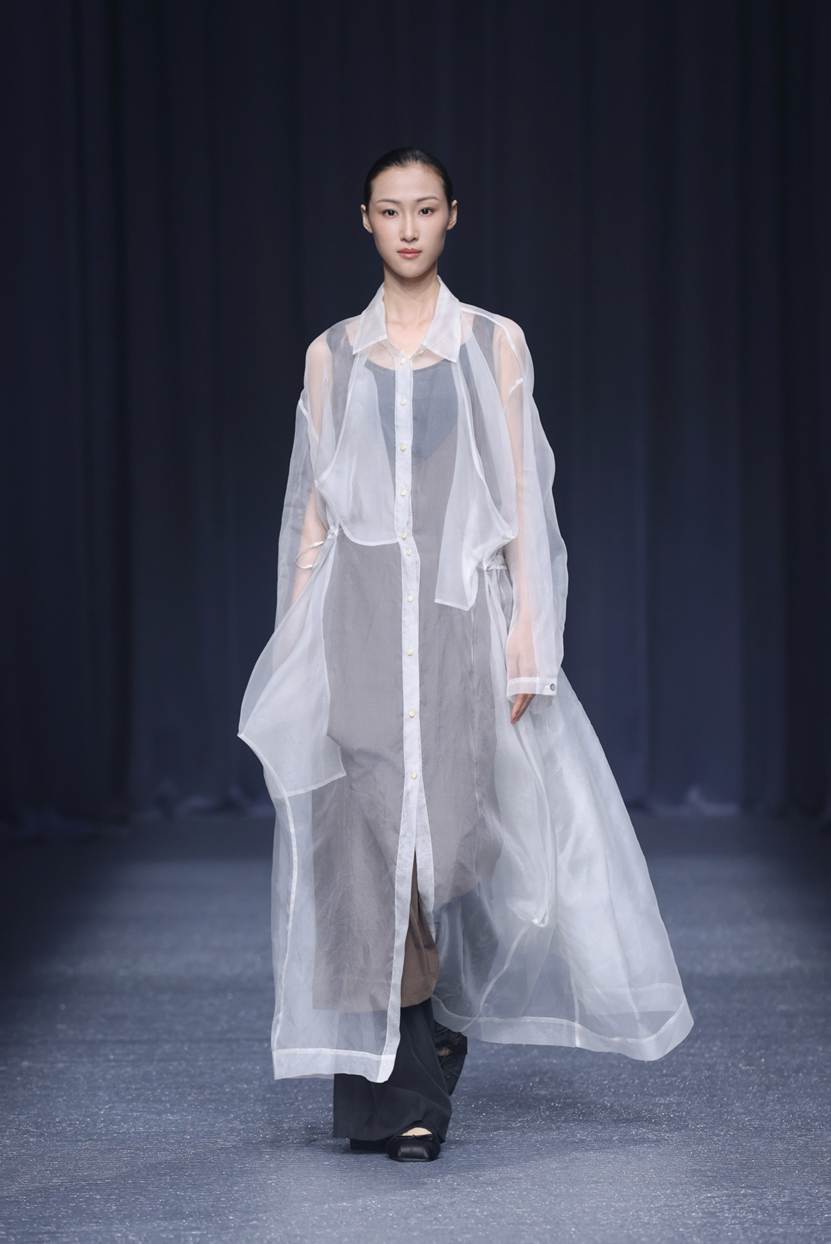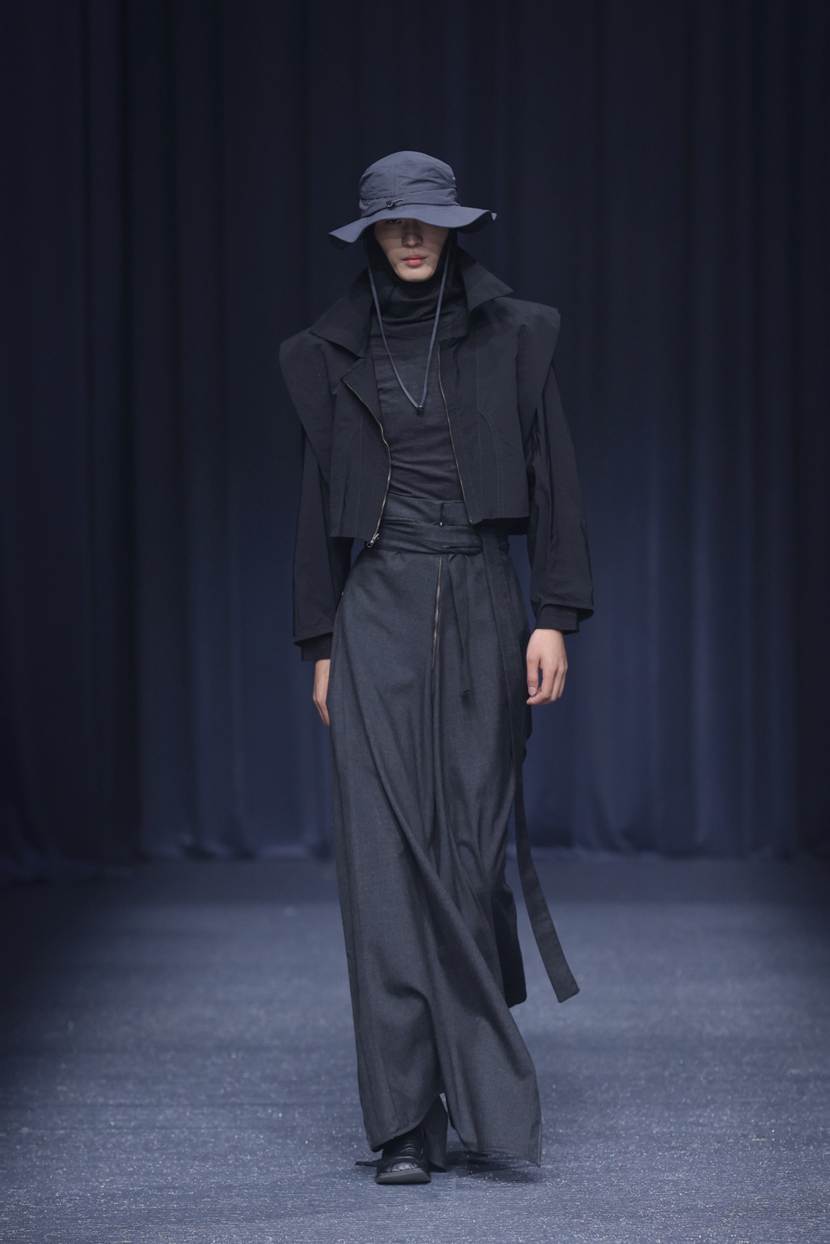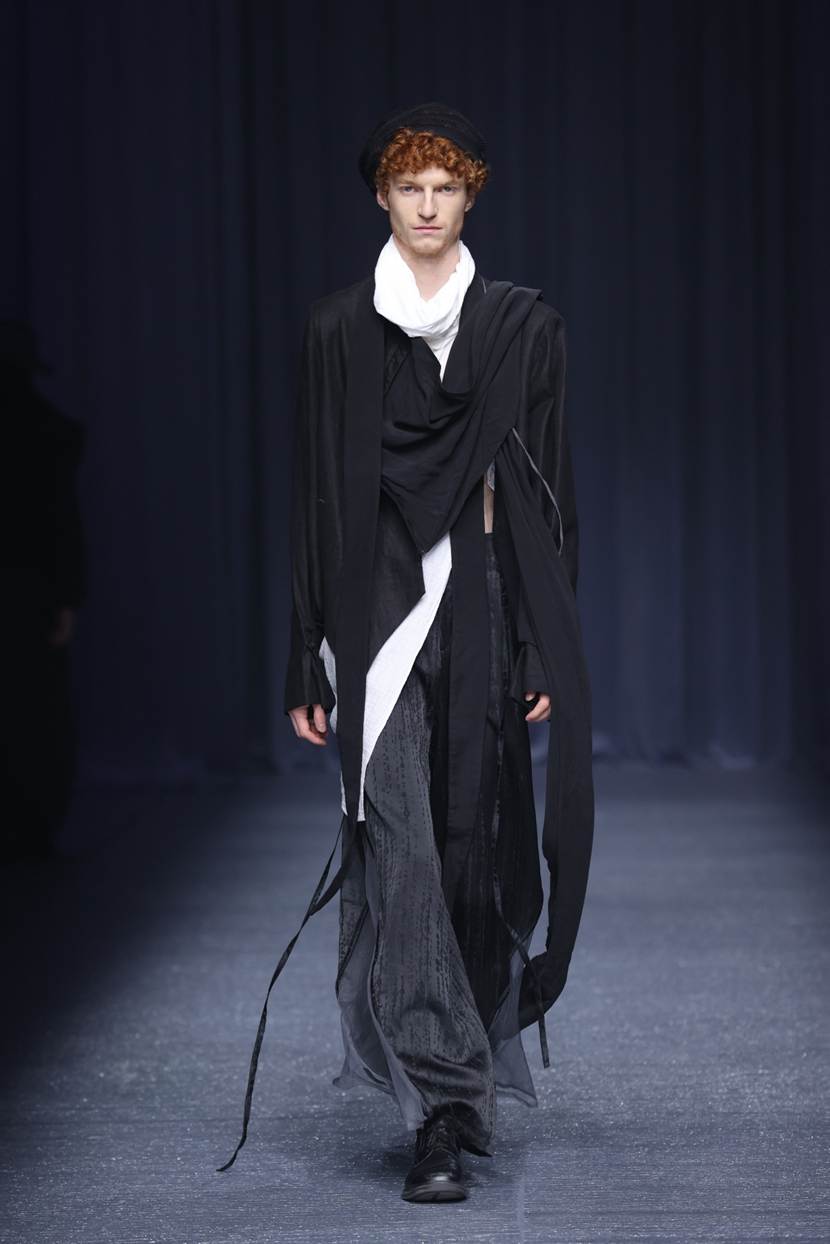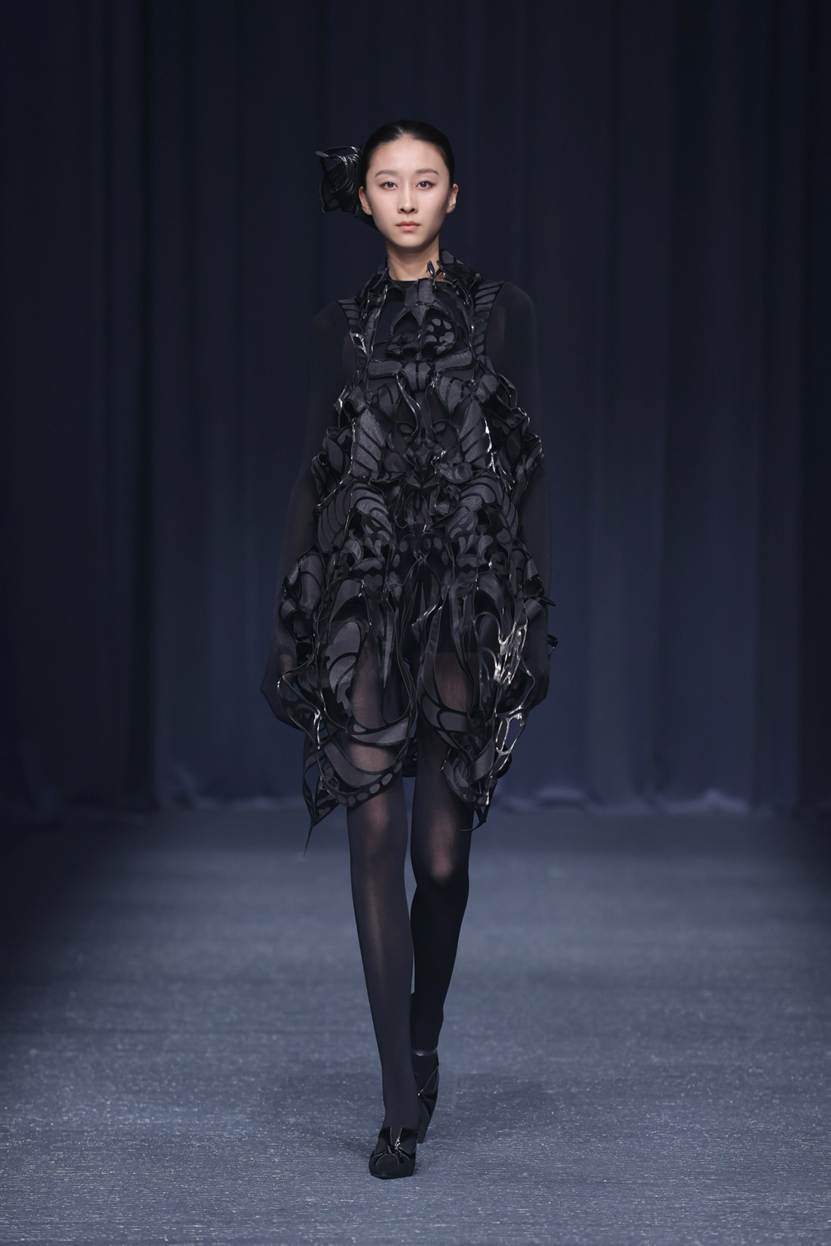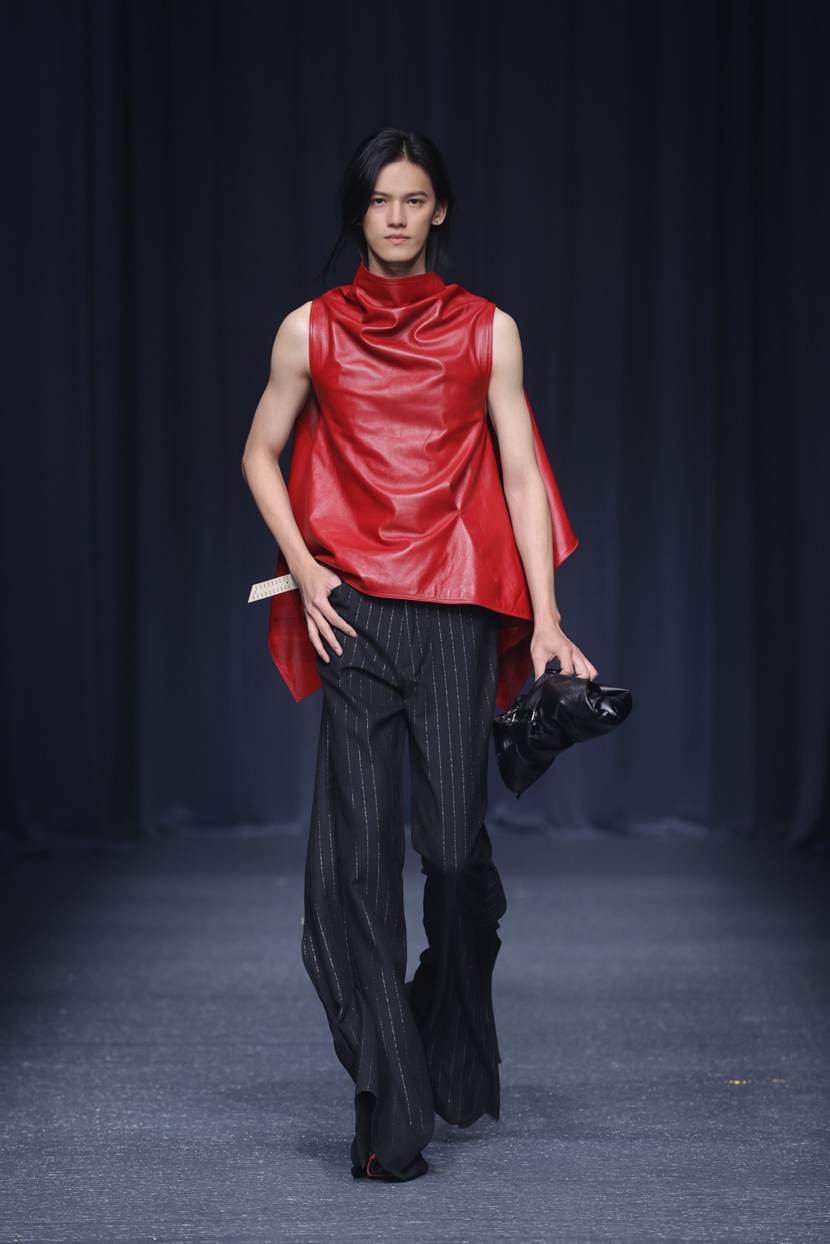
The Academy of Arts & Design, Tsinghua University (AADTHU), Nuova Accademia di Belle Arti (NABA), and The Glasgow School of Art jointly inaugurated the 2026 Joint Graduation Show for Fashion and Accessory Design under the evocative theme Touch on May 20 at the Central Hall of Beijing’s 798 Art District. Using apparel as a creative medium, the show established an international platform that integrates diverse cultures and bridges art and technology, presenting guests with a fashion feast of intellectual depth, artistic quality, and contemporary innovation.
The show brought together graduating designers from all three institutions, presenting a cohesive yet pluralistic narrative rooted in the shared conviction that design must remain grounded in human sensibility, even as digital technologies reshape the very fabric of perception and interaction. Touch, as both title and ethos, serves as a deliberate counterpoint to an era defined by mediated interfaces and algorithmic abstraction. It asserts the irreplaceable value of direct, unmediated encounter: the tactile, the emotional, and the intellectual, a triad of connection that resists reduction to data or simulation.
A distinguished assembly of academic leaders, industry pioneers, and cultural stakeholders gathered alongside eminent figures from China’s textile and fashion ecosystem to attend the event. Their presence affirmed the event’s significance not only as an academic milestone but as a cultural inflection point for the future of Chinese fashion on the world stage.
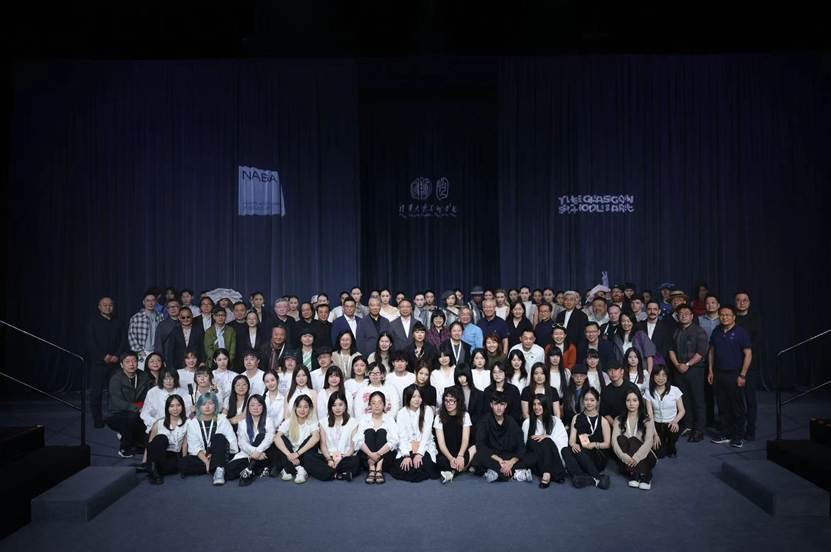
At the heart of Touch lies a philosophical proposition: in an age of accelerating virtualization, the human imperative is to reclaim presence, to re-embed meaning in the physical, the sensory, the interpersonal. The exhibition unfolded as a trilogy of encounters: first, the touch of idea, where inspiration meets critical reflection; second, the touch of tradition, where ancestral motifs are reanimated through contemporary lenses; and third, the touch of craft, where material intelligence and artisanal intention converge. This tripartite structure embodies the show’s guiding insight: Where boundaries dissolve, embodiment is reclaimed; in the moment of touch, all things are connected.
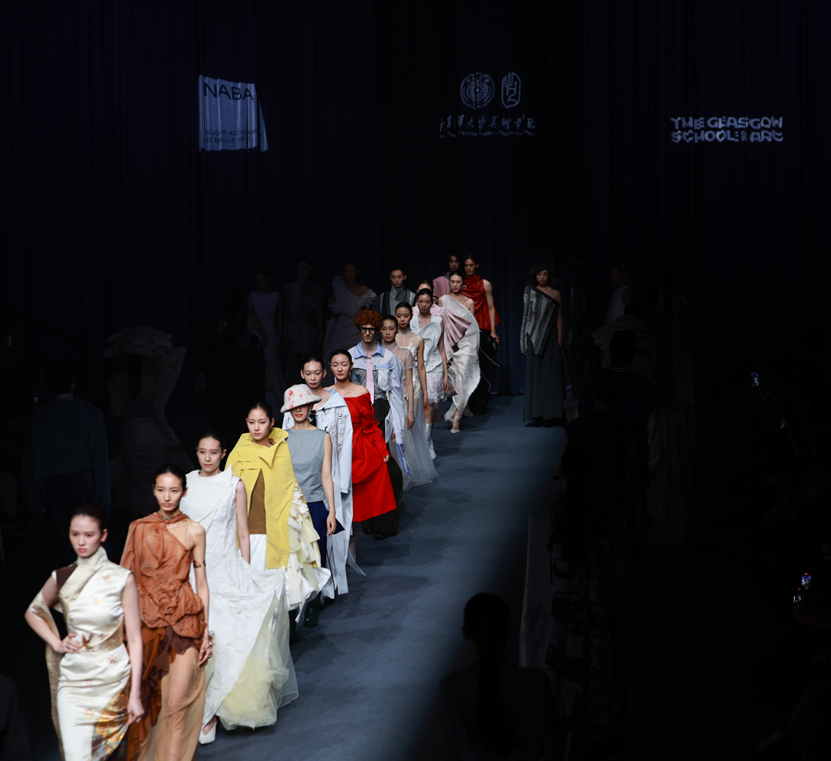
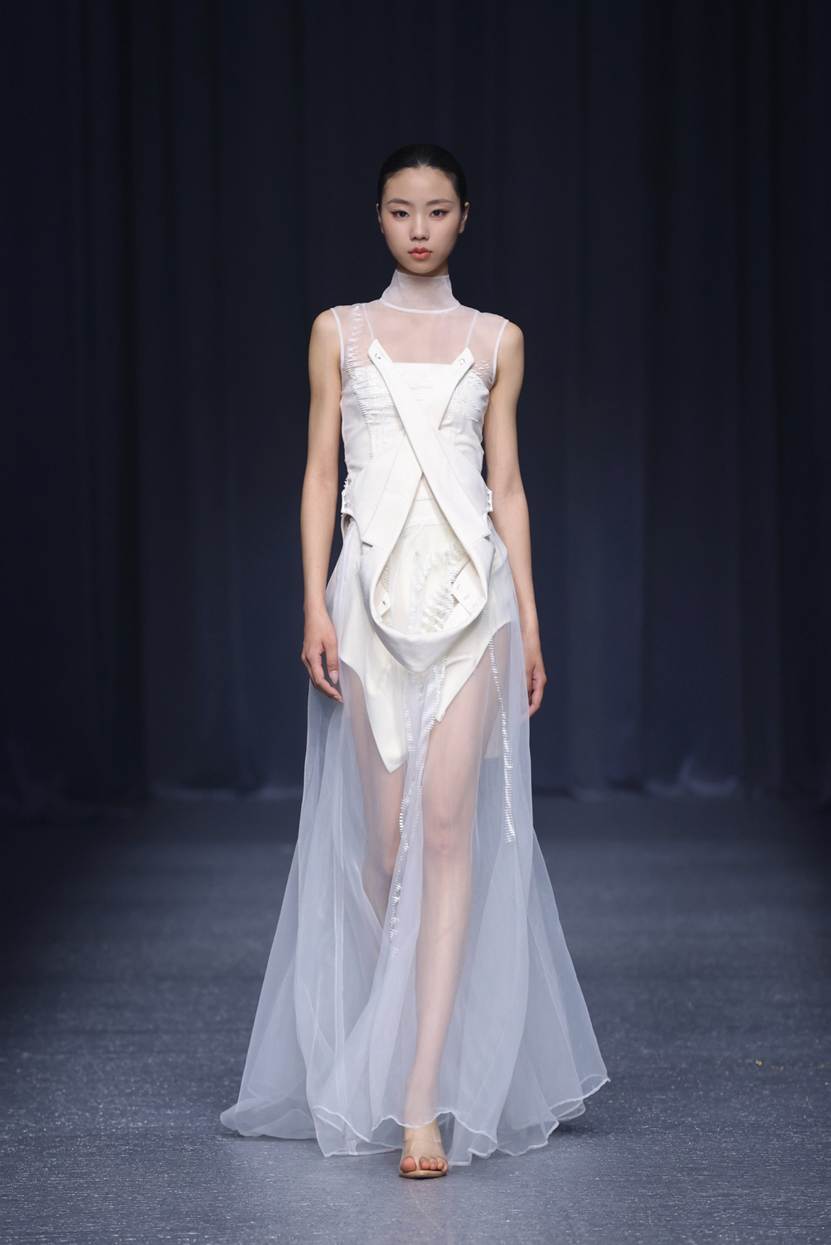
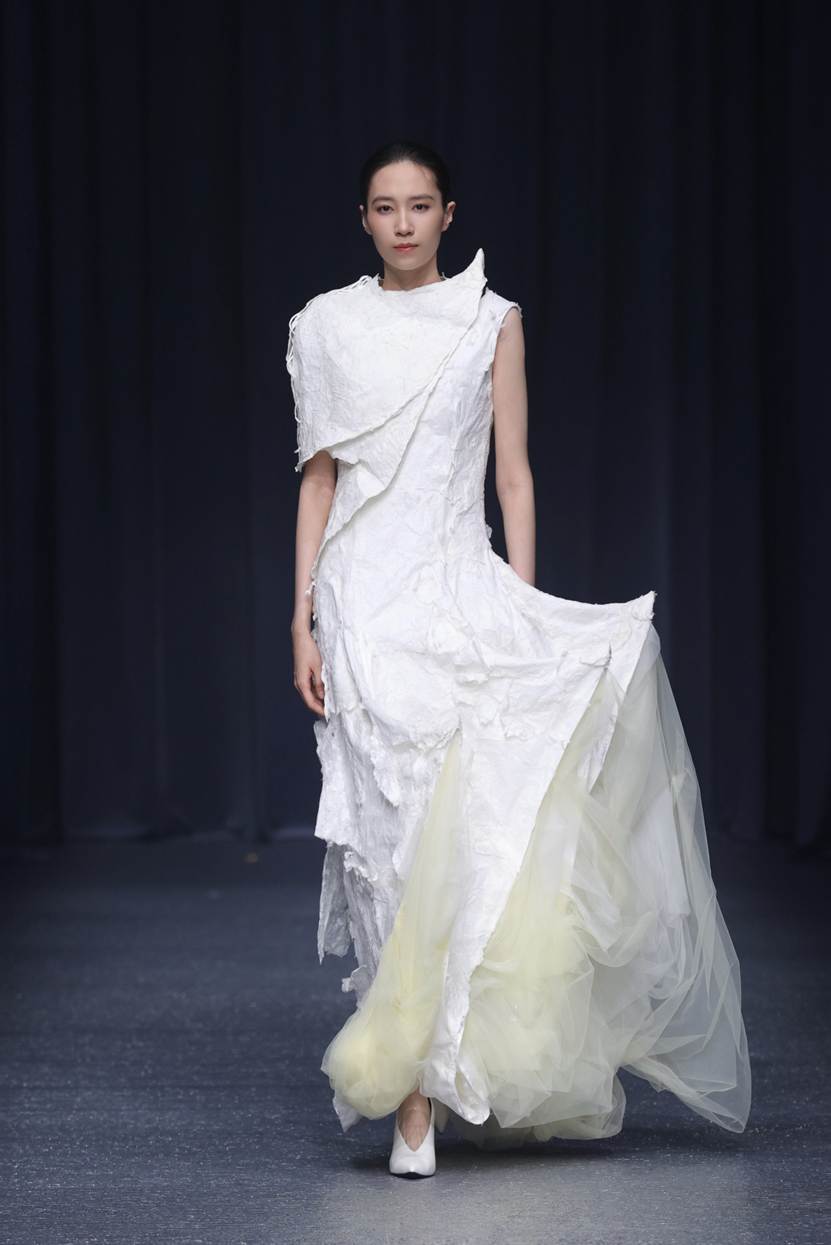
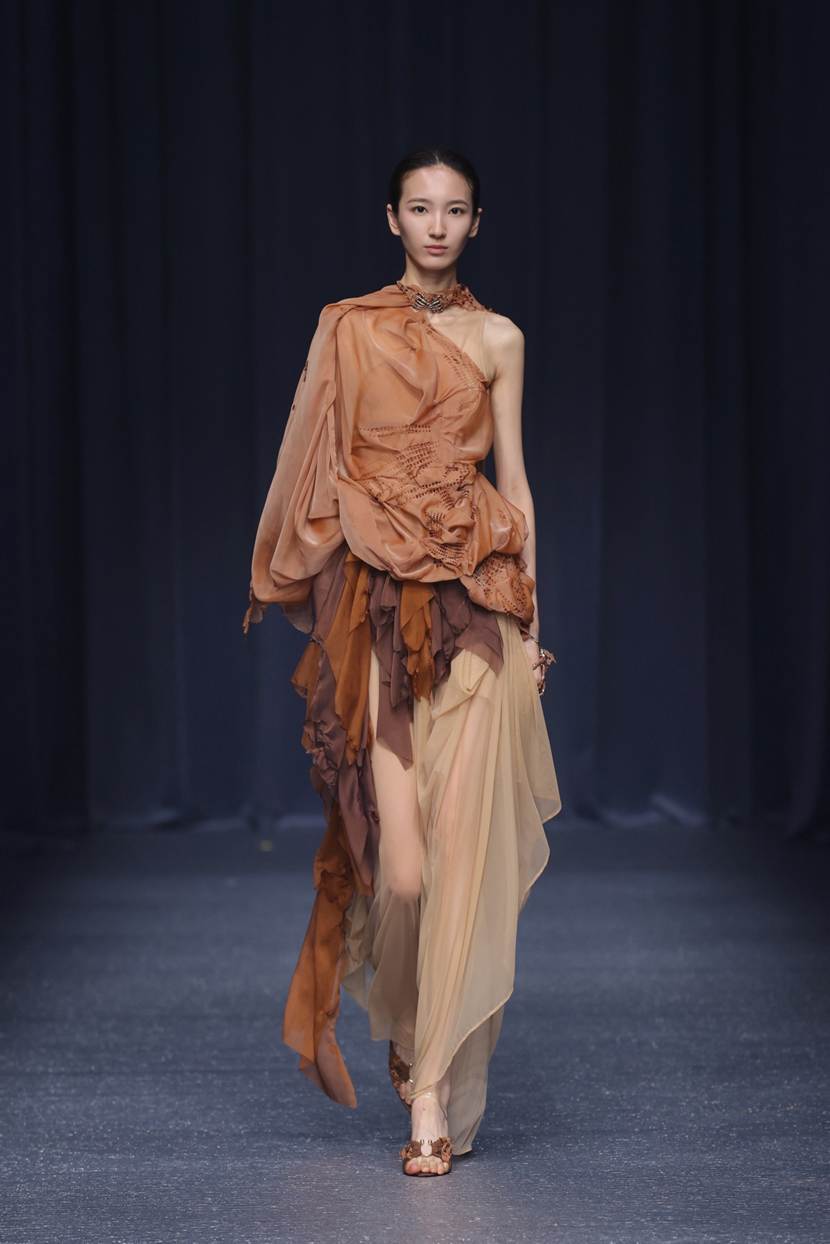
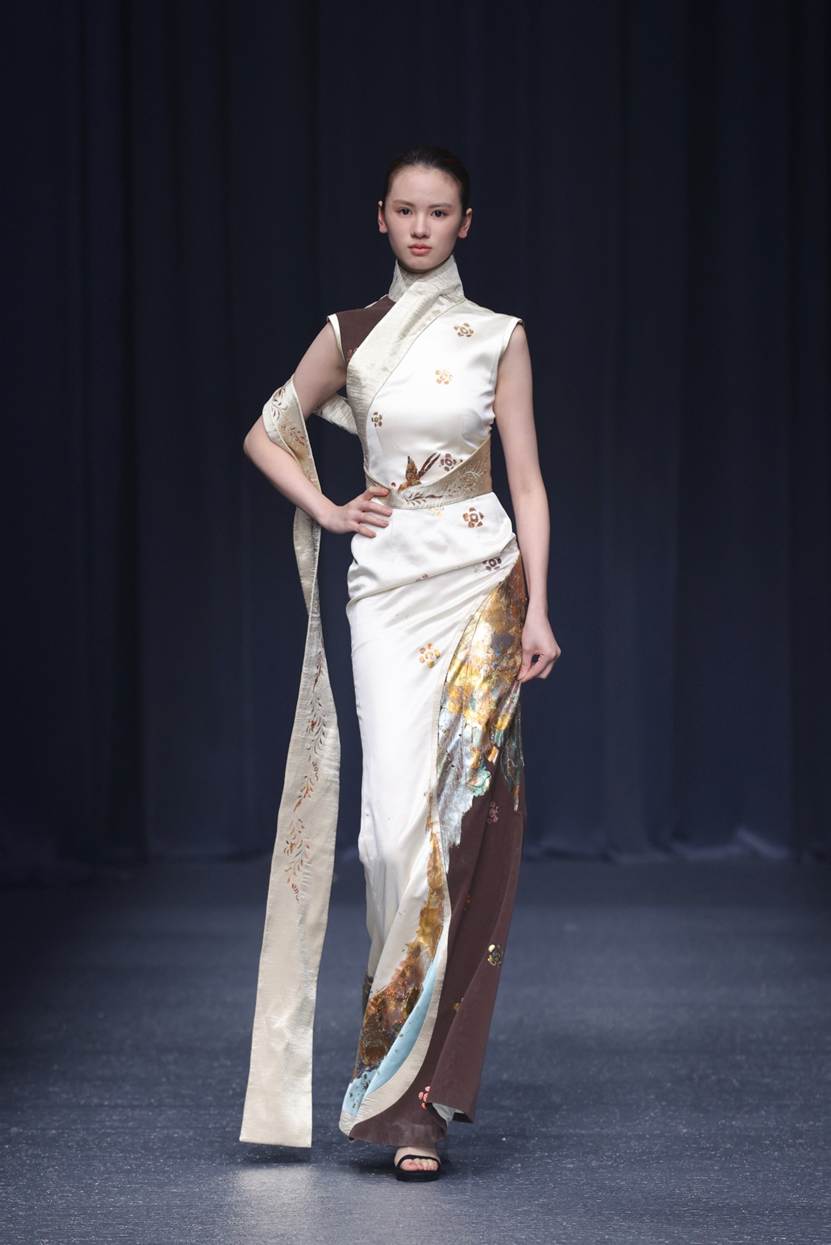
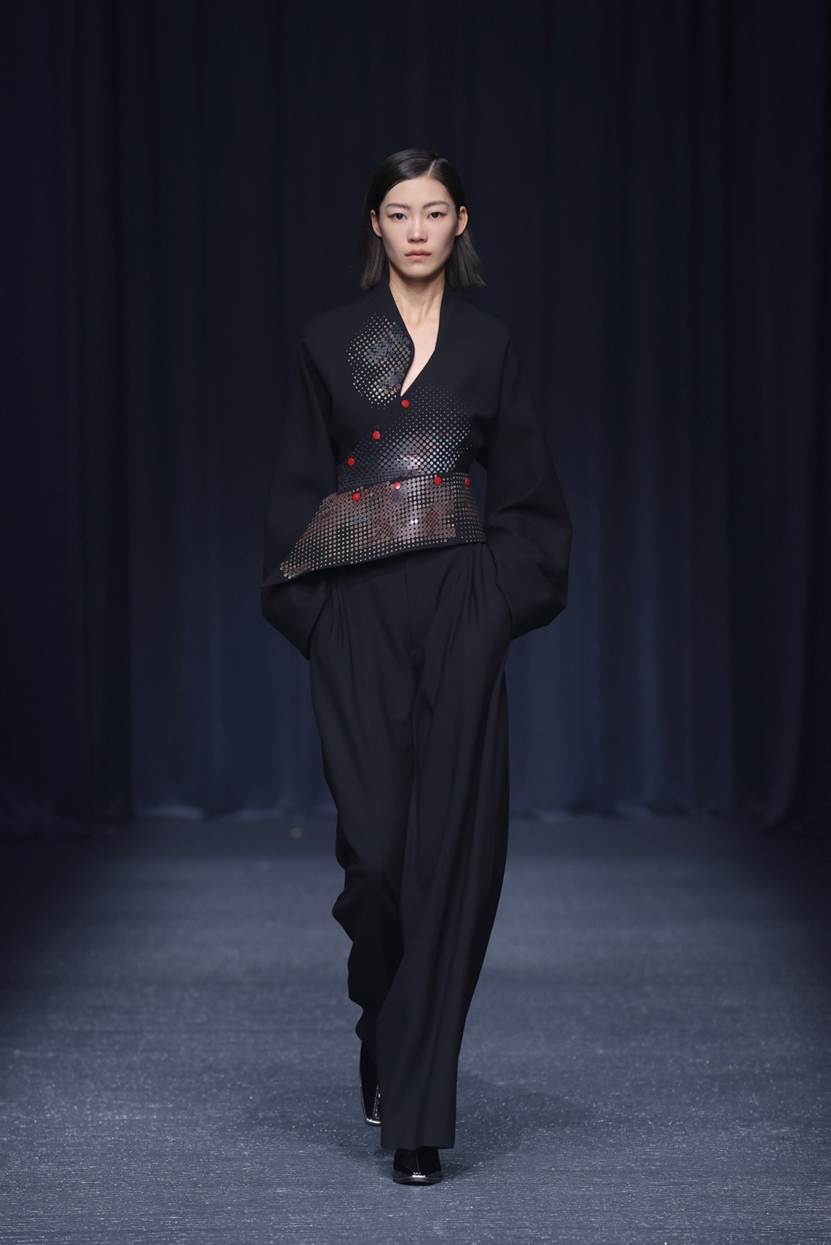
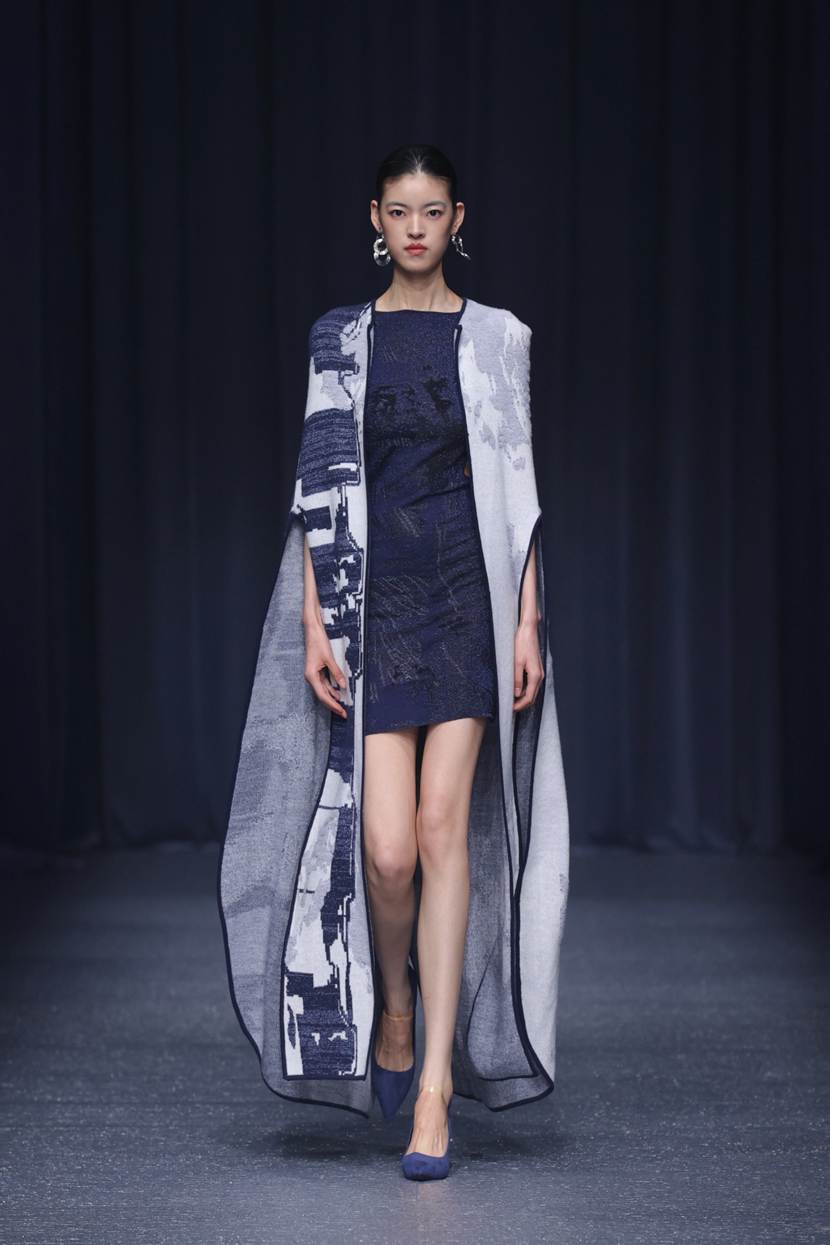
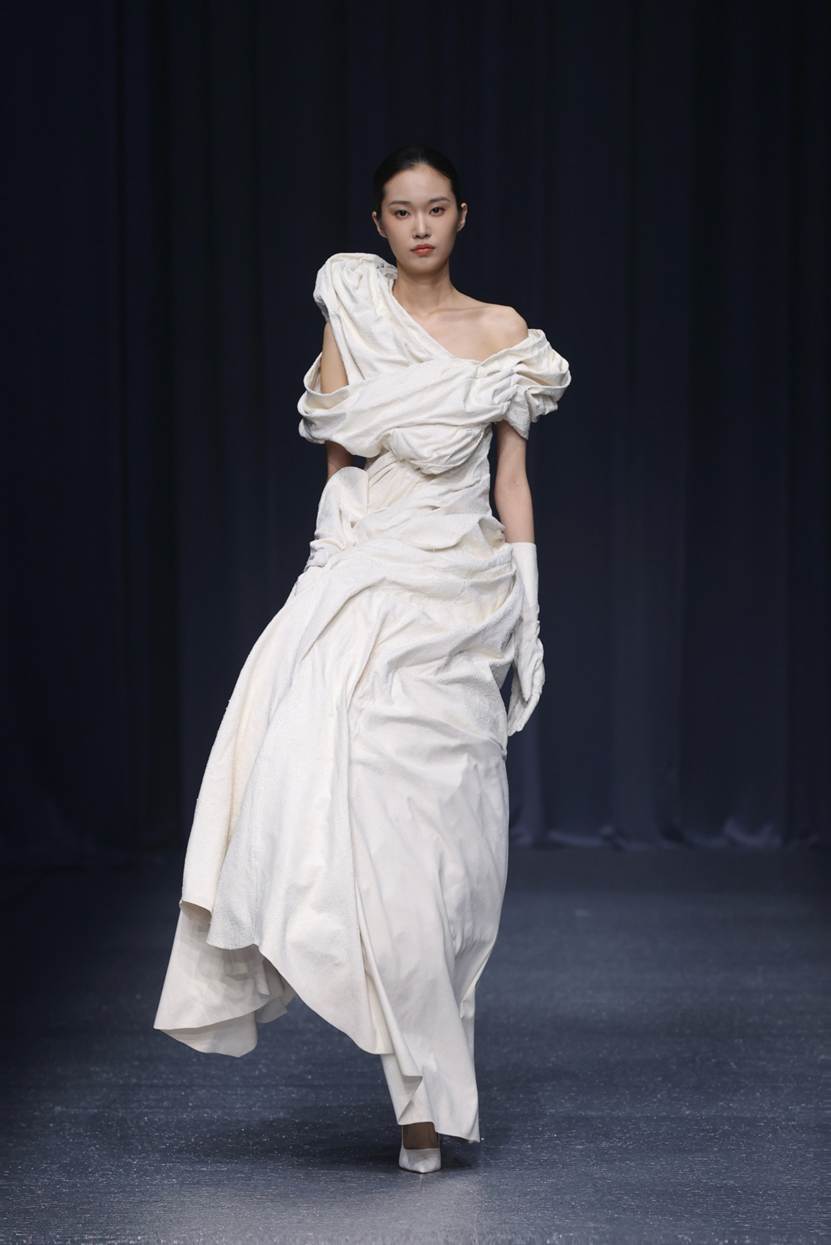
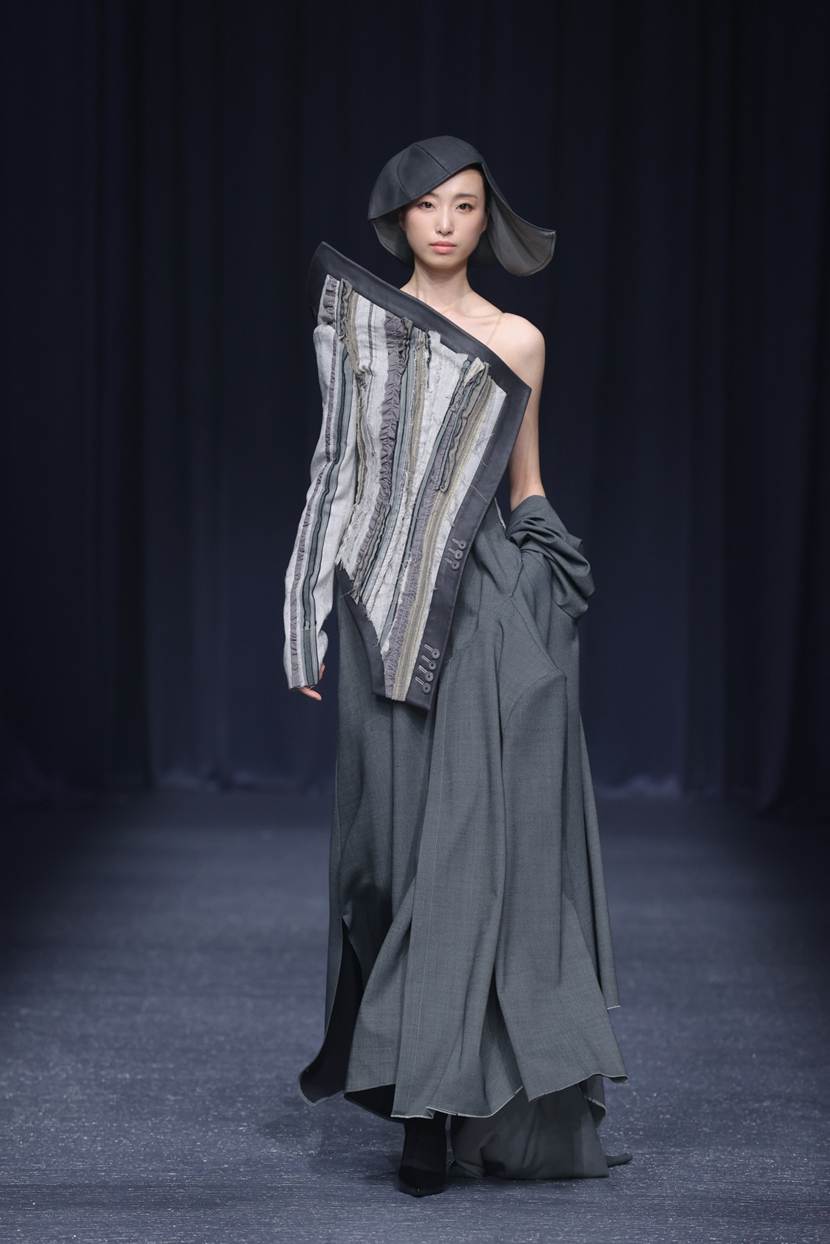
The AADTHU cohort’s work exemplified this synthesis with exceptional rigor and poetic sensitivity. In their reinterpretation of cultural heritage, pieces such as 2632 and Foil Echoes drew from the layered iconography of Dunhuang murals, employing stratified compositional logic to articulate historical palimpsests, while heat-fused metallic foils rendered the iridescent luminescence of aged pigments. Shadow Inquiry at the Lattice Window translated the metaphysical elegance of classical Chinese garden architecture into wearable form, using ice-dyeing and flocking techniques to evoke the ephemerality of light filtering through lattice screens.
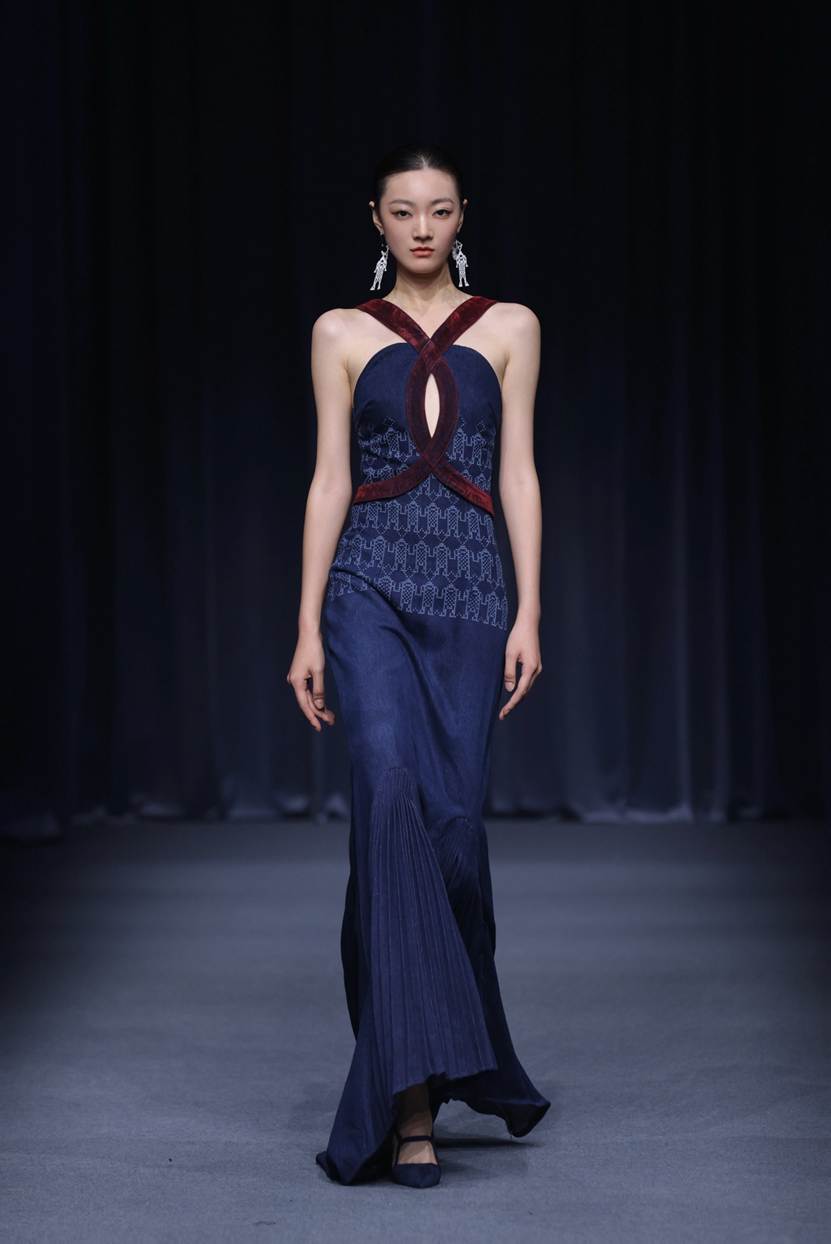
Regeneration and Spring Comes deconstructed the dragon-and-phoenix motifs of Warring States lacquerware and the scrolling floral patterns of the Song dynasty, respectively, hybridizing AI-assisted generative design with traditional hand-weaving to revive the understated grace of Song-era aesthetics. Meanwhile, Between the Hua Yao and Chasing the Fish recontextualized folk symbols from the Hua Yao ethnic community of Hunan and the Bai minority’s ritual Jia Ma paper talismans, transforming sacred iconography into contemporary sartorial syntax.
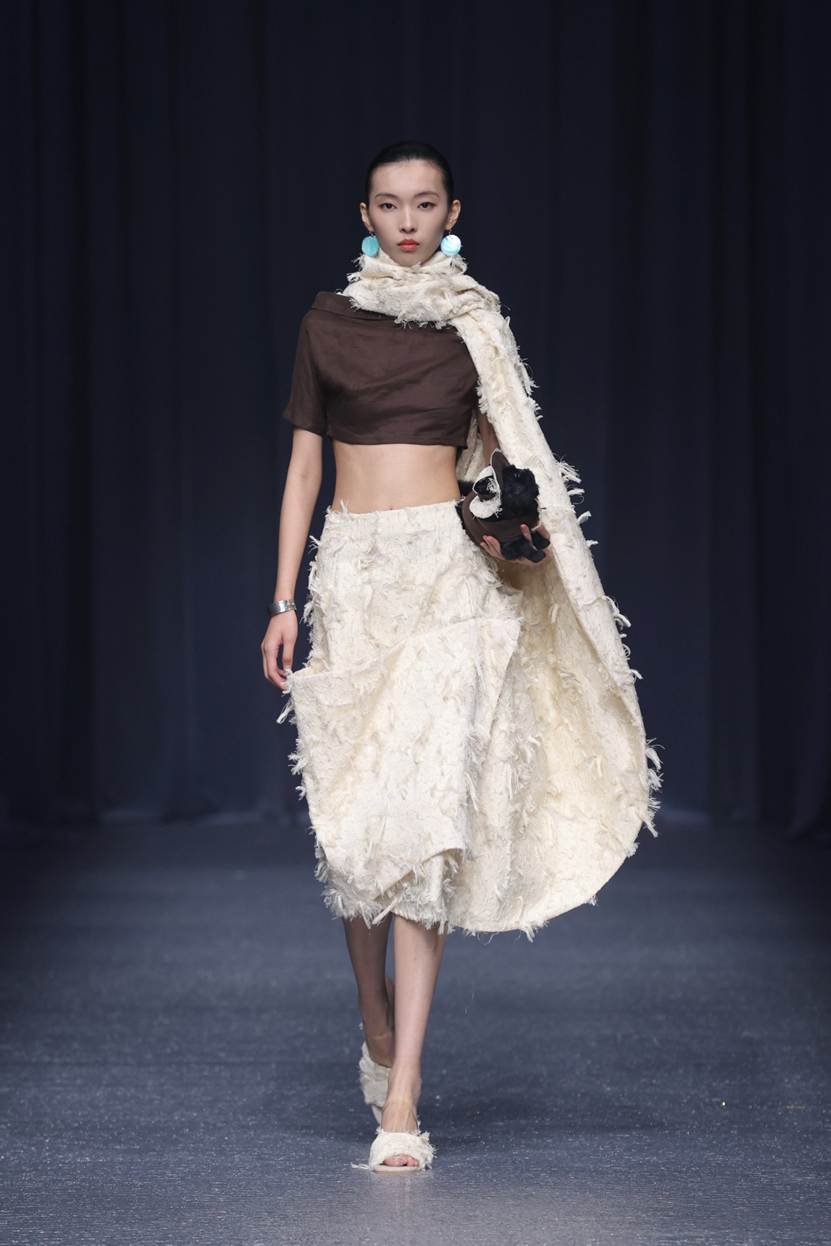
On the frontier of material innovation, projects such as Hyperreal Reflection and Qi · Rhythm deployed 3D printing not merely for form, but for haptic experience, constructing modular, sensorially rich structures meant to be felt as much as seen. Spark Moment wove metallic filaments into merino wool, then subjected the resulting fabric to fulling, yielding a tactile dialectic of rigidity and resilient softness. Corrosion and Renewal used precision laser cutting and multi-layer fabric assembly to sculpt wearable soft sculptures that respond to movement and light;
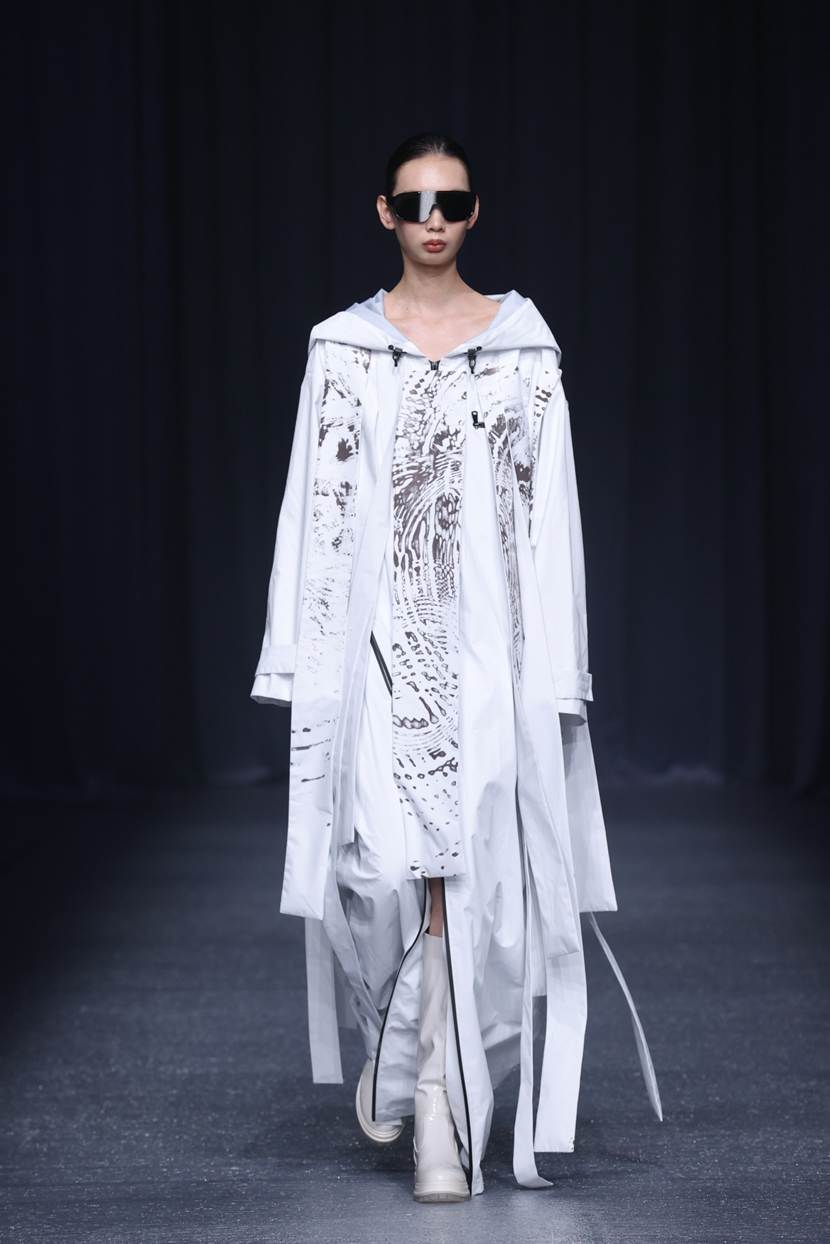
Ripple introduced thermochromic coatings to outdoor apparel, enabling garments to shift chromatically with ambient temperature, an elegant fusion of environmental responsiveness and aesthetic intentionality; Still combined parametric knitting algorithms with hand-stitched, laser-cut components to preserve the textural memory of architectural surfaces and the warmth of human labor; Quartet employed wool felting to embed the temporal patina of repurposed materials, transforming vestiges of the past into tactile present.
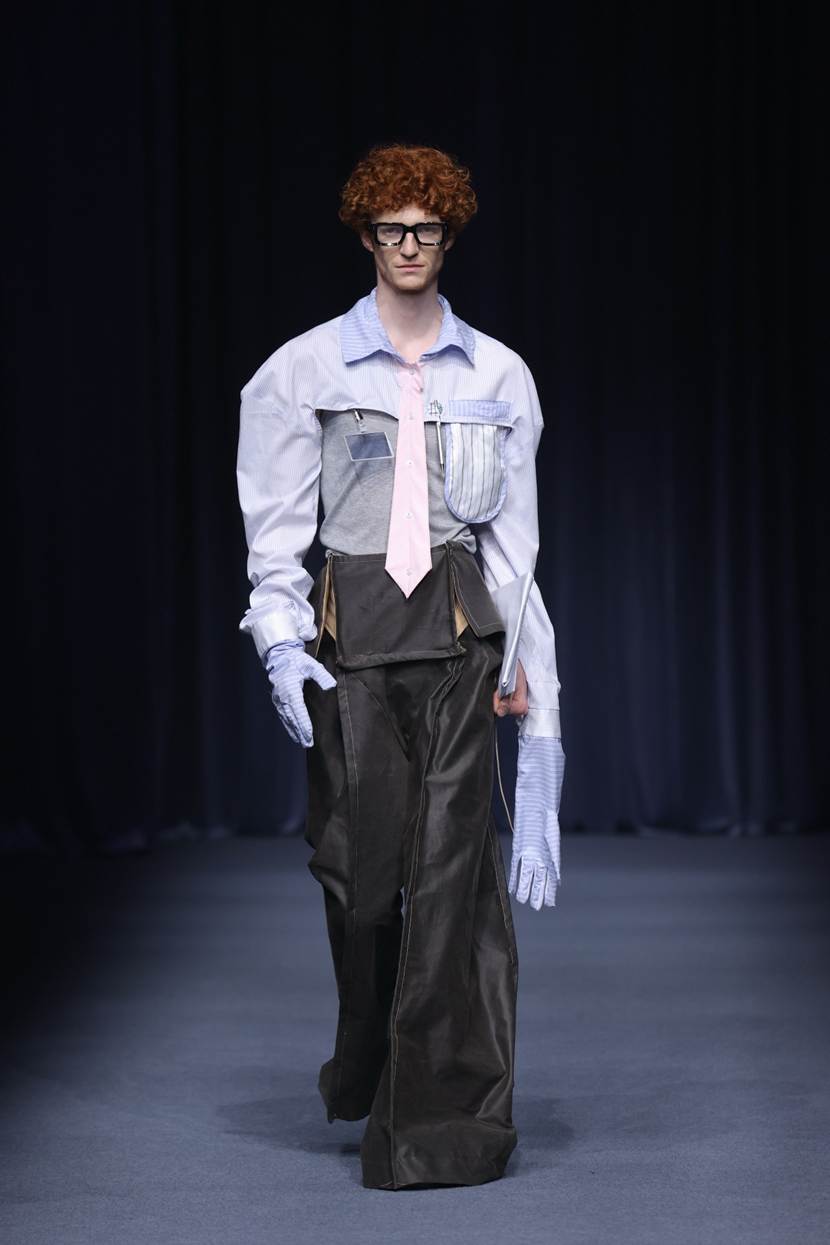
In the domain of humanistic storytelling and socio-critical engagement, works such as Shǒu (Hand) and Tolerable Disarray examined emotional memory and the interior world of highly sensitive individuals; Entangle visualized the tension between self-perception and external judgment, transmuting psychological energy into sculptural form; The Man in the Case allegorized professional adaptation and the quiet resilience required to thrive within institutional frameworks;
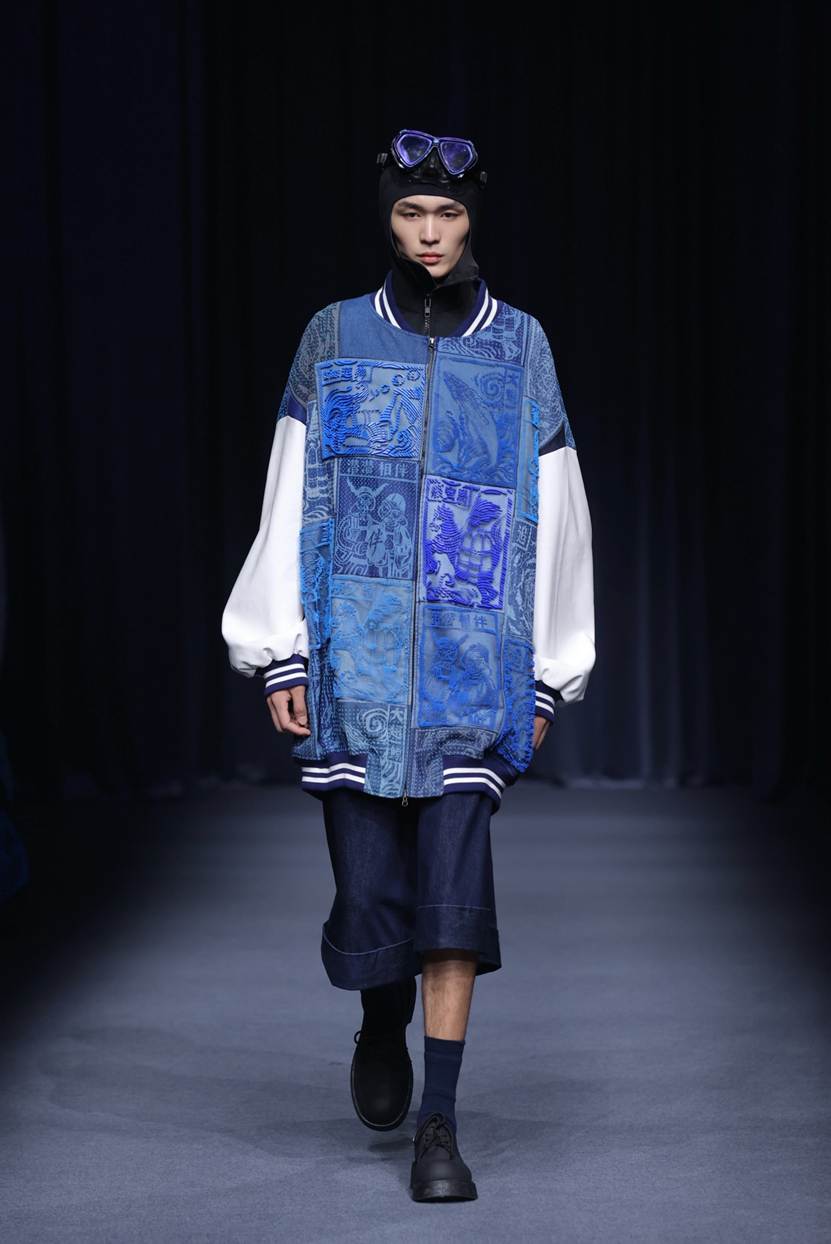
The Fourth Wall interrogated the fragmentation and reconstitution of identity in digital spaces, where the self is perpetually performed, curated, and reassembled; Belongings explored the psychological scaffolding adults construct through objects of emotional anchorage; Texture Error appropriated the visual grammar of video games to reimagine Neo-Chinese dress, proposing a generative dialogue between digital vernacular and historical continuity; and Beneath the Cracks metaphorically depicted the symbiotic networks of mutual support that sustain life in densely populated urban environments, endowing fashion with moral weight and civic resonance.
This joint graduation presentation transcends the conventional framework of academic showcase. It is, rather, a testament to what is possible when institutions commit to deep cross-cultural collaboration, not as a gesture of goodwill, but as a methodological necessity. In dismantling disciplinary silos and embracing epistemic plurality, the three schools have forged a new paradigm: one where Eastern and Western aesthetics converse resonate in harmony, where tradition informs rather than constrains innovation, and where technology serves human meaning rather than displacing it.
The Touch Joint Graduation Show was co-organized by the Academy of Arts & Design, Tsinghua University; Tsinghua Shenzhen International Graduate School; Nuova Accademia di Belle Arti (NABA); The Glasgow School of Art; and the China Fashion Designers Association. It was hosted and curated by the Department of Textile and Fashion Design at AADTHU.
Following the opening ceremony, dedicated exhibition zones opened for immersive engagement with the works of Tsinghua University, NABA, and The Glasgow School of Art, each reflecting the distinct pedagogical ethos and cultural geography of its home institution, yet united by a shared commitment to design as a practice of empathy, inquiry, and hope.
As the final lights dimmed on the Central Hall, the resonance of Touch remained, not as a conclusion, but as an invitation: to feel deeply, to reflect profoundly, and above all, to remain authentically here, in the world, with hands open and senses attuned. In an age of increasing abstraction, this is the most radical act of design imaginable.
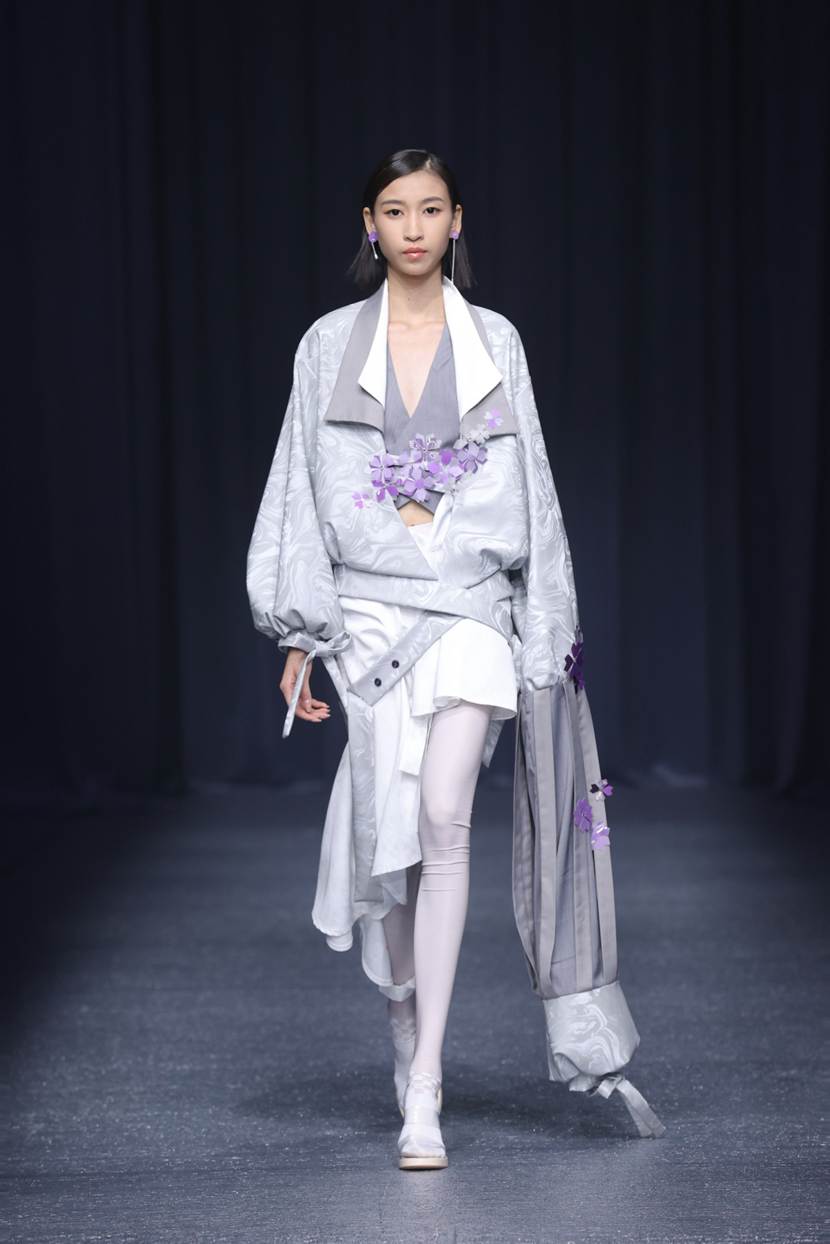
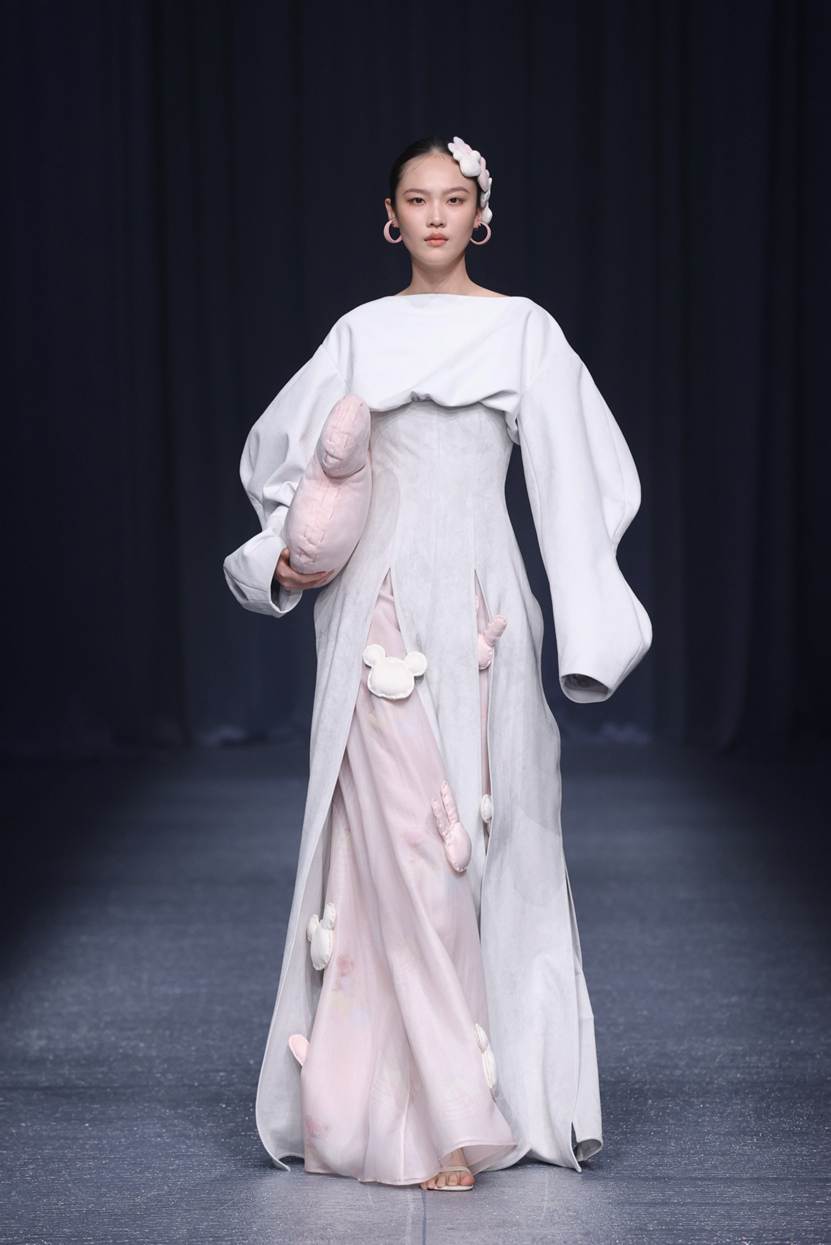
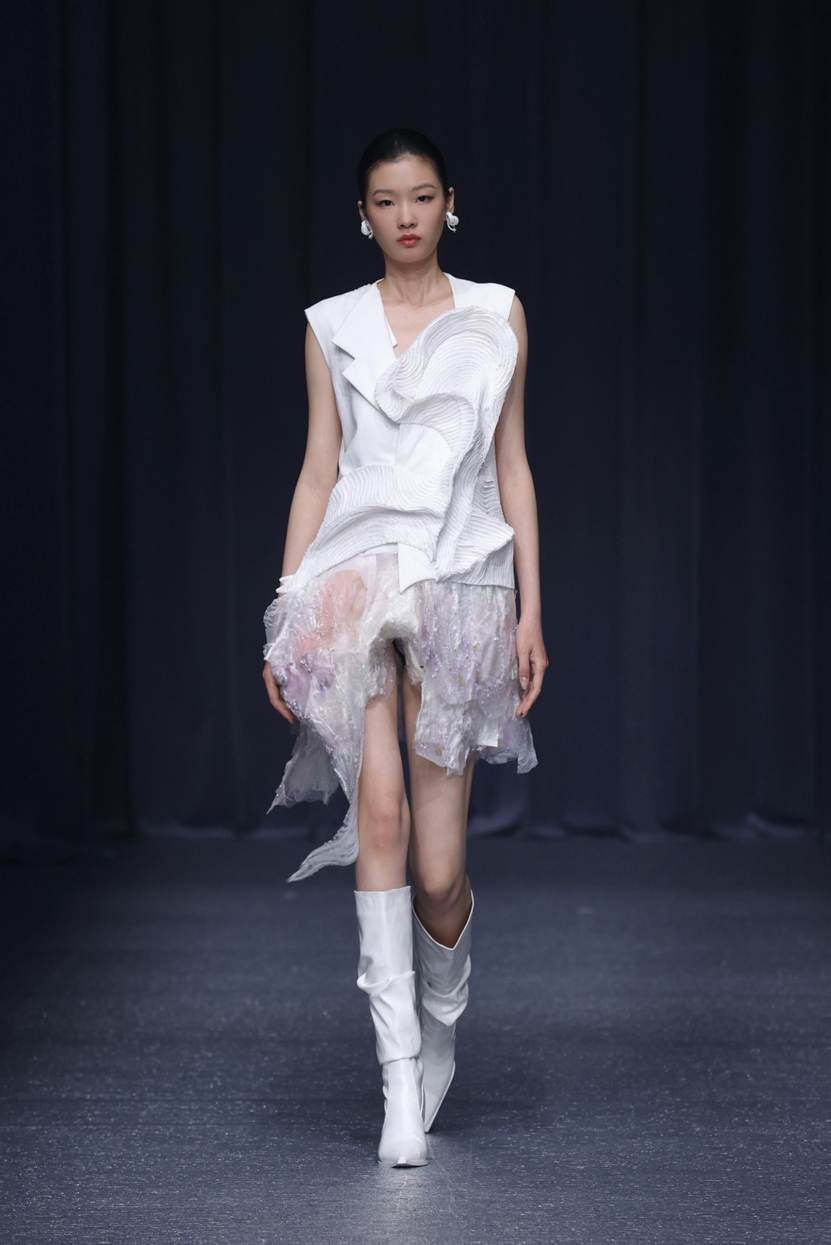
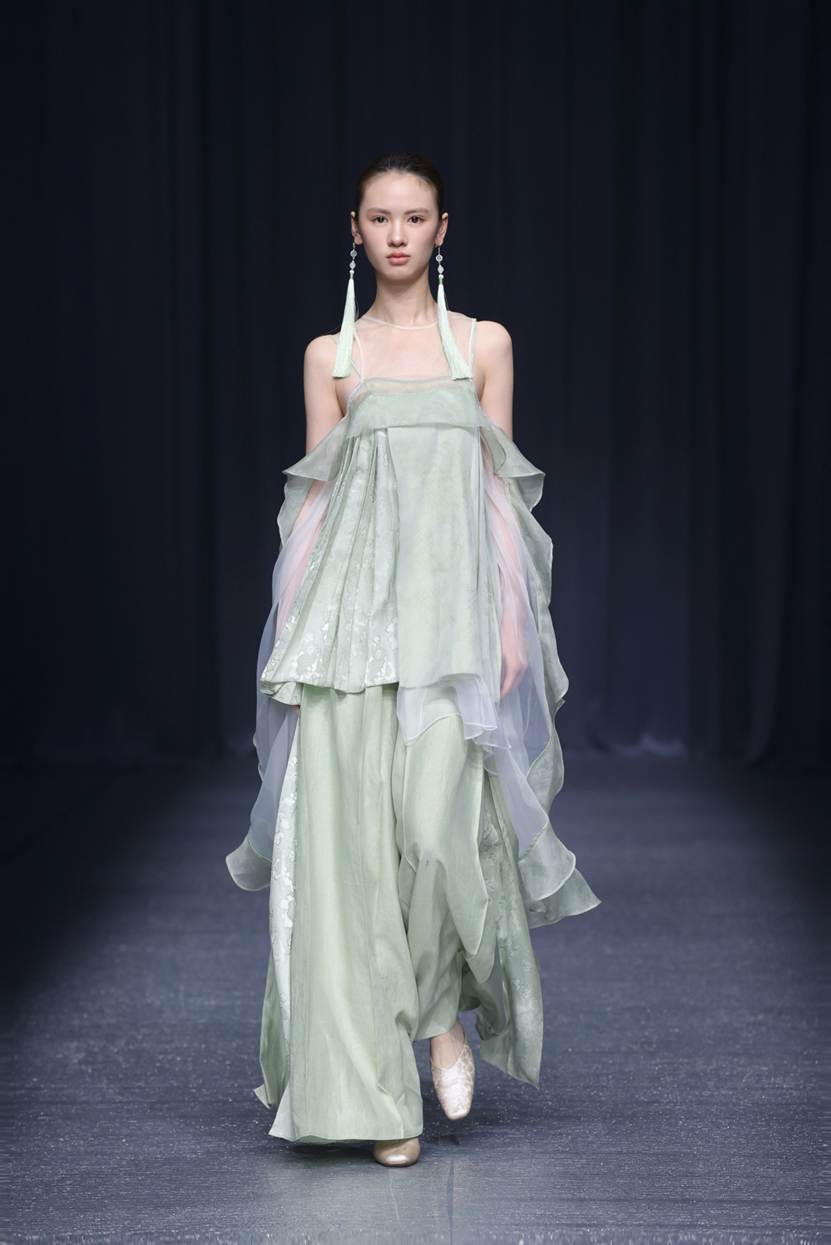
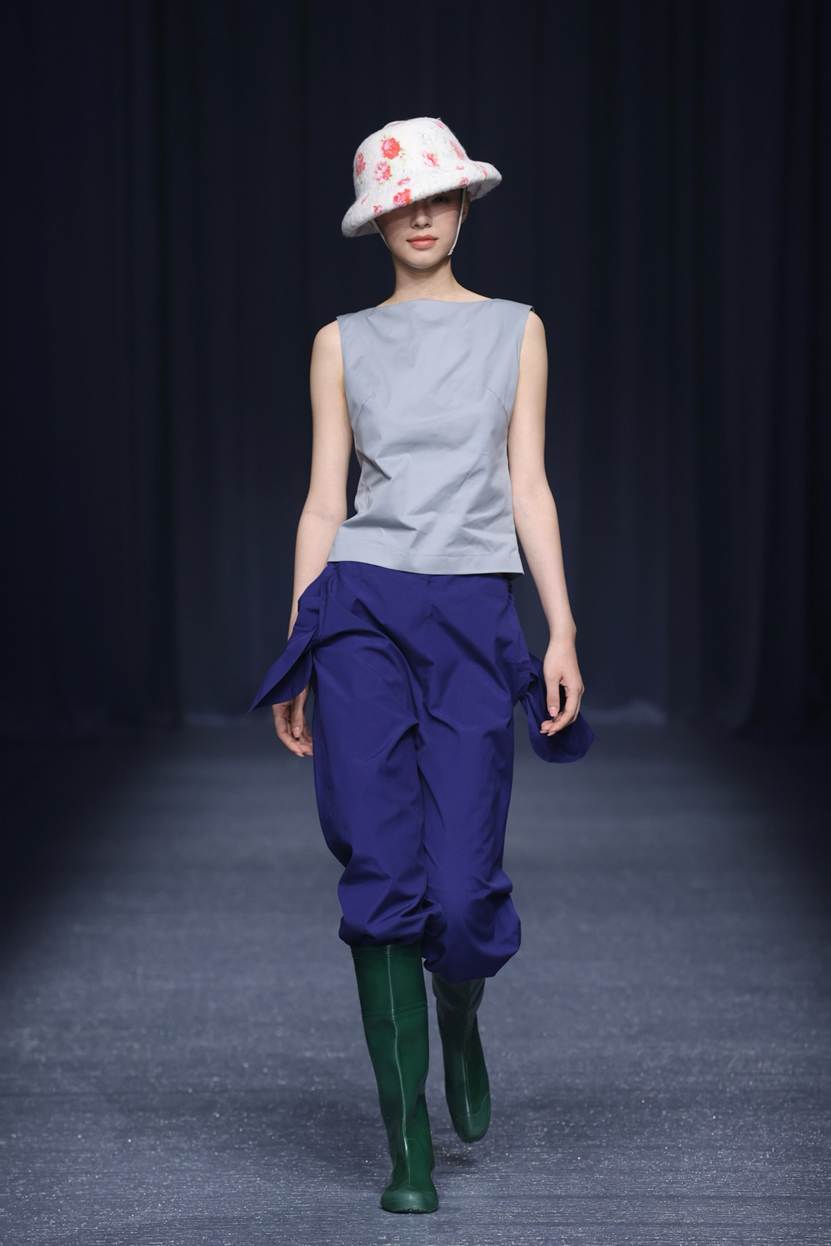
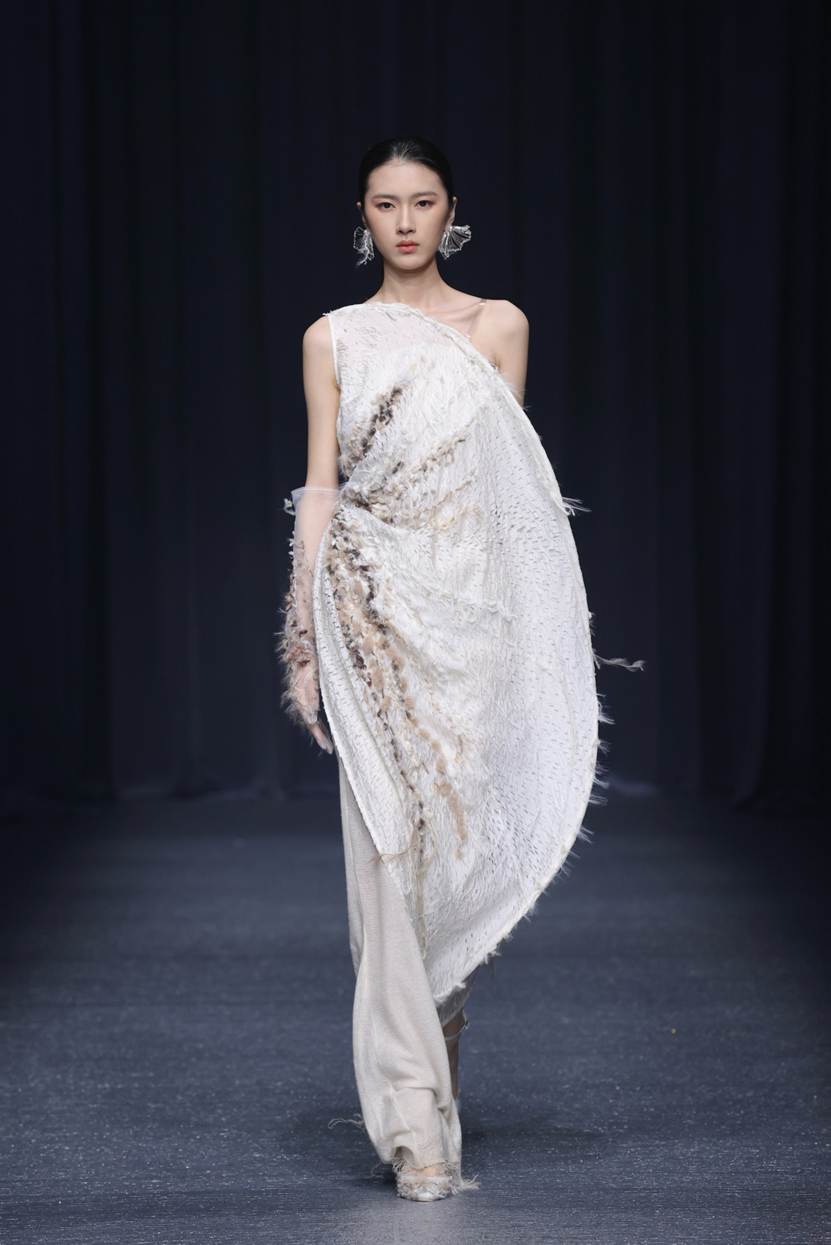
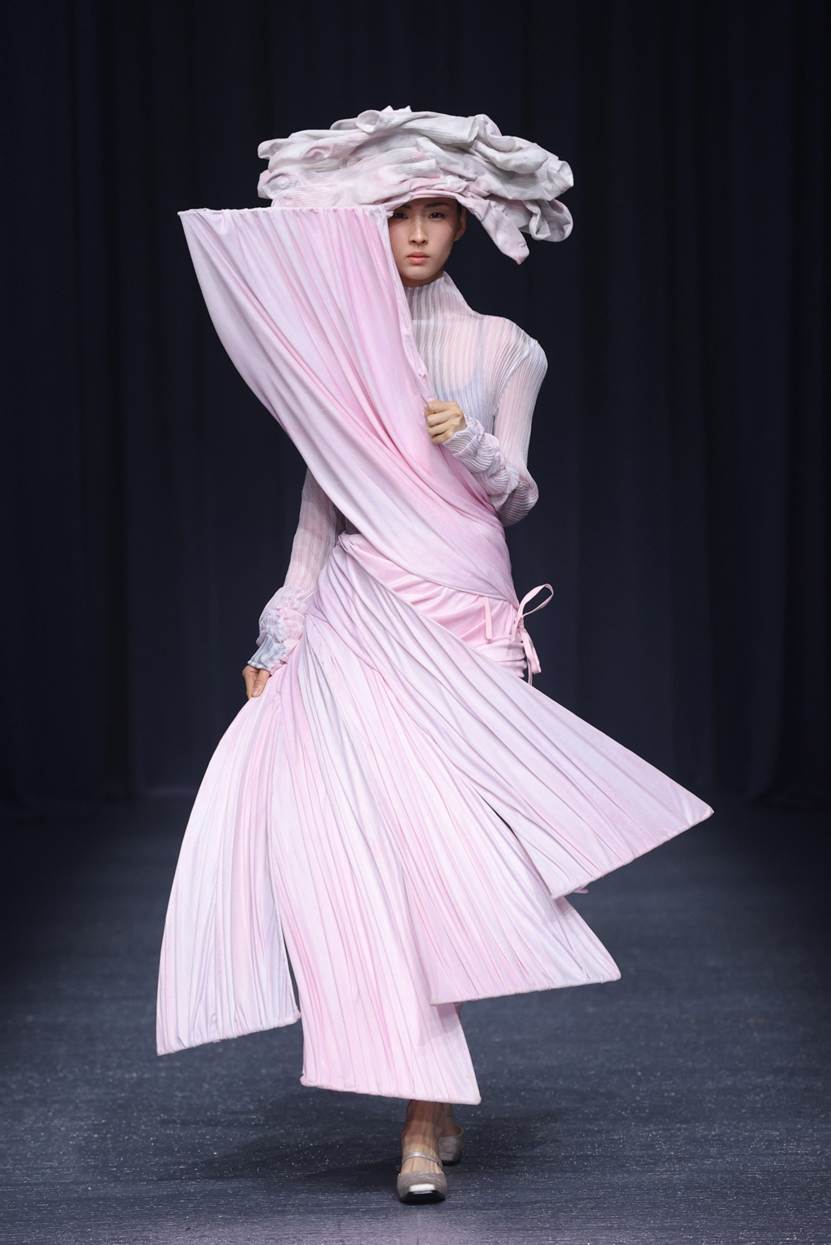
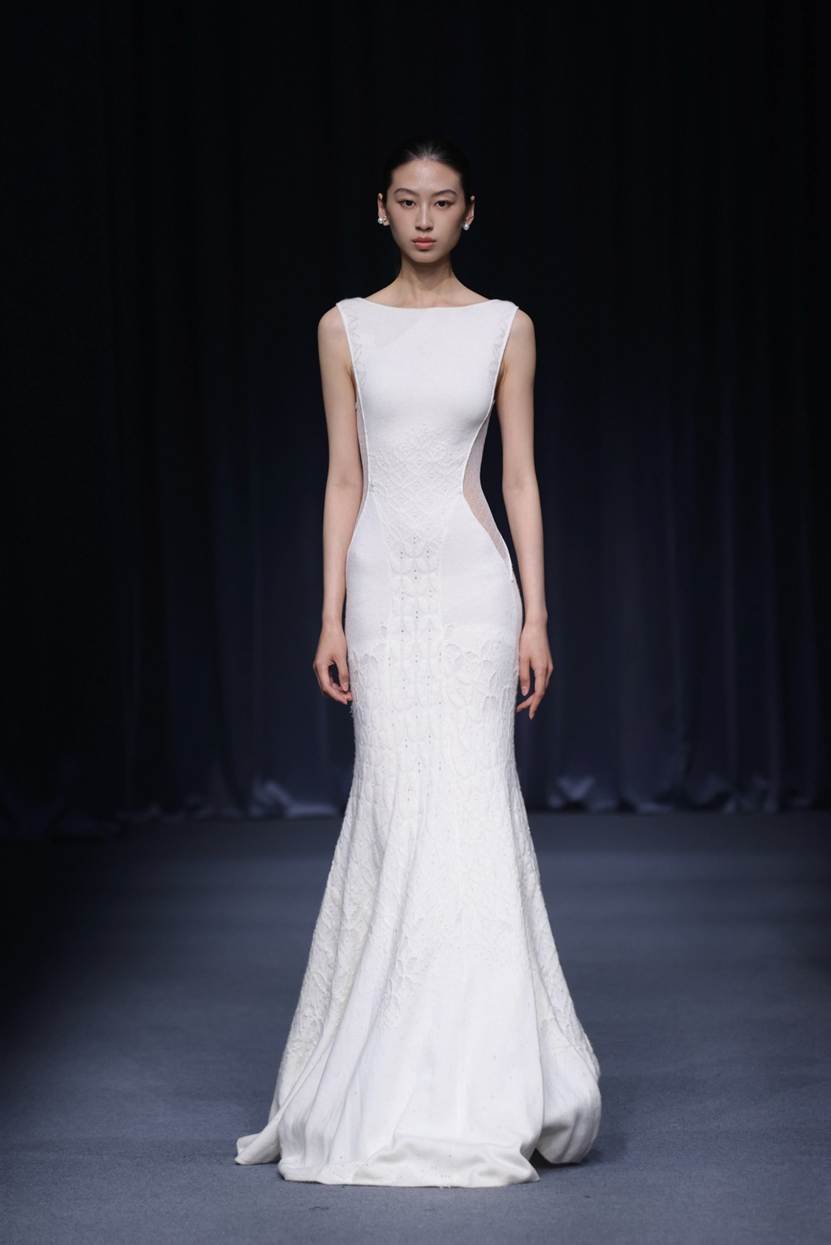
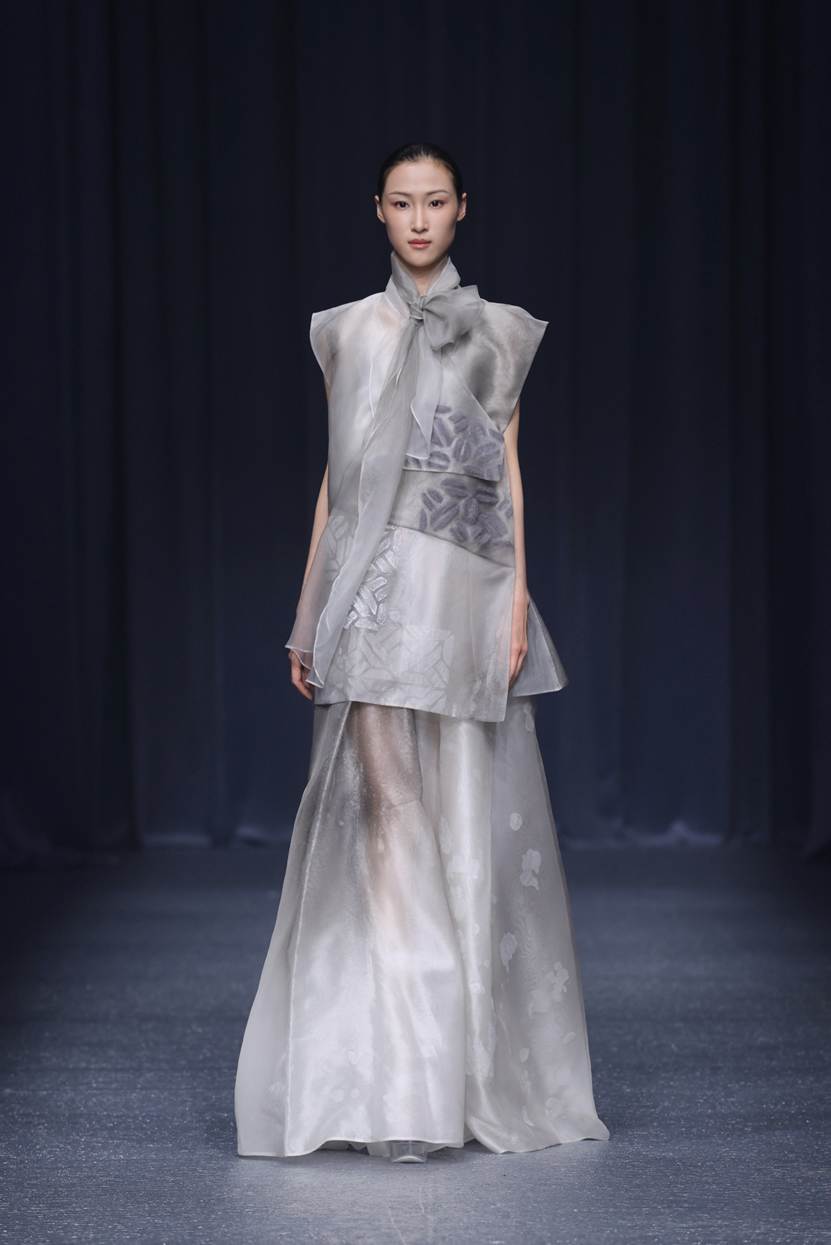
Works Showcase: Academy of Arts & Design, Tsinghua University
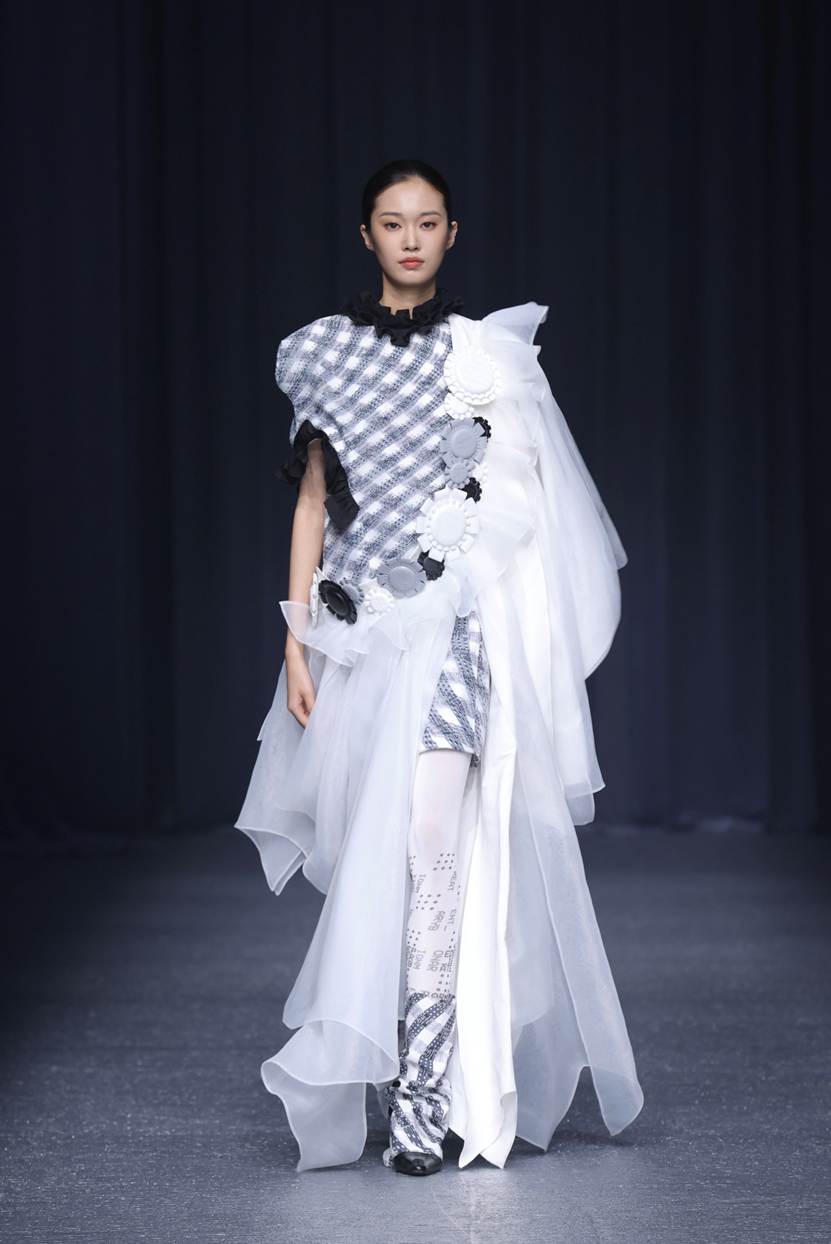
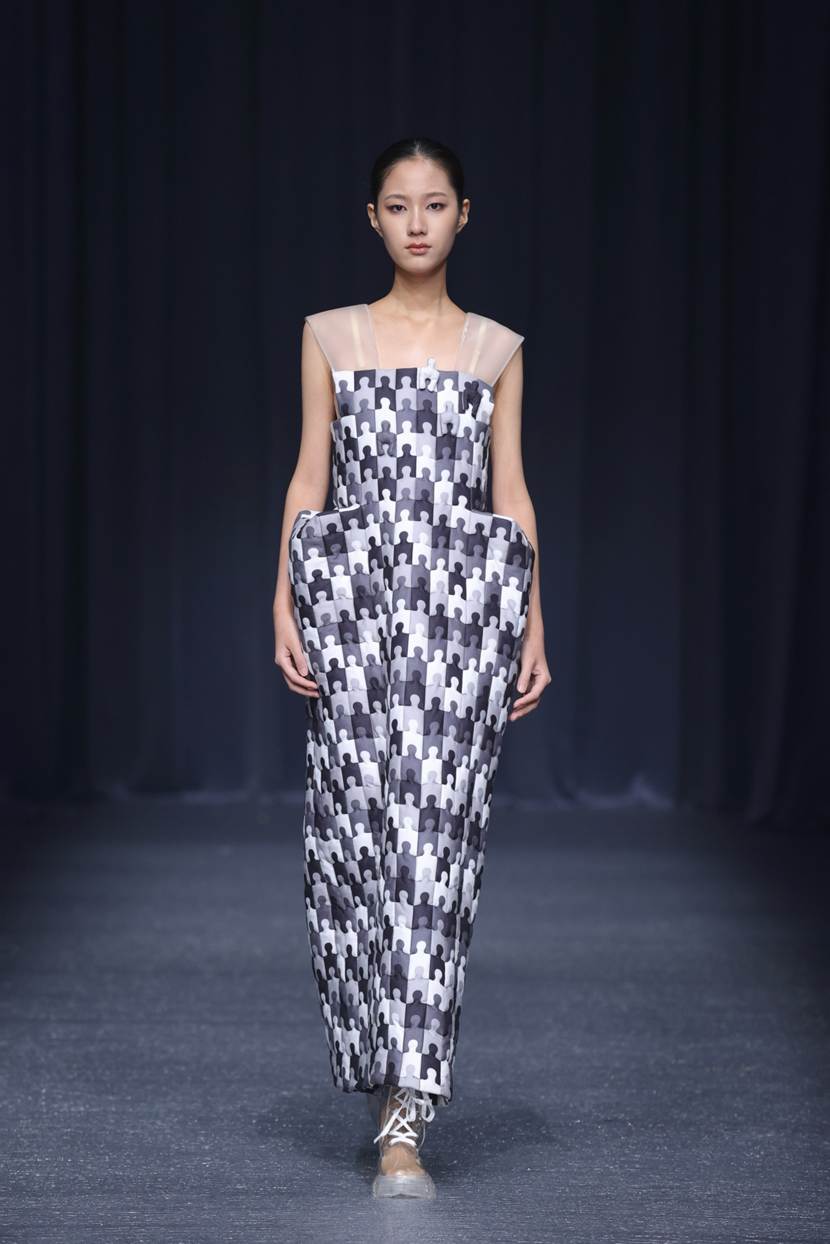
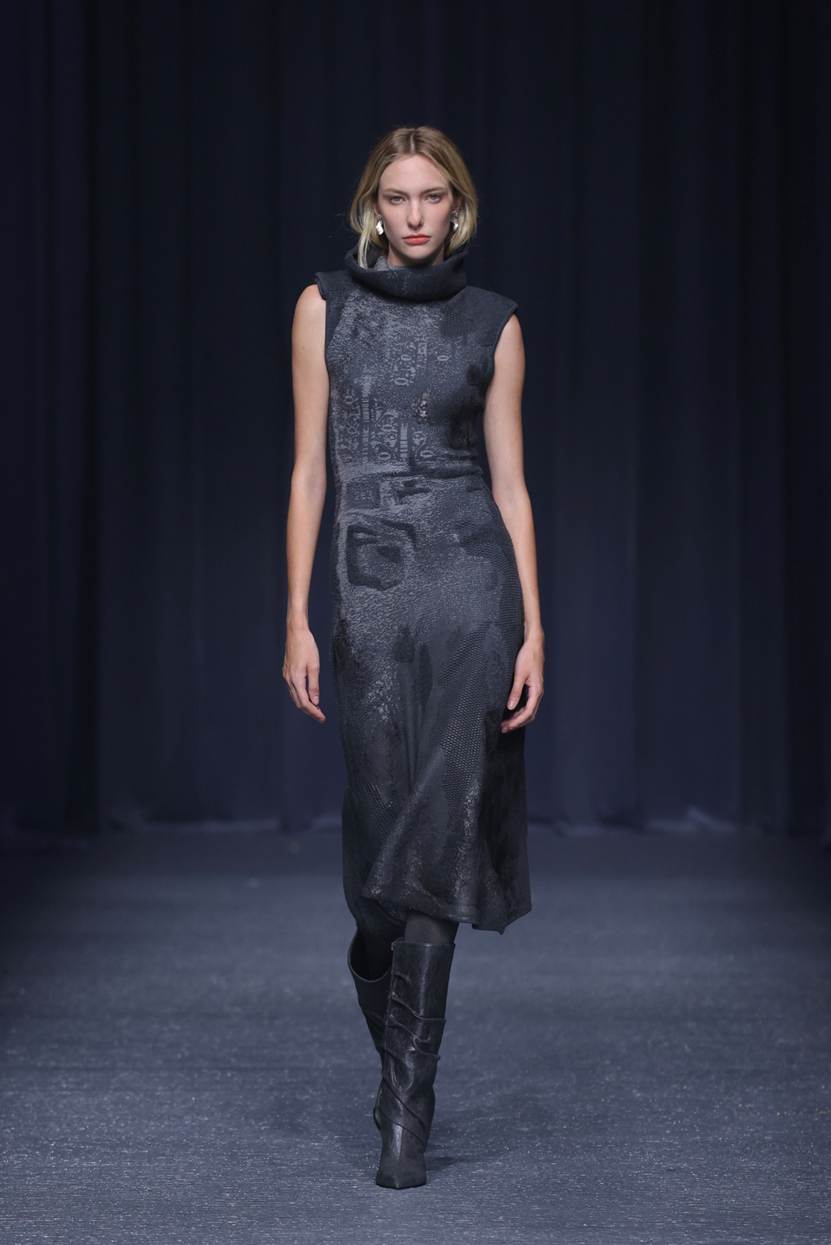
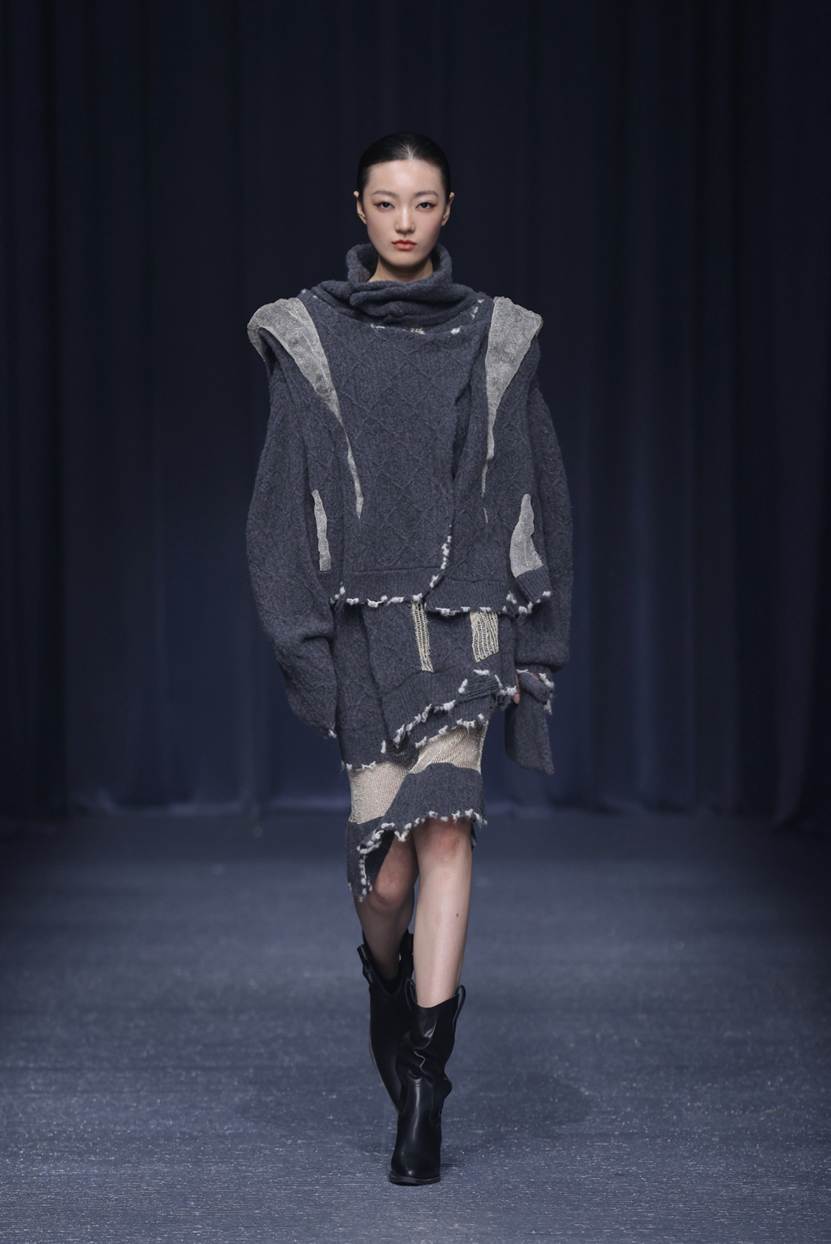
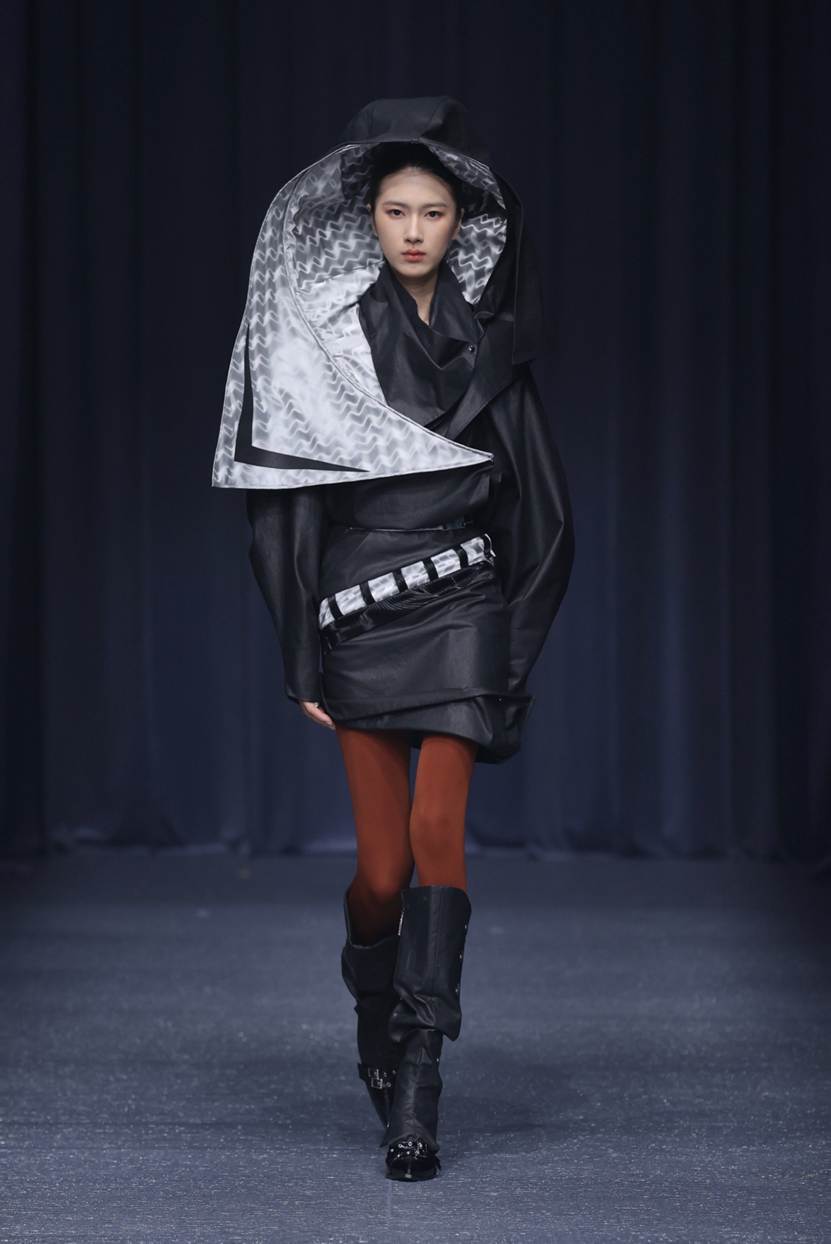
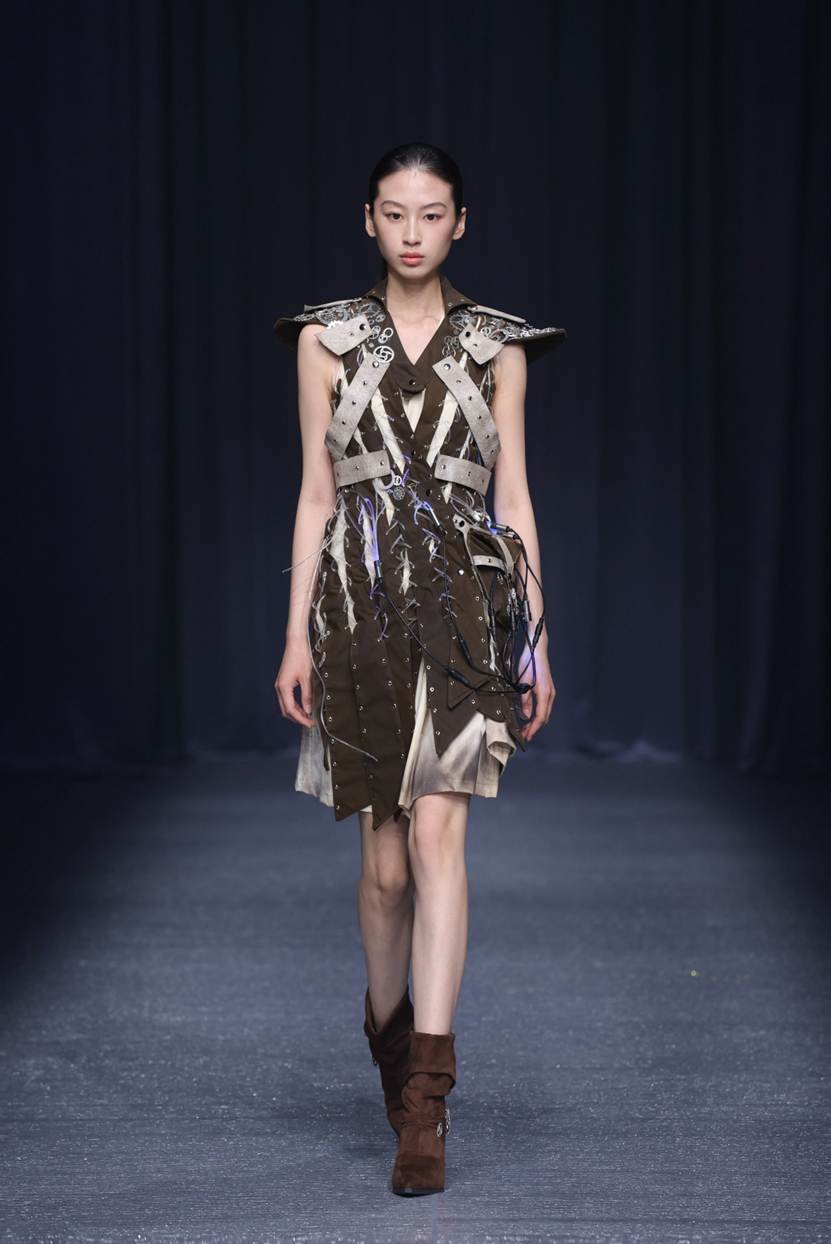
Works Showcase: Nuova Accademia di Belle Arti (NABA)
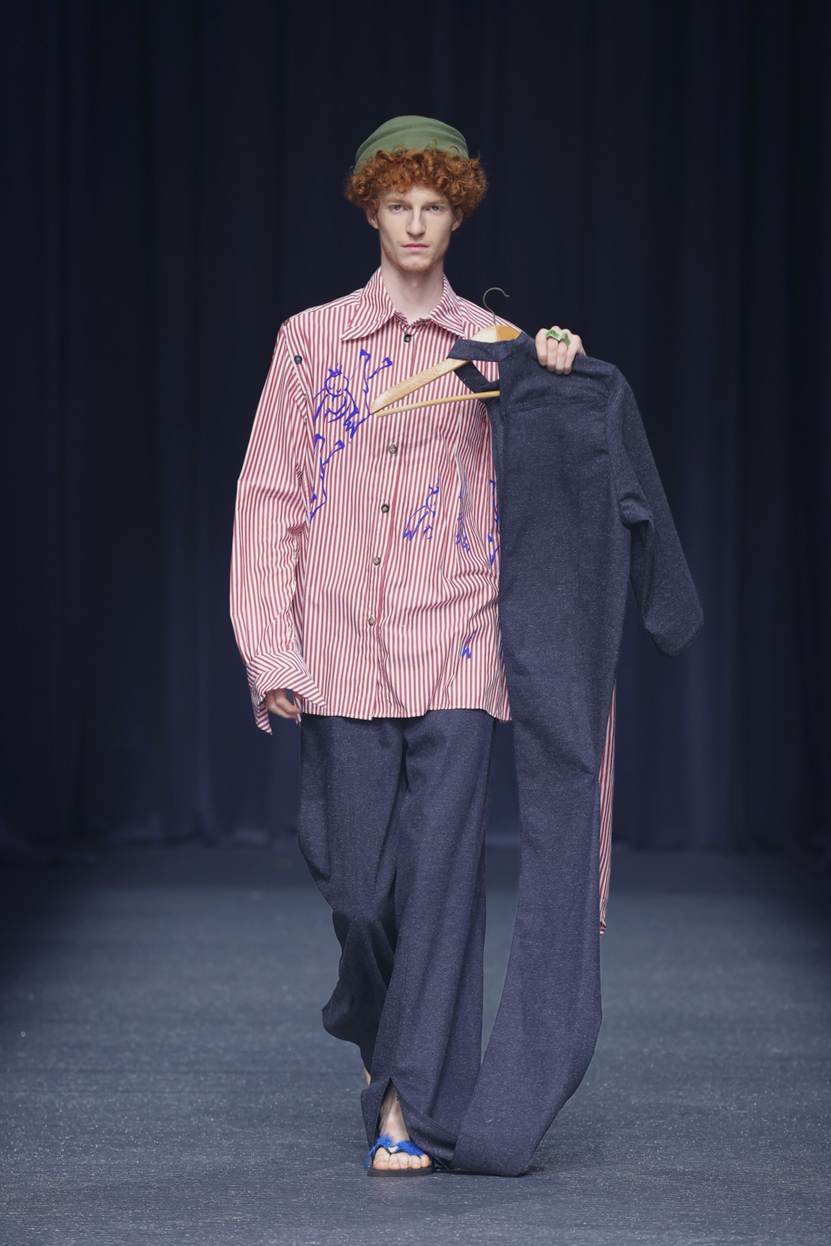
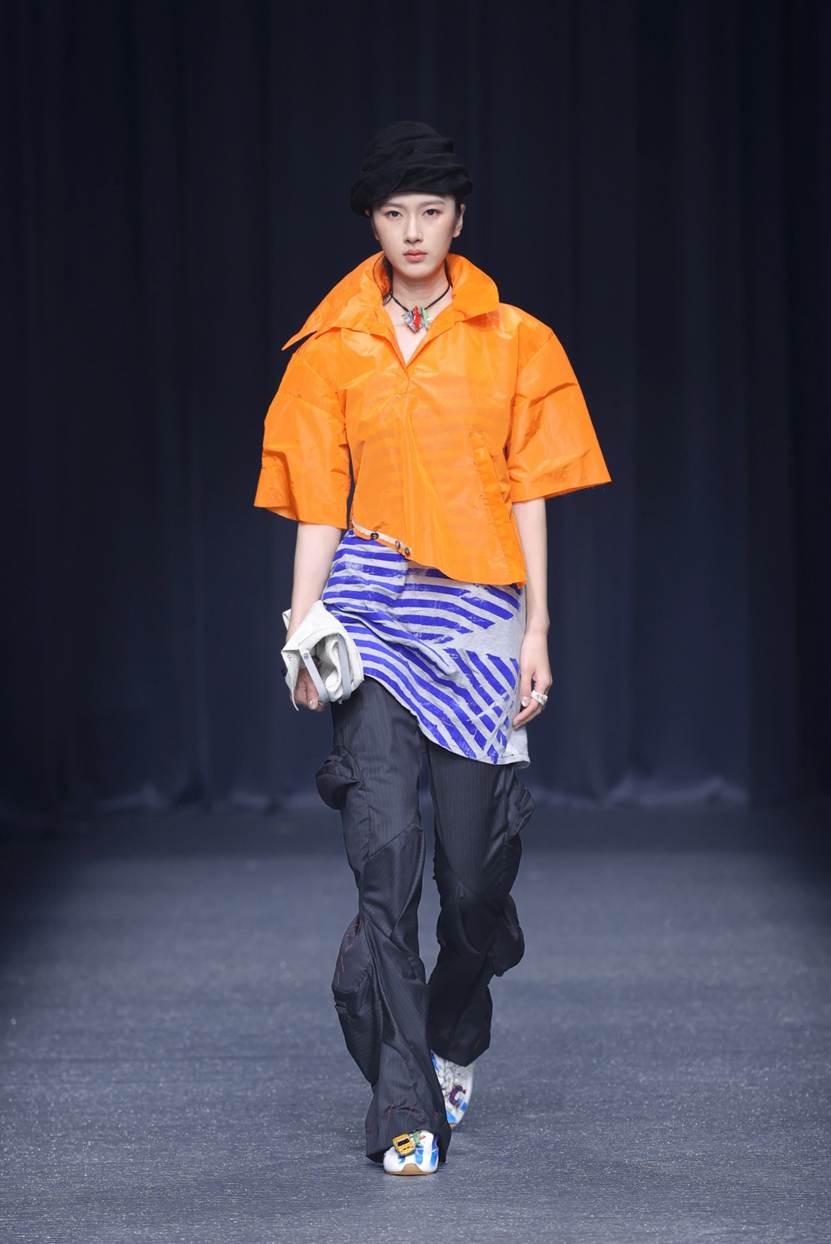
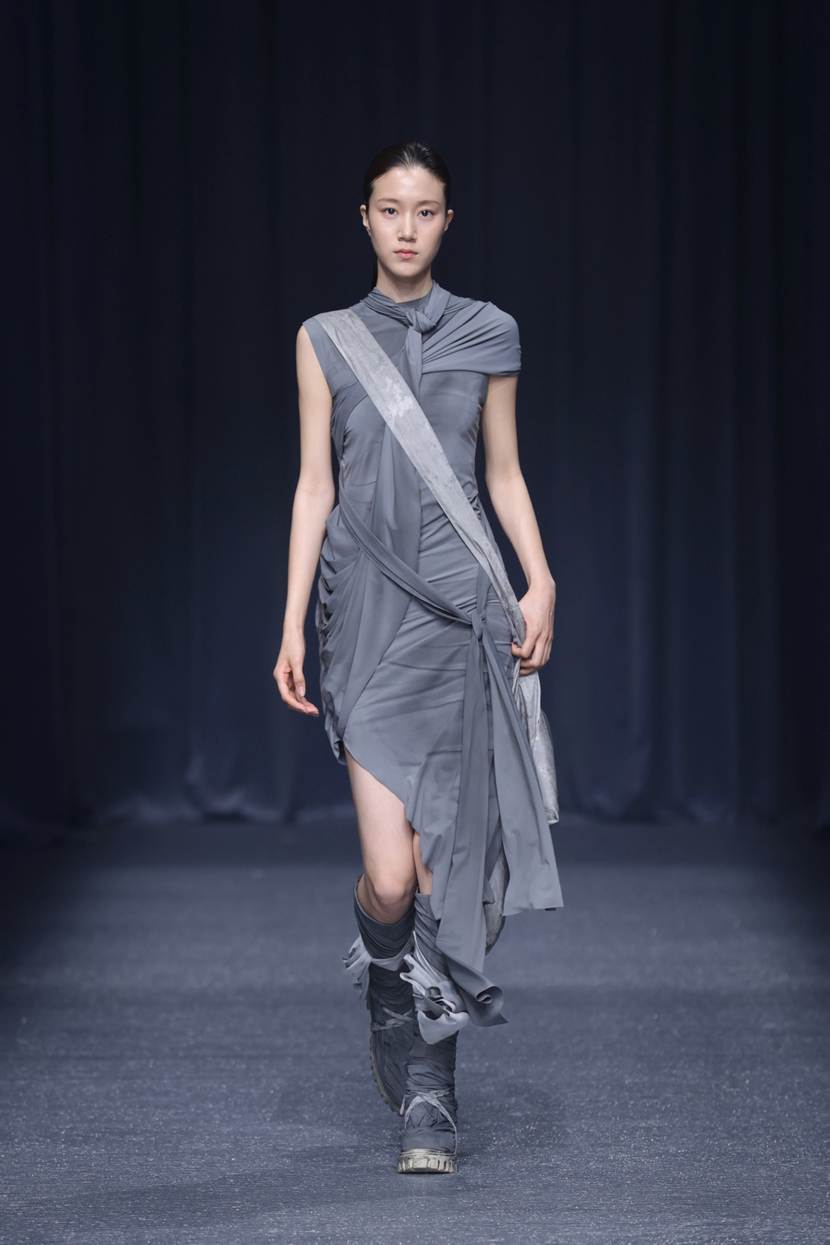
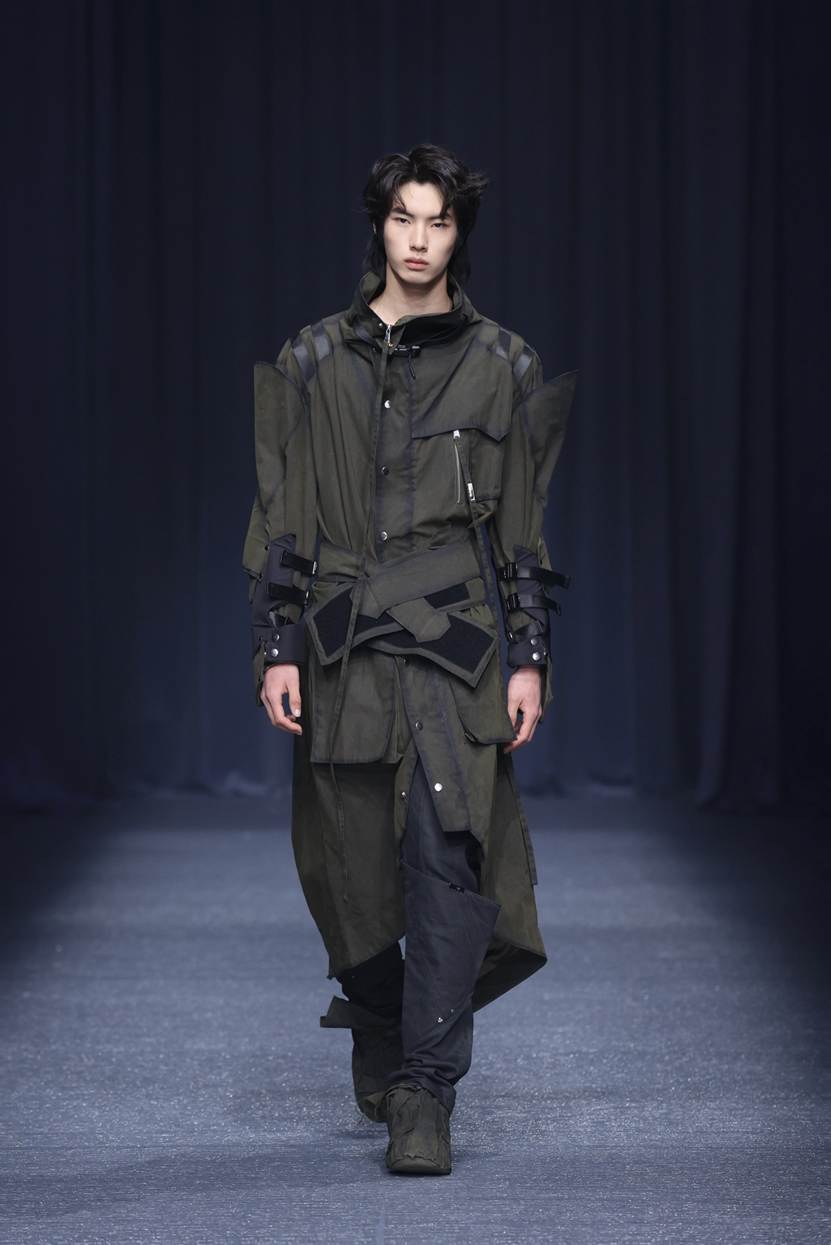
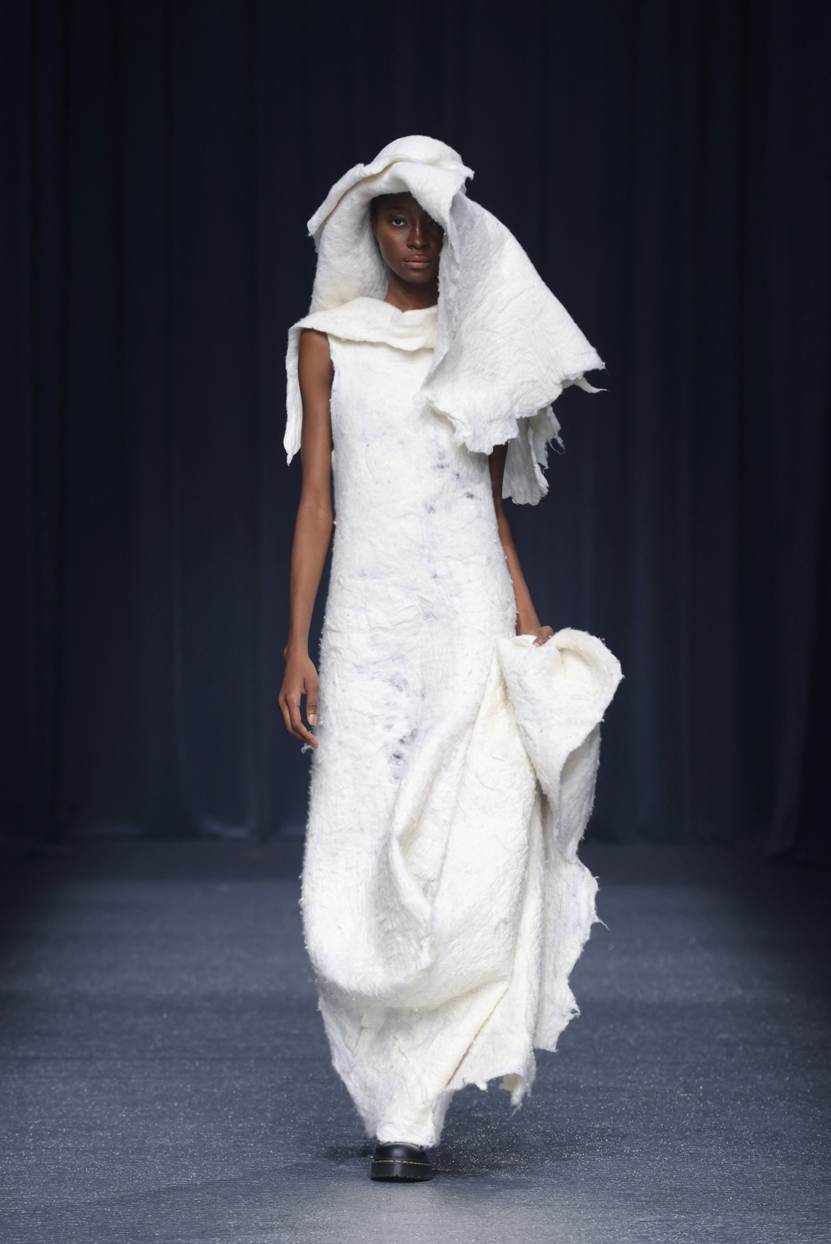
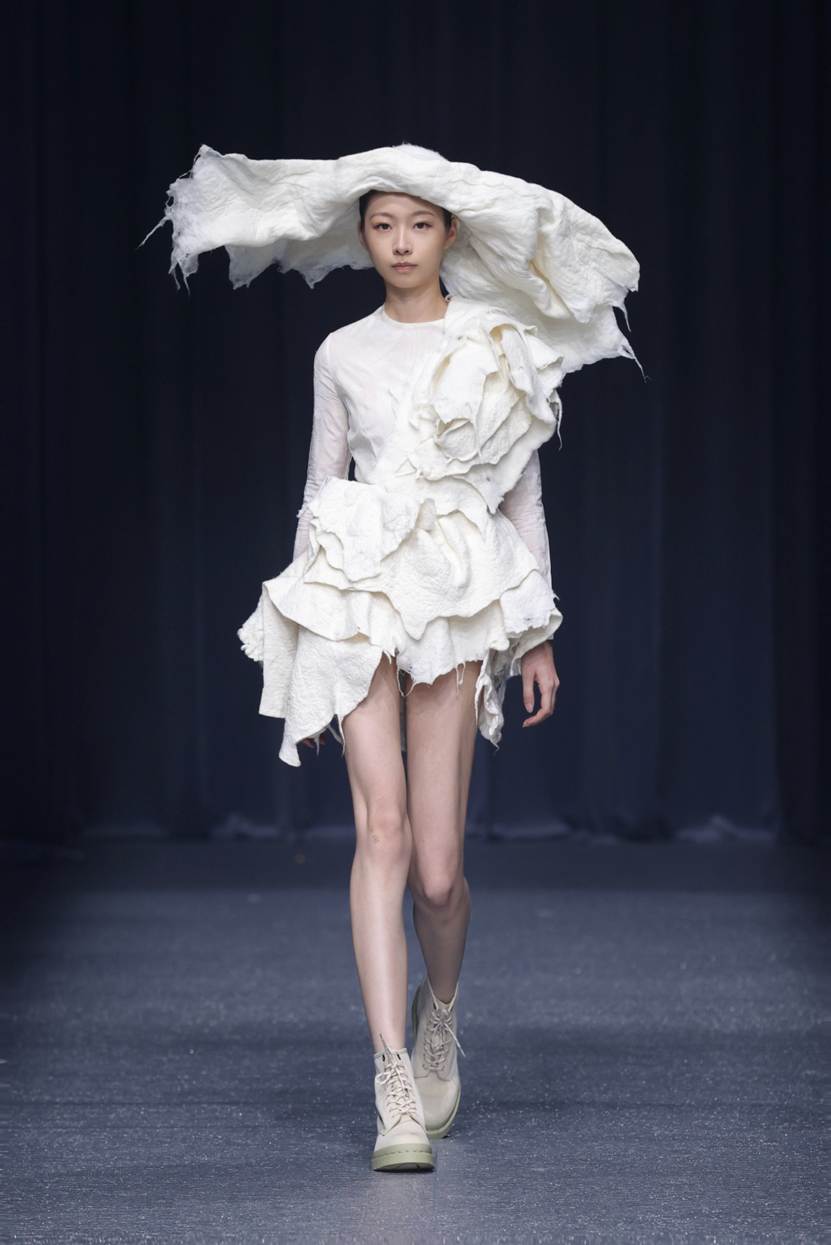
Works Showcase: The Glasgow School of Art