April 16, the “WISDOM OF CHINESE CHARACTERS: A Design Exhibition on Chinese Script and Culture” (Ségur Hall, UNESCO House, Paris) was grandly inaugurated at the headquarters of the United Nations Educational, Scientific and Cultural Organization (UNESCO).
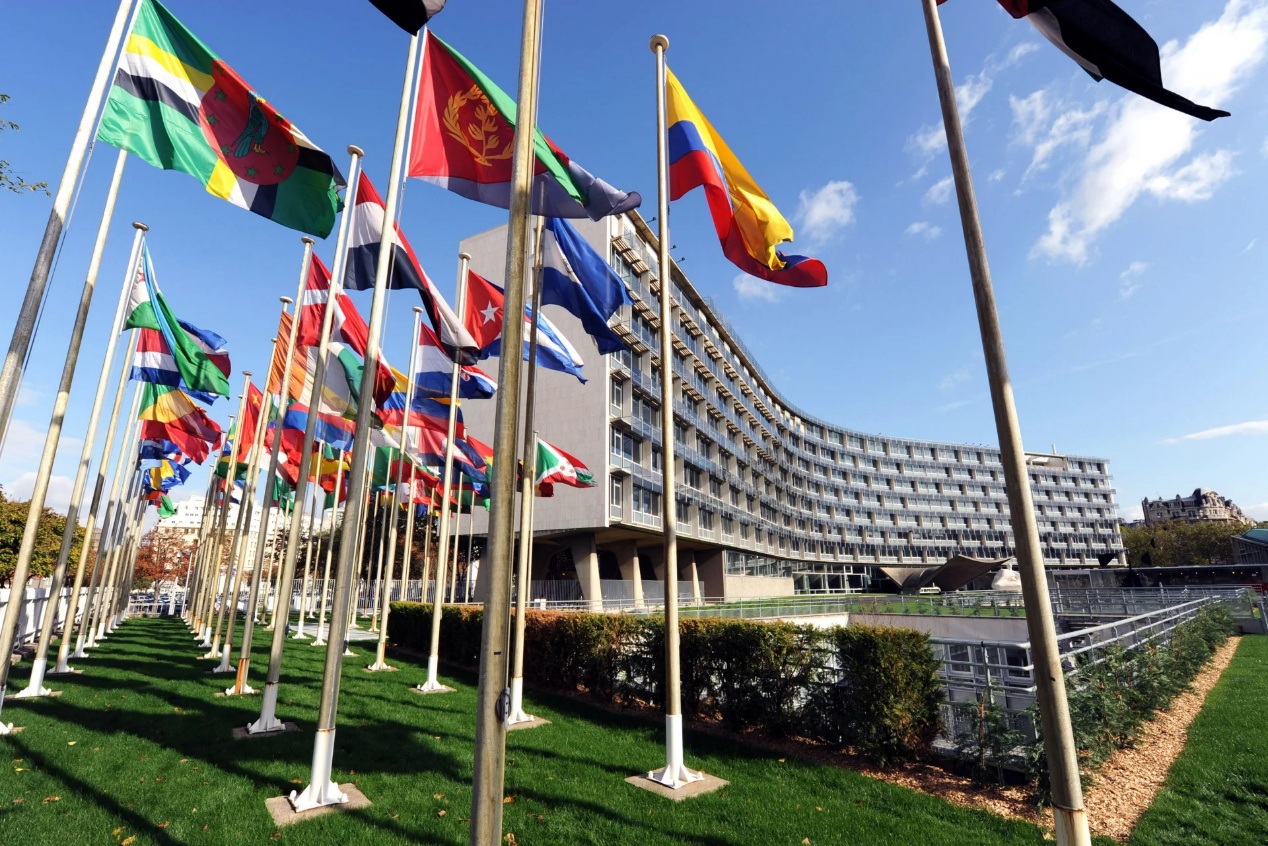
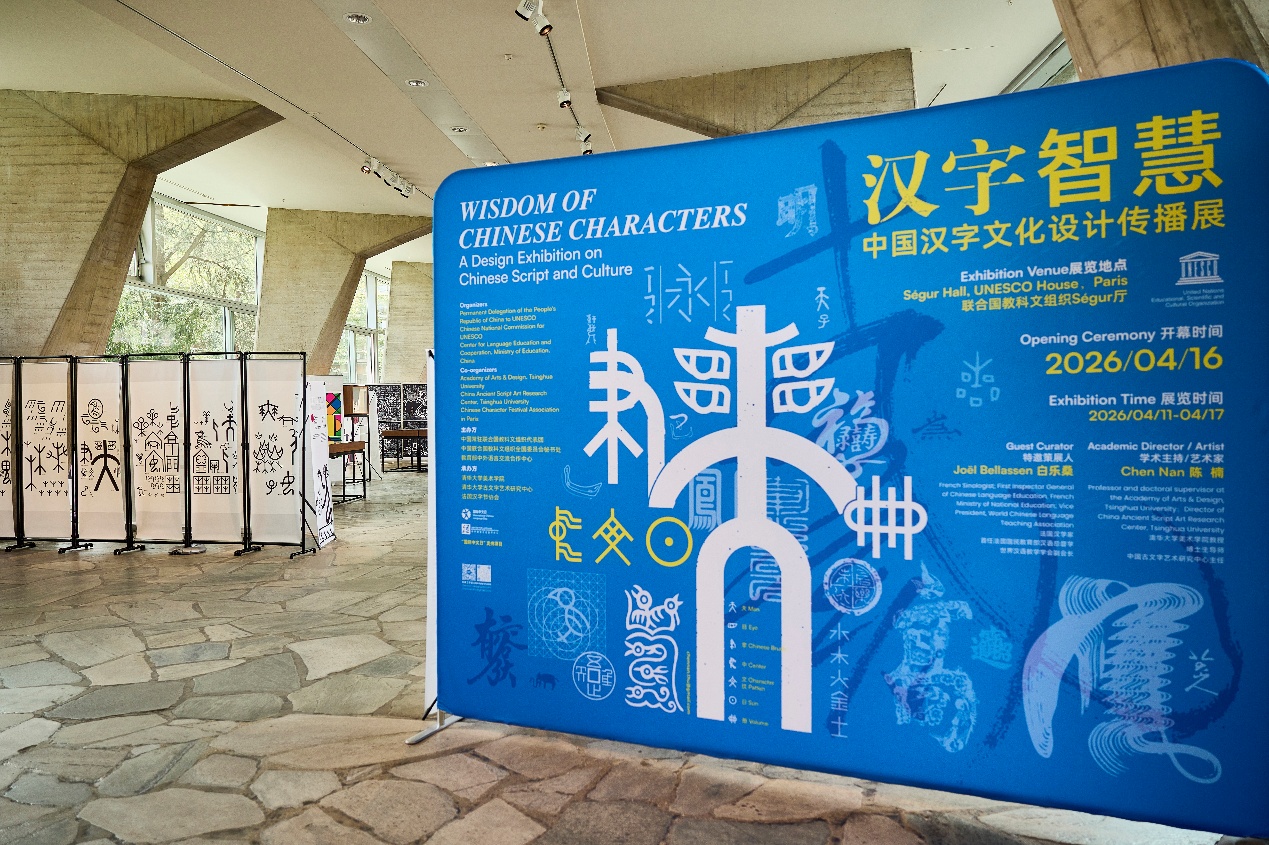
The opening ceremony was attended by a distinguished gathering of more than 300 permanent delegates, diplomats, and cultural luminaries. Prominent attendees included Khondker M. Talha, President of the General Conference of UNESCO; Nasser Bin Hamad Al Hinzab, Chairperson of the Executive Board of UNESCO; Lazare Eloundou Assomo, Director of the UNESCO World Heritage Centre; Yang Xinyu, Ambassador and Permanent Delegate of China to UNESCO; Wang Ying, Deputy Permanent Delegate of China to UNESCO; Joël Bellassen, renowned French Sinologist and Honorary President of the European Association for Chinese Teaching; and Chen Nan, the exhibition’s featured artist and Professor at the Academy of Arts & Design, Tsinghua University.
The exhibition was jointly hosted by the Permanent Delegation of the People’s Republic of China to UNESCO, the Chinese National Commission for UNESCO, and the Center for Language Education and Cooperation (CLEC) of the Chinese Ministry of Education. It was co-organized by the Academy of Arts & Design, Tsinghua University, the Research Center for Ancient Chinese Character Art at Tsinghua University, and the French Association for the Chinese Character Festival. Professor Chen Nan served as the general planner and primary artist of the exhibition, while French Sinologist Joël Bellassen acted as the special guest curator.
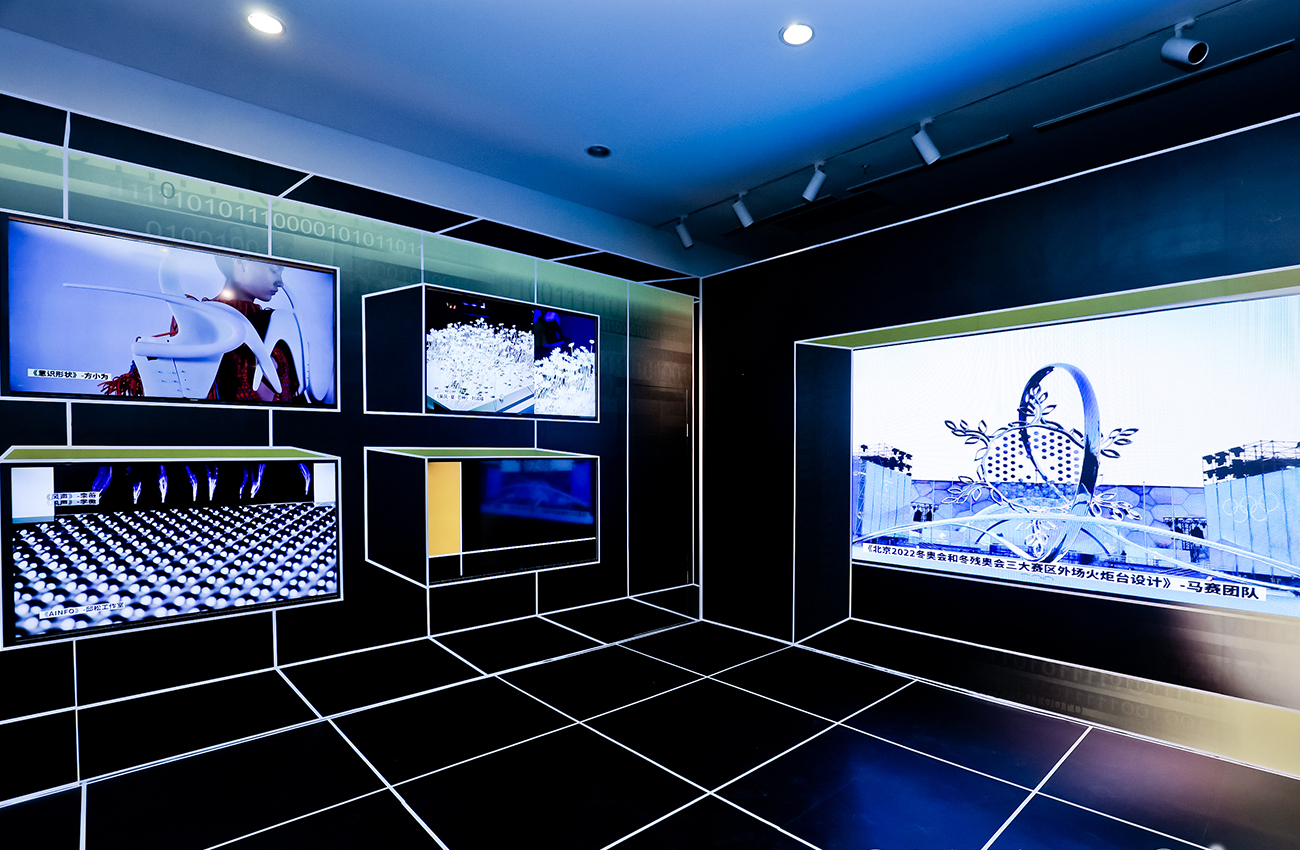
Highlighting the artistic design of Chinese characters through a systemic design perspective, the exhibition vividly illustrates the design wisdom of Chinese characters embedded in various aspects of daily life: clothing, food, housing, and transportation. This is achieved through multidimensional formats, including flat visual art, art installations, information visualization charts, pop-up books, and video projections. The event also comprehensively demonstrated the remarkable achievements of Professor Chen Nan’s team over the past three decades in the fields of Chinese character art design and cultural communication.
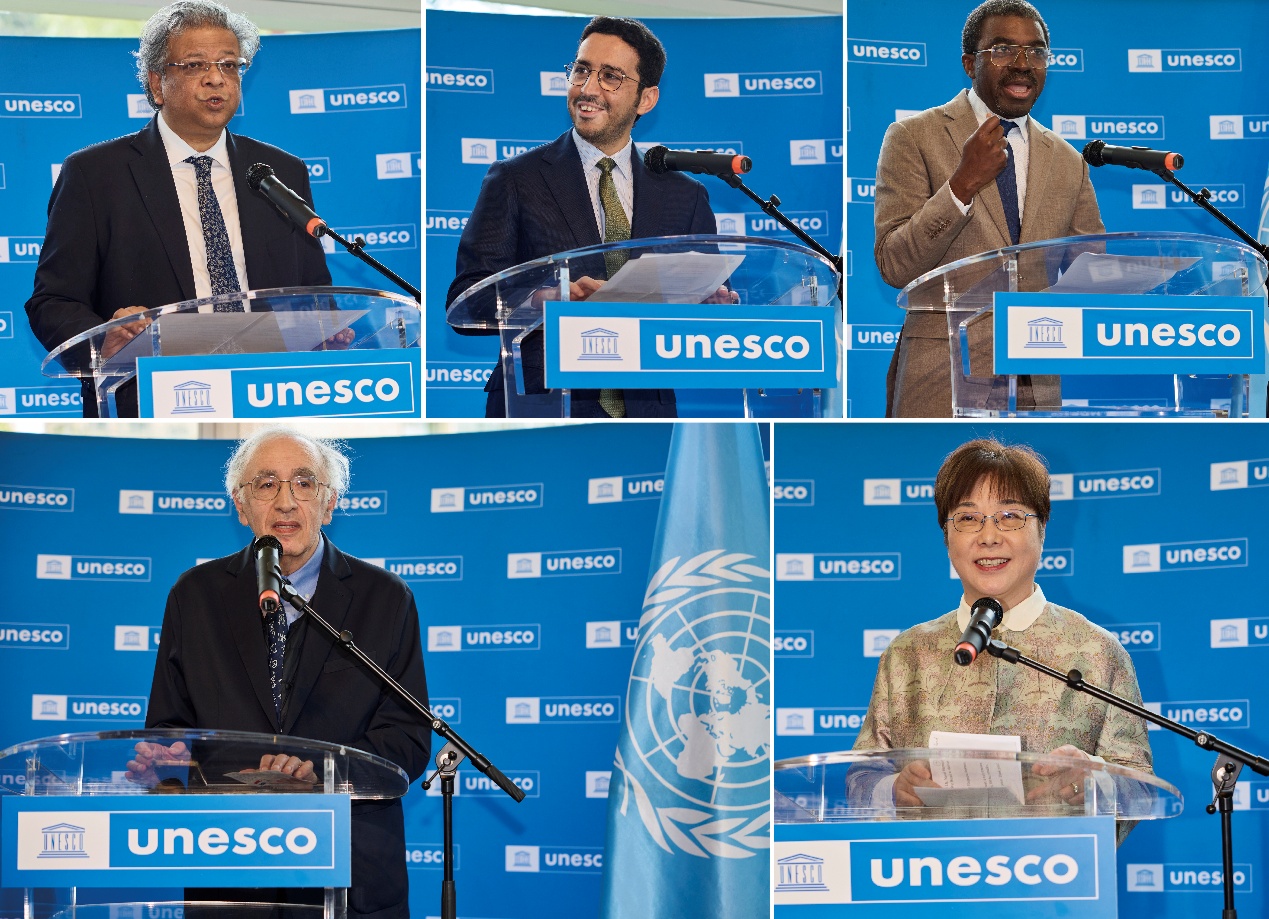
During the opening ceremony, passionate remarks were delivered by prominent figures including Khondker M. Talha, Nasser Bin Hamad Al Hinzab, Lazare Eloundou Assomo,
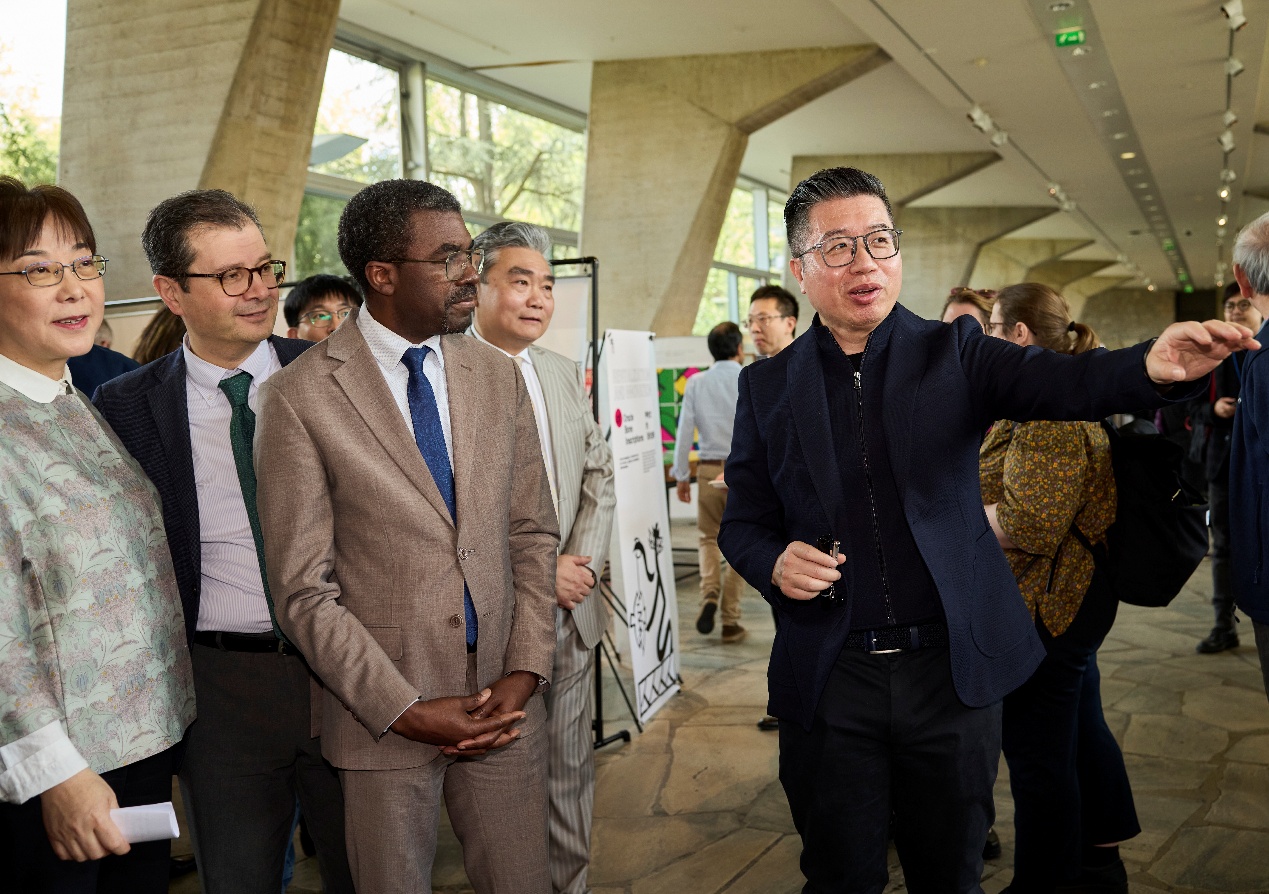
Joël Bellassen, and Ambassador Yang Xinyu. Furthermore, Professor Chen Nan, who also serves as the Director of the Research Center for Ancient Chinese Character Art at Tsinghua University, provided an insightful guided introduction to the exhibition.
In their speeches, the UNESCO leaders jointly emphasized that the Chinese language, as one of the most widely used languages globally and an official language of the United Nations since 1946, plays an instrumental role in fostering international exchange and cross-civilizational dialogue. They noted that the exhibition allows audiences to trace the evolutionary trajectory of writing across different historical epochs and witness its contemporary continuation and transformation. This provides an intuitive pathway for international audiences of diverse cultural backgrounds to gain deep insights, serving as a vital reference point for contemporary society to appreciate cultural diversity.
Ambassador Yang Xinyu stated that Chinese characters stand as the core visual symbols of Chinese civilization. They represent the only self-forming writing system in the world that has been in continuous use for thousands of years, seamlessly integrating the functions of information transmission, aesthetic experience, and cultural inheritance. In an era of globalization, viewing Chinese characters through the lens of design translation and visual expression allows them to enter the international communication arena in a highly perceptible manner, significantly deepening mutual understanding and communication between different cultures.
Mr. Bellassen articulated that as an ideographic system, Chinese characters hold a singularly unique position within the global linguistic landscape. Their profound meaning manifests not only in their functional linguistic recording but also in their magnificent visual structures and cultural symbolism. He commended Professor Chen Nan’s profound research into the wisdom of Chinese characters from a design perspective. By employing contemporary design methodologies to reinterpret ancient characters, Chen has extended their relevance into new contexts, successfully building a robust bridge for cross-cultural understanding.
During his curatorial walkthrough, Professor Chen Nan elaborated on the exhibition’s philosophy. The narrative threads were distinctly organized into two main parts: the study of traditional design wisdom of Chinese characters and their contemporary innovative revitalization. He detailed traditional design milestones backed by his comprehensive monograph A History of Chinese Character Design, and showcased subsequent innovative design portfolios focusing heavily on Oracle Bone Inscriptions (Jiaguwen).
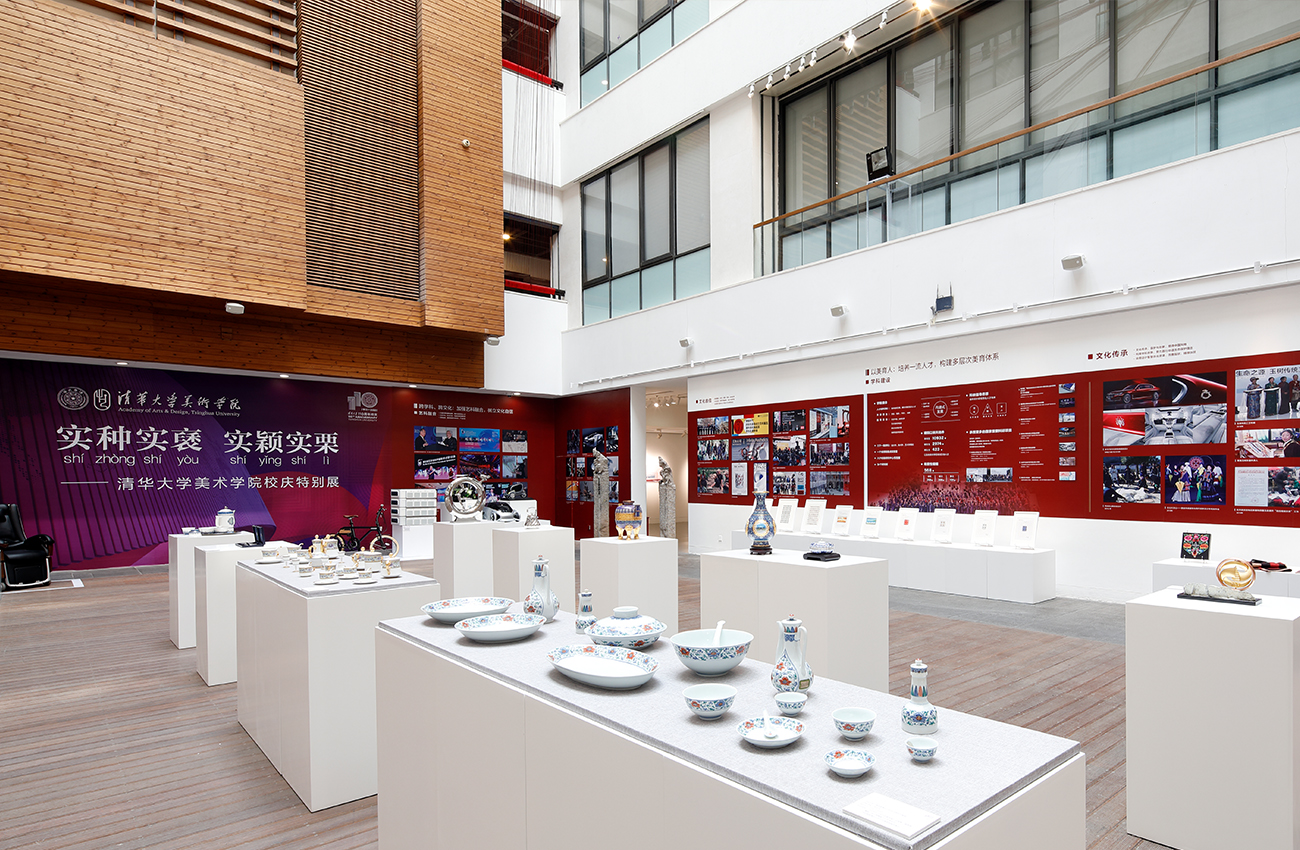
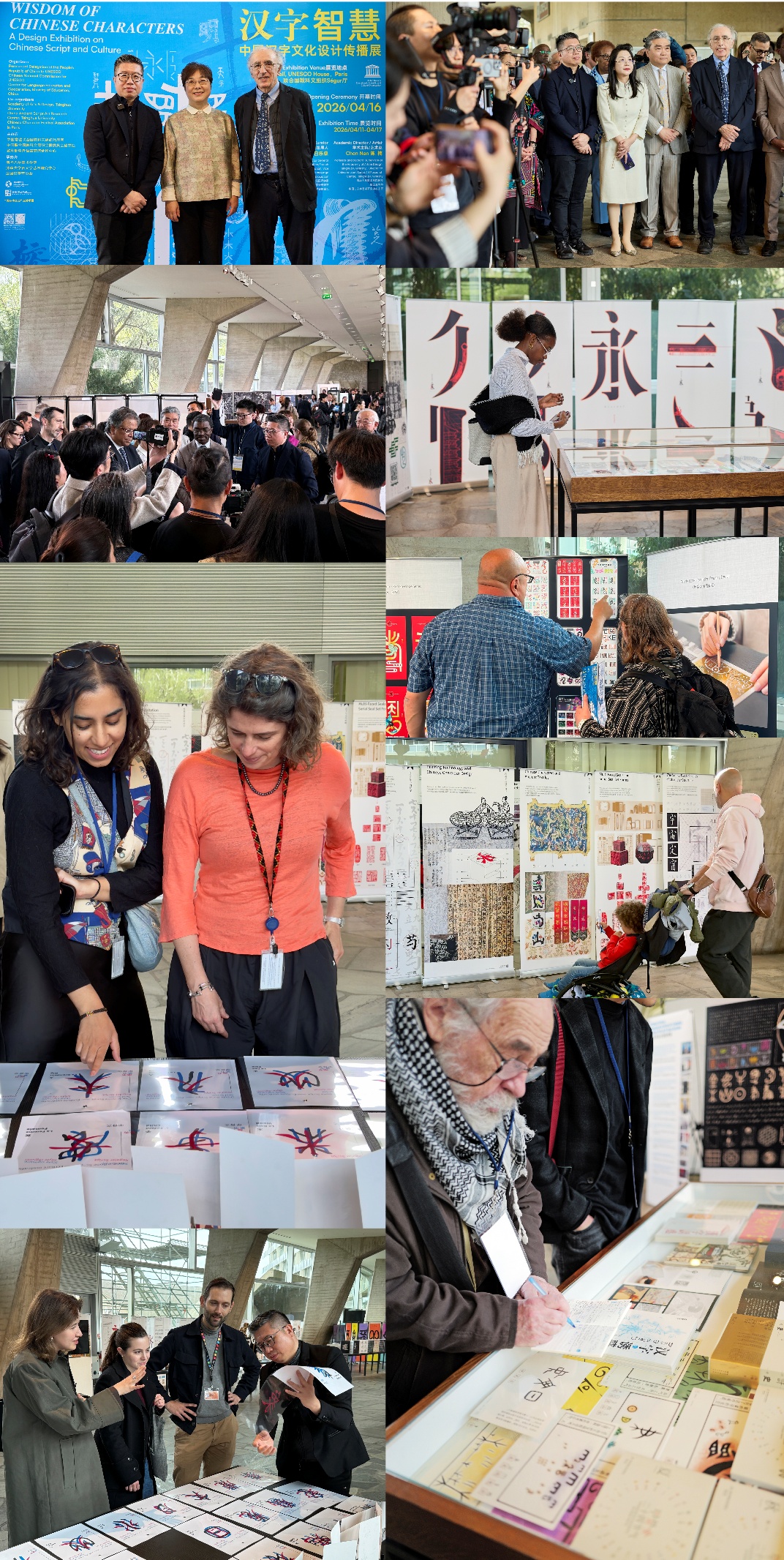
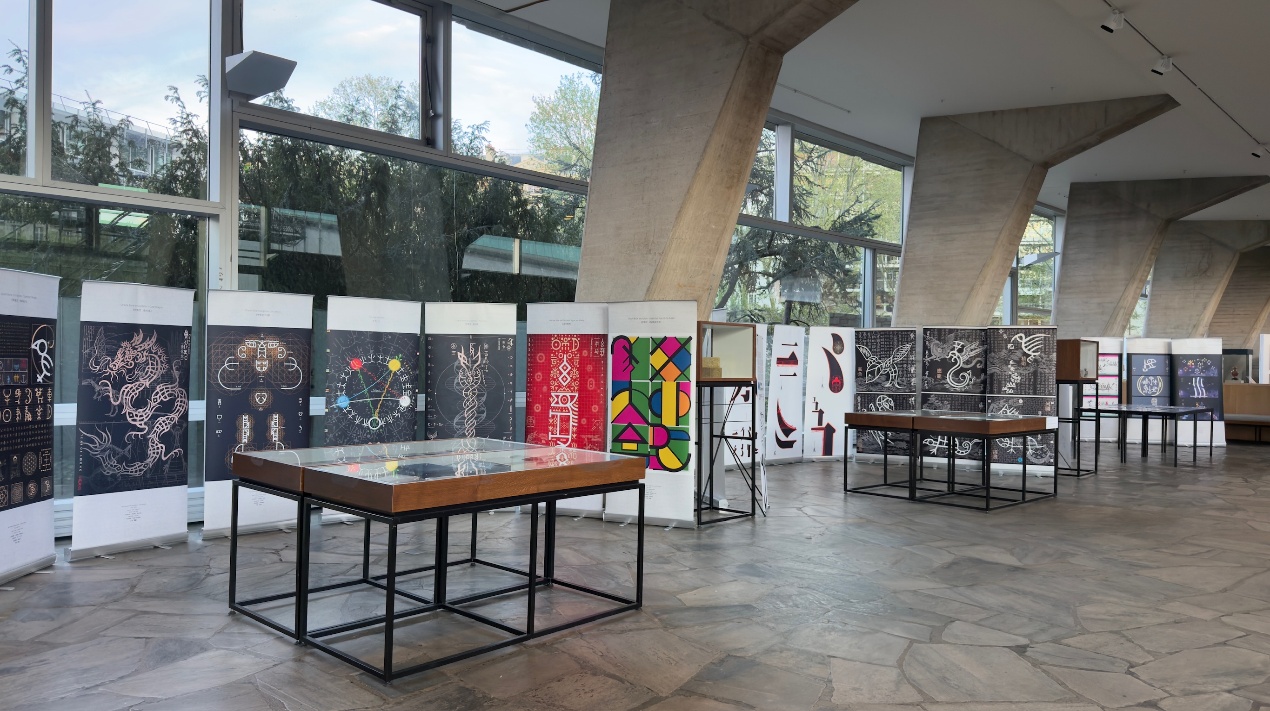
Exhibition Scene
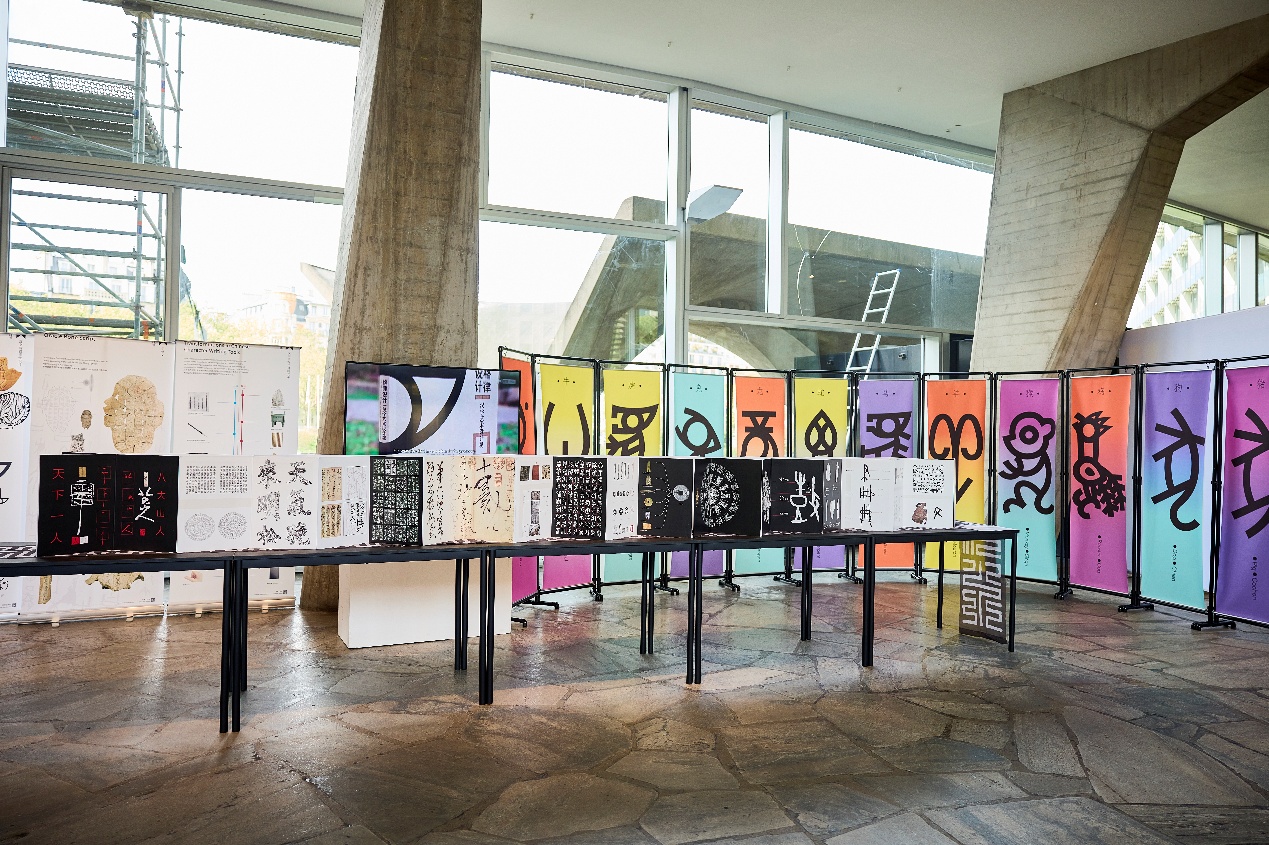
The exhibition hall was bustling with unparalleled enthusiasm. Numerous distinguished guests noted that the systematic visual framework established by the exhibition enabled them to comprehend Chinese characters thoroughly from a structural dimension, moving far beyond mere surface-level phonetic or symbolic recognition.
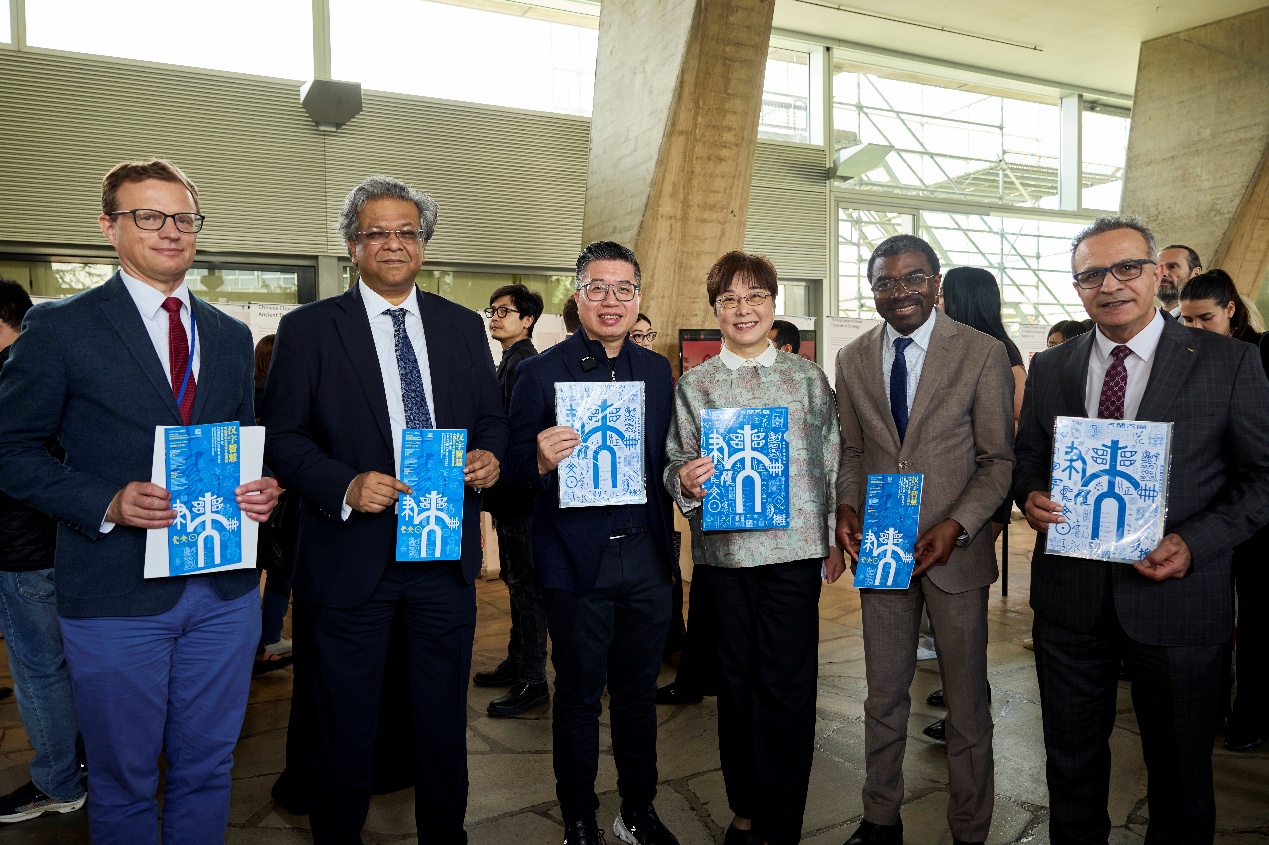
Exhibition Scene
Exhibition Content
Serving as the quintessential visual symbol of Chinese civilization, Chinese characters possess the triple attributes of conveying information, delivering aesthetics, and echoing cultural heritage. Crucially, they act as an indispensable bridge for people worldwide seeking to learn Chinese and profoundly comprehend China’s outstanding cultural legacy.
Leveraging visual, graphical, and artistic design languages, the exhibition systematically curates and translates historical documents of Chinese characters into contemporary visual designs. It structurally unveils the ancient wisdom in character creation, eastern aesthetic principles, decorative methodologies, and deep cultural connotations. The showcase is divided into four thematic modules: “Origin and Development of Chinese Characters,” “Structure and Formation of Chinese Characters,” “Decoration and Beautification of Chinese Characters,” and “Innovation and Cultural Dissemination of Chinese Characters.”
Using progressive mediums such as interactive experiences, pop-up books, and installations, the exhibition shortens the cultural distance for language learners and international audiences. By achieving an educational escalation from “basic character recognition” to “deep cultural empathy,” the showcase strongly bolsters the international integration of Chinese language learning and broadens the influence of the global “UN Chinese Language Day” initiatives.
First Part: Design Wisdom in the Evolution of Chinese Characters
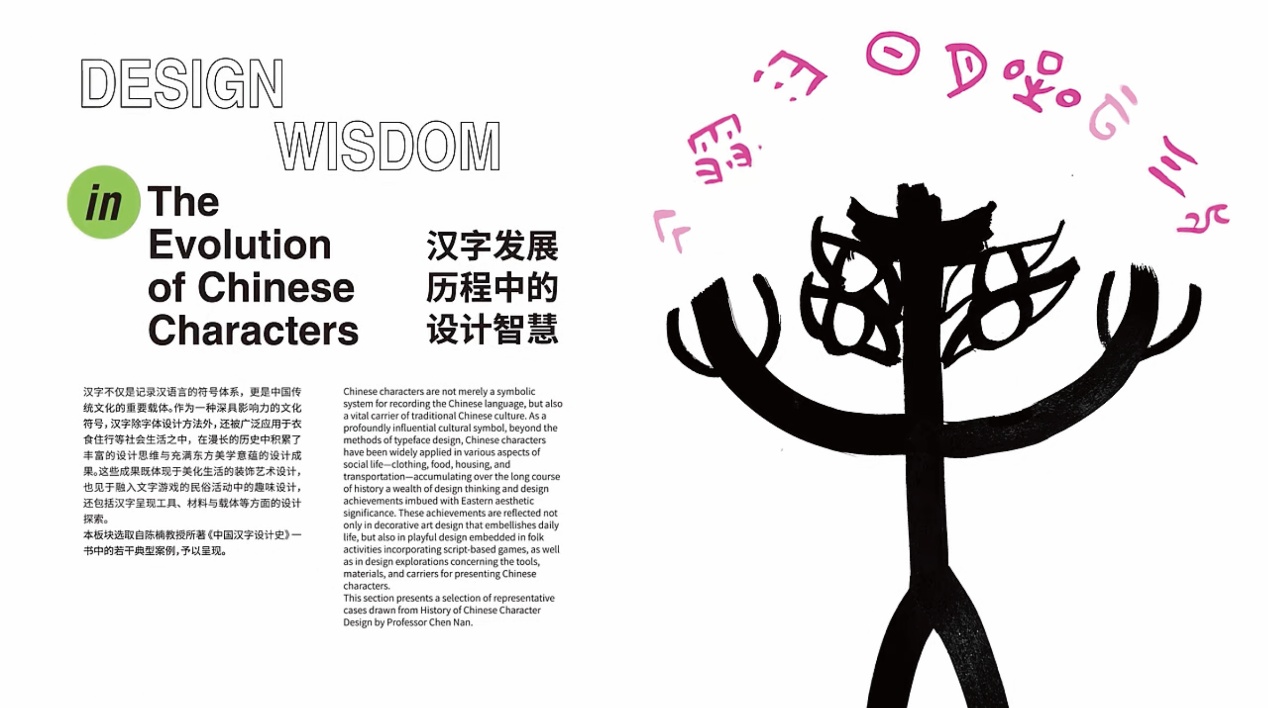
Chinese characters are not solely a phonetic system for the spoken language; they are monumental vessels of traditional Chinese culture. Beyond standard typographical design methods, characters have historically permeated all facets of daily life (clothing, food, shelter, mobility), aggregating immense visual design thinking rooted in Eastern aesthetics. These range from functional domestic decorations to engaging typography in folk wordplay to the profound evolution of writing tools and physical mediums. This section curates classic case studies derived directly from Professor Chen Nan’s seminal book A History of Chinese Character Design.
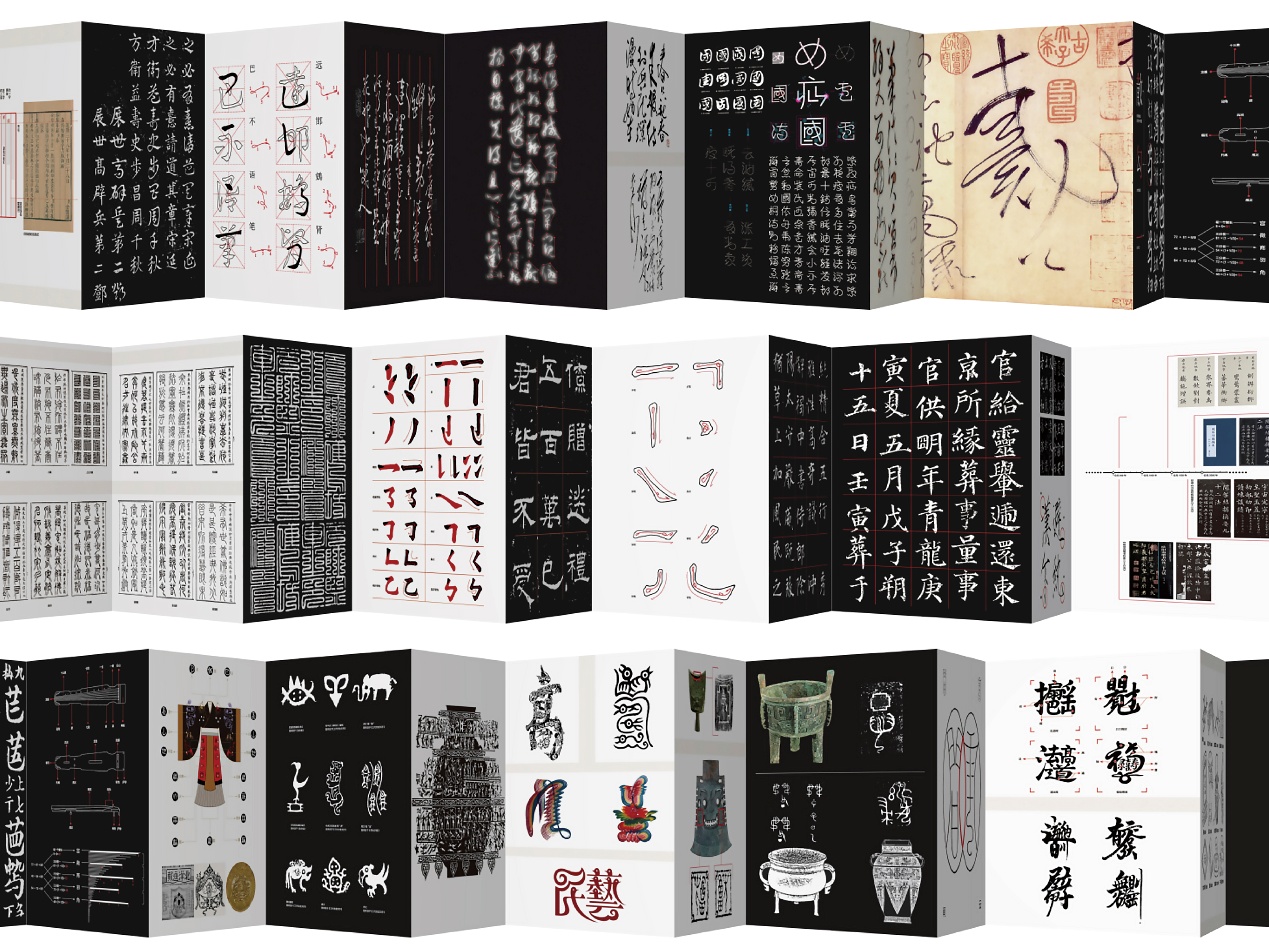
A History of Chinese Character Design
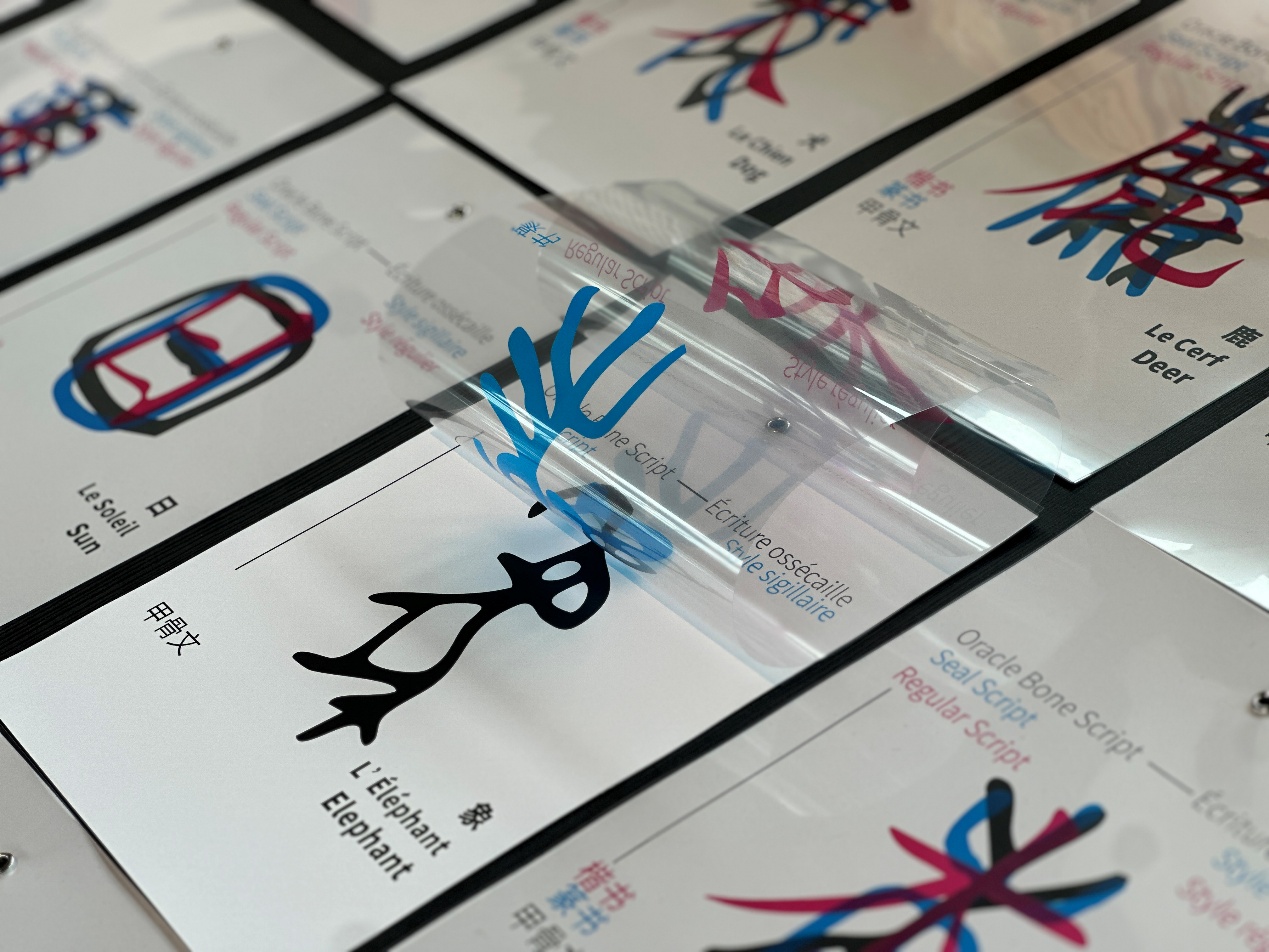
Interactive segment on the evolution of Chinese character forms: Overlapping multi-layer transparent pages displaying the developmental connection of calligraphic styles from Oracle Bone Inscriptions to Regular Script.
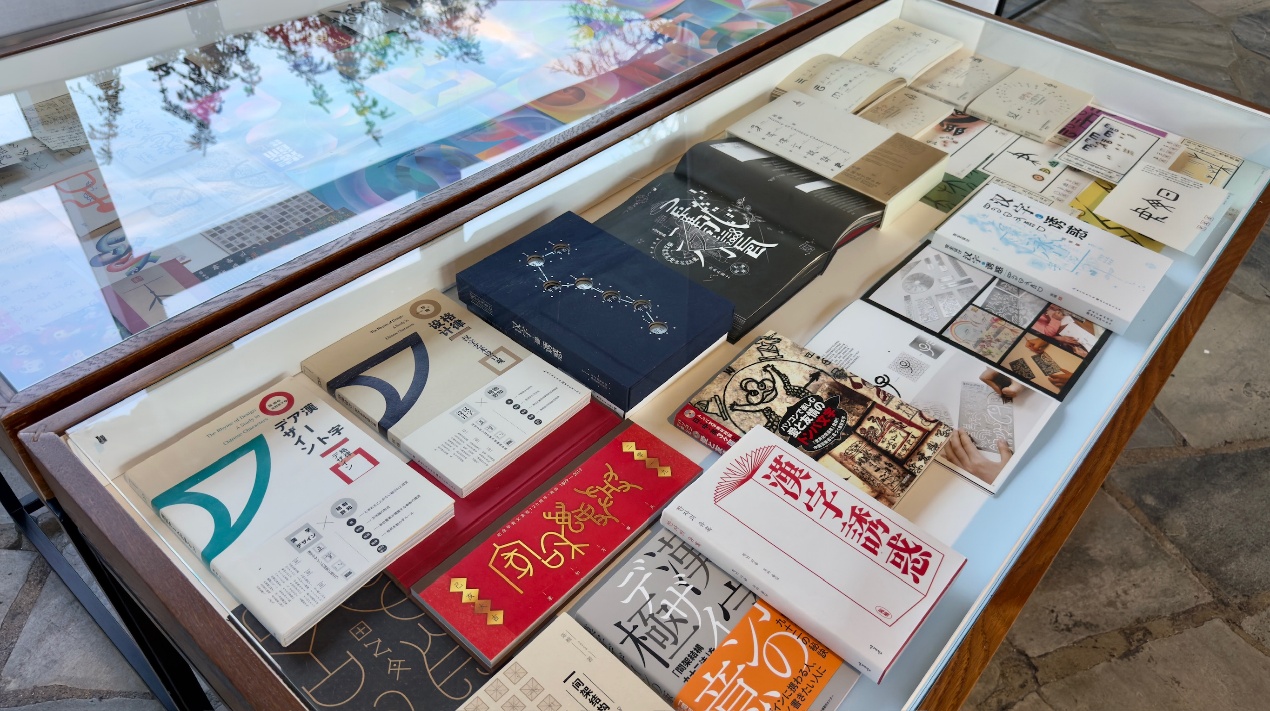
Prof. Chen Nan’s monographs on Chinese character design research, including overseas editions in French, Korean, and Japanese.
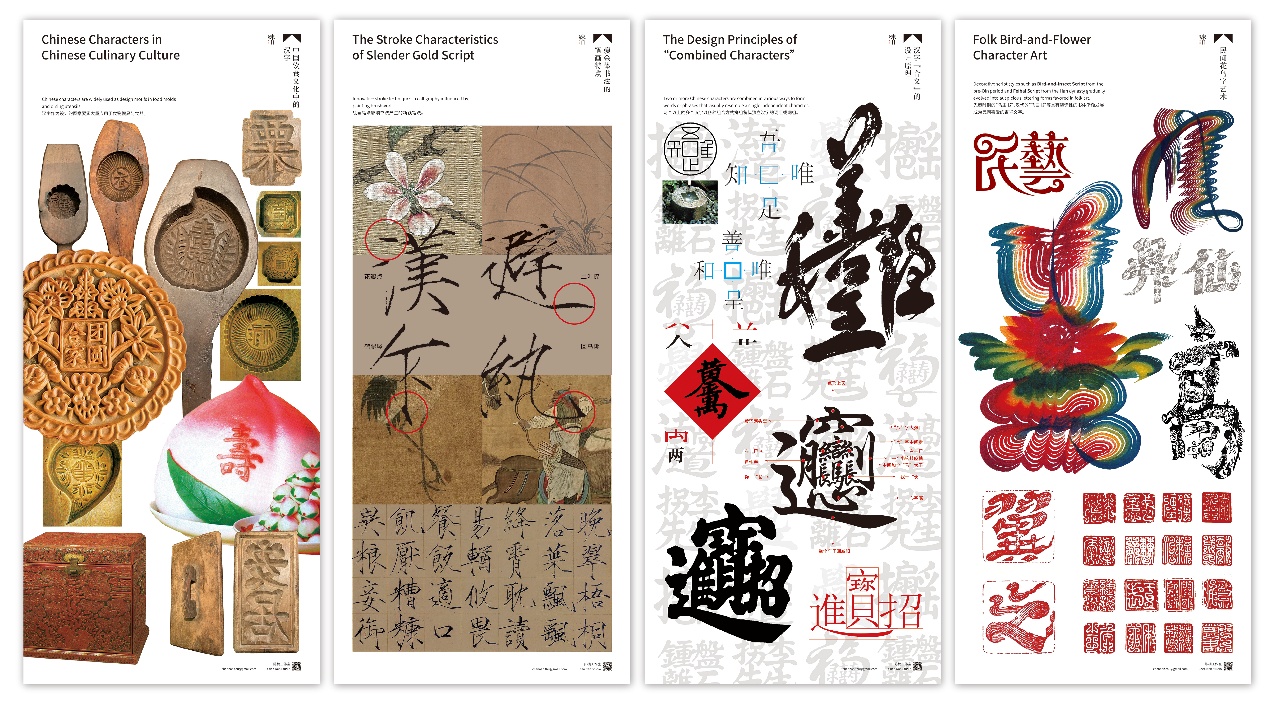
40 sets of case studies illustrating design wisdom throughout the developmental history of Chinese characters.
Second Part: Revitalization and Innovation of Oracle Bone Inscriptions
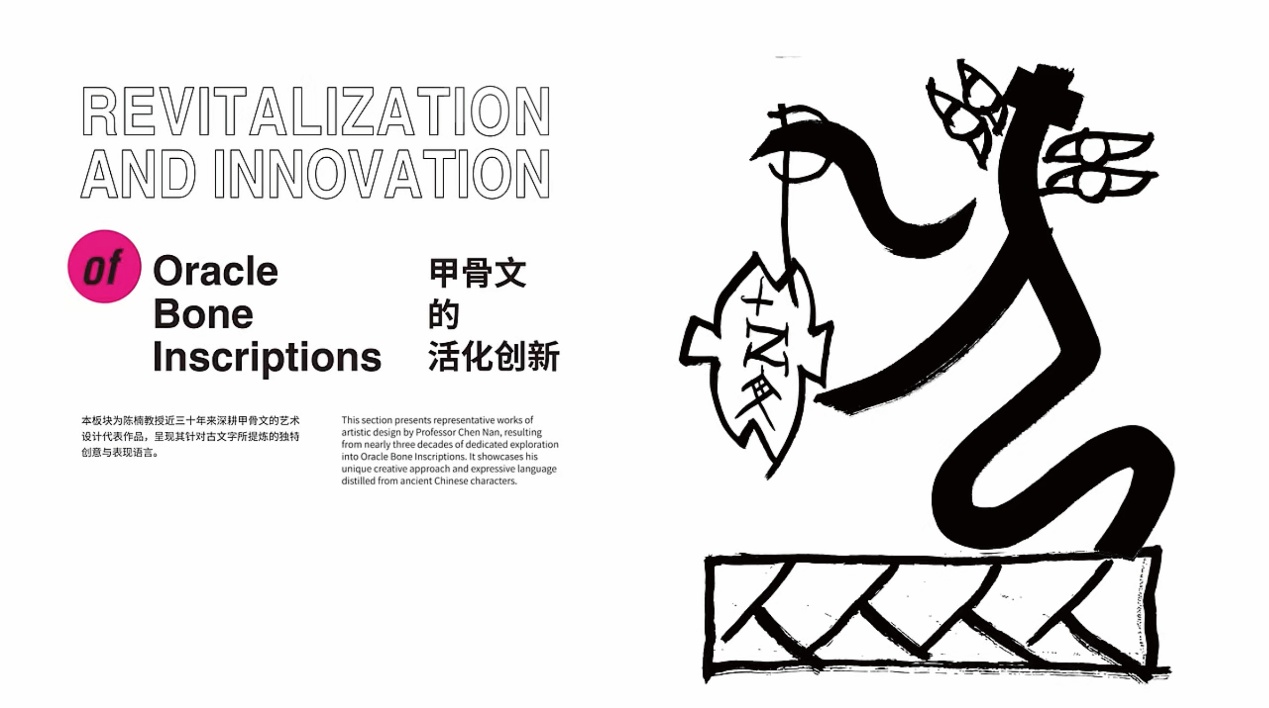
This segment proudly displays Professor Chen Nan’s representative artistic endeavors spanning nearly thirty years, deeply exploring the creative extraction and artistic vernacular of Oracle Bone Inscriptions—the earliest known form of Chinese writing.
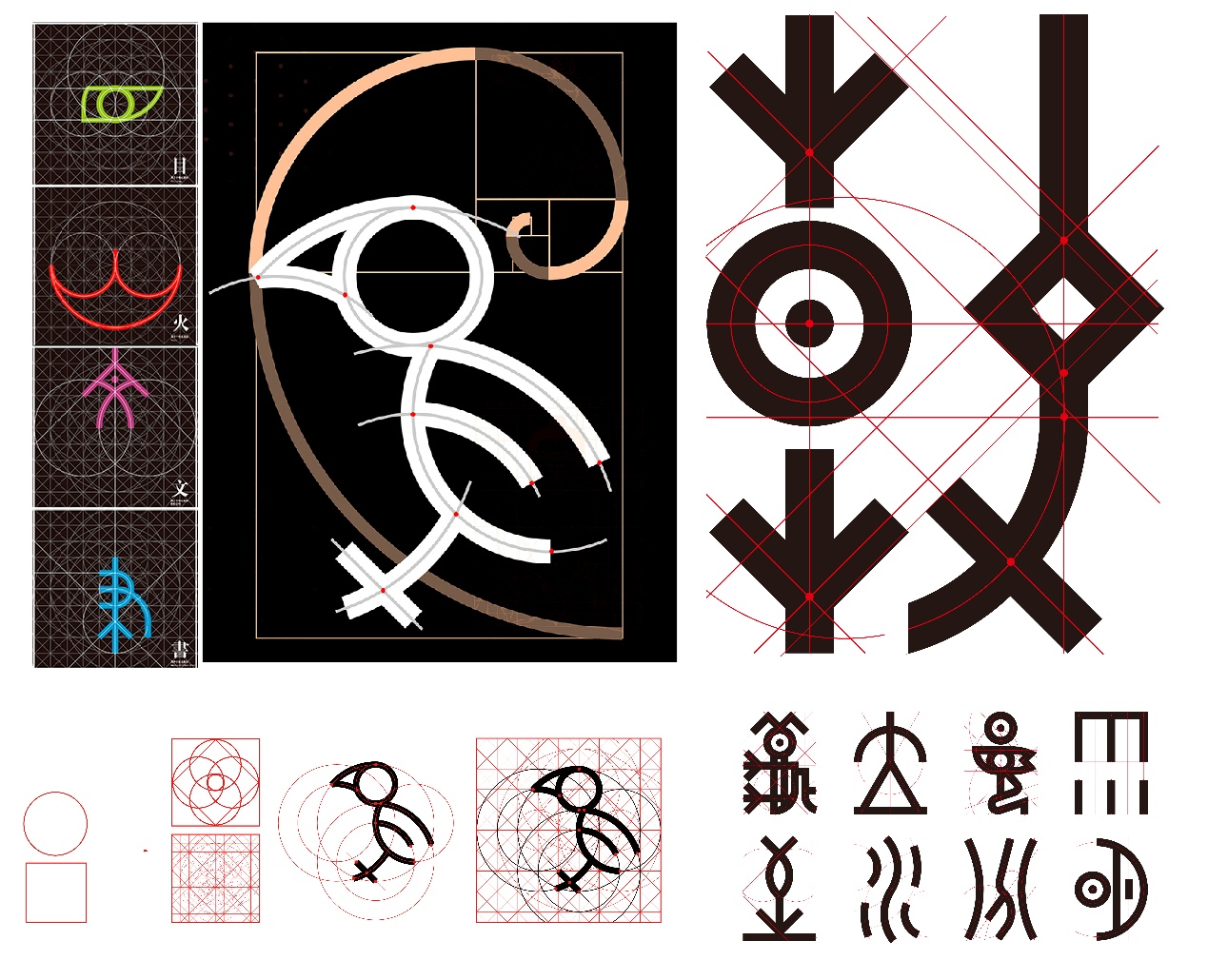
Prof. Chen Nan’s design principles for Oracle Bone Inscription typography since 1999.
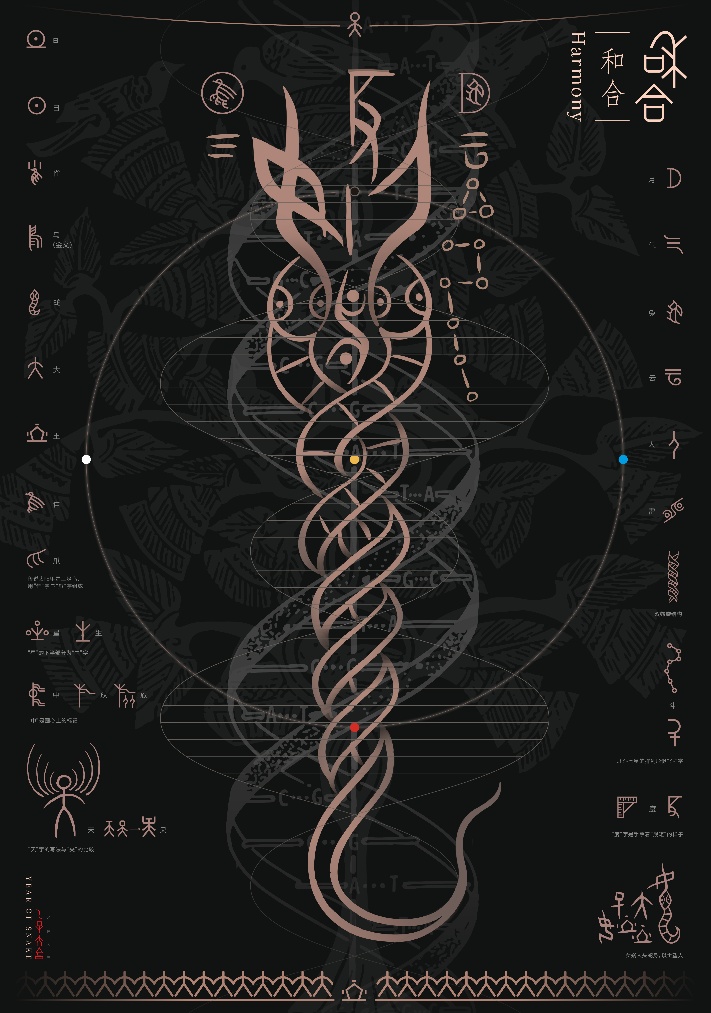
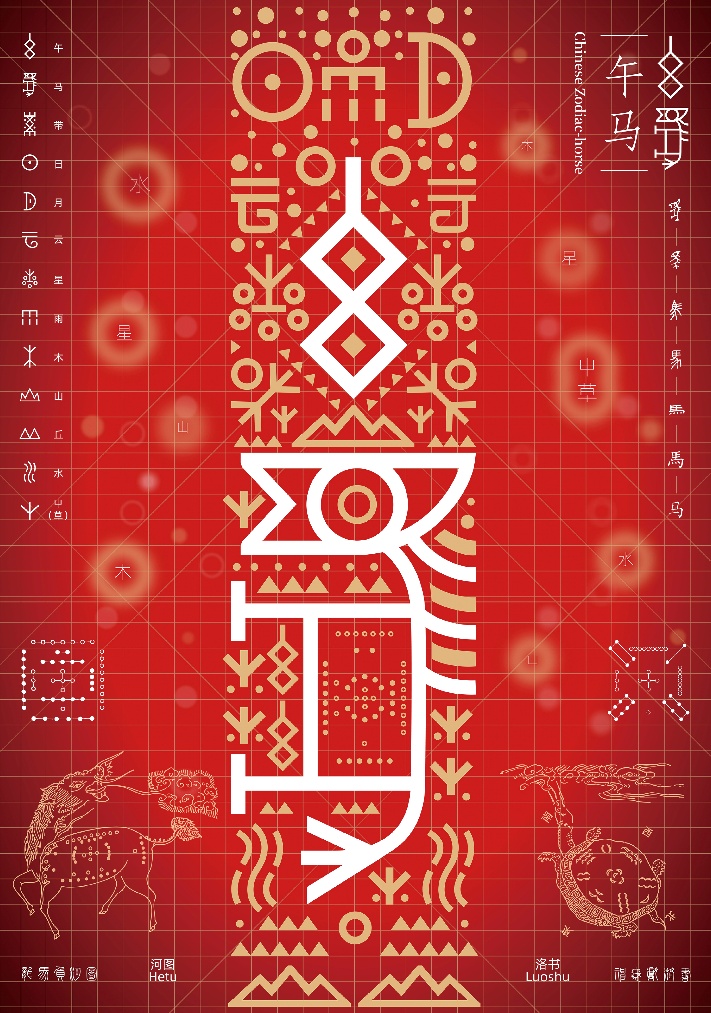
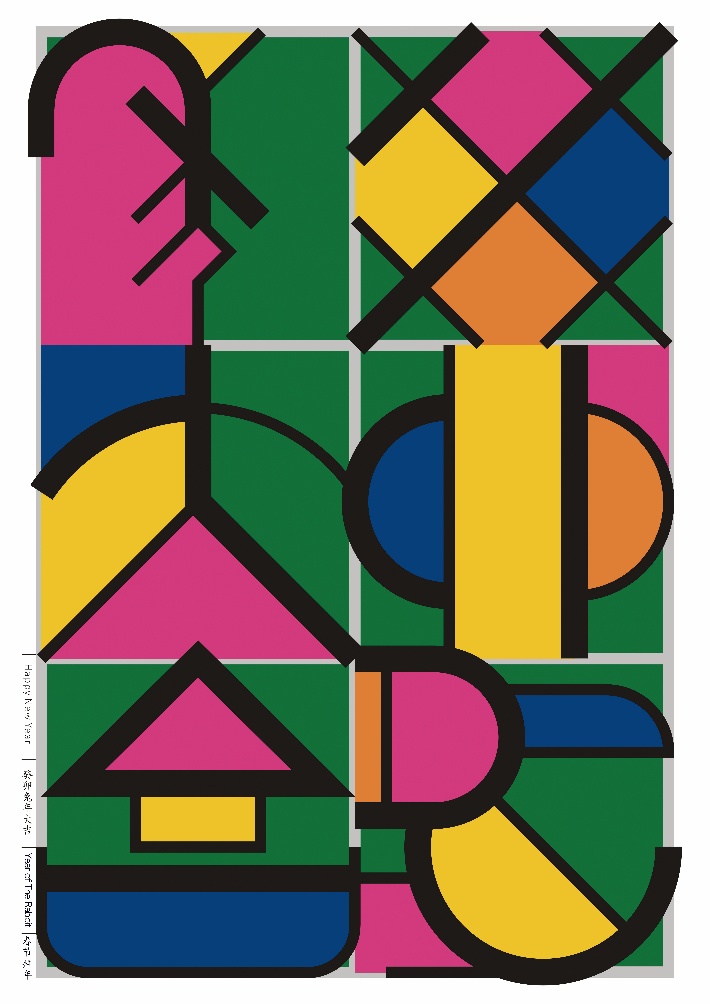
Poster designs featuring Oracle Bone Inscriptions.
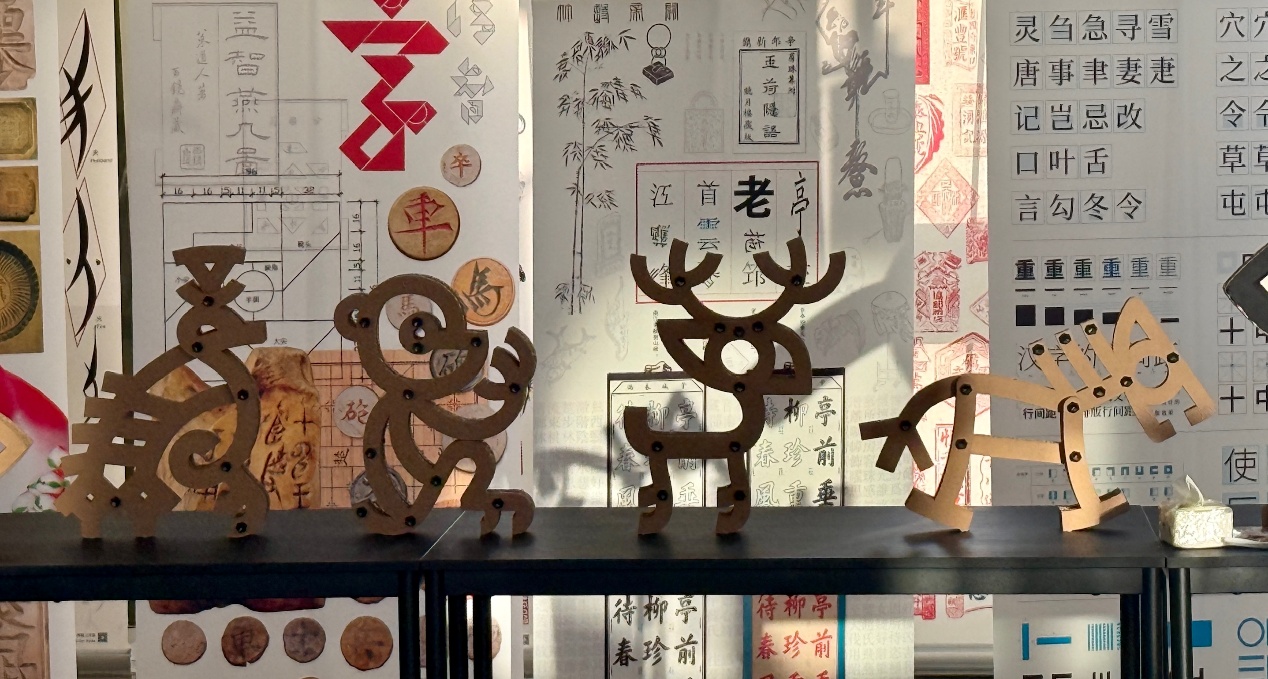
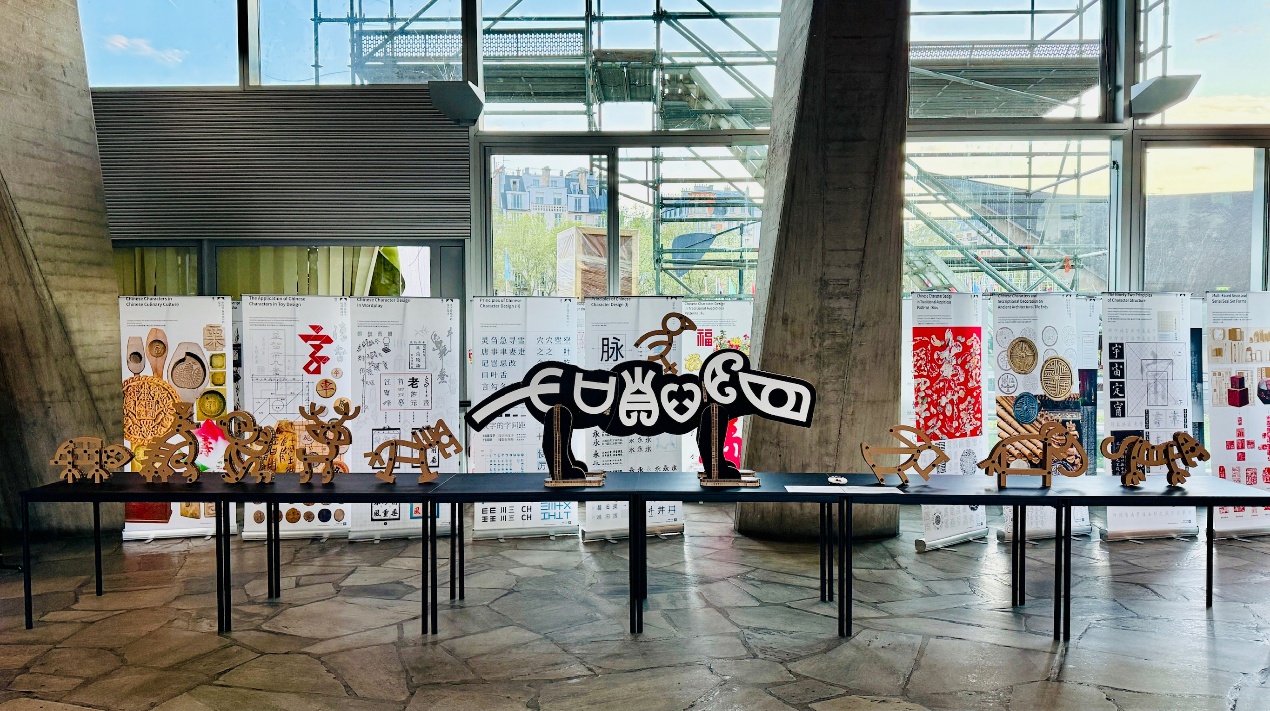
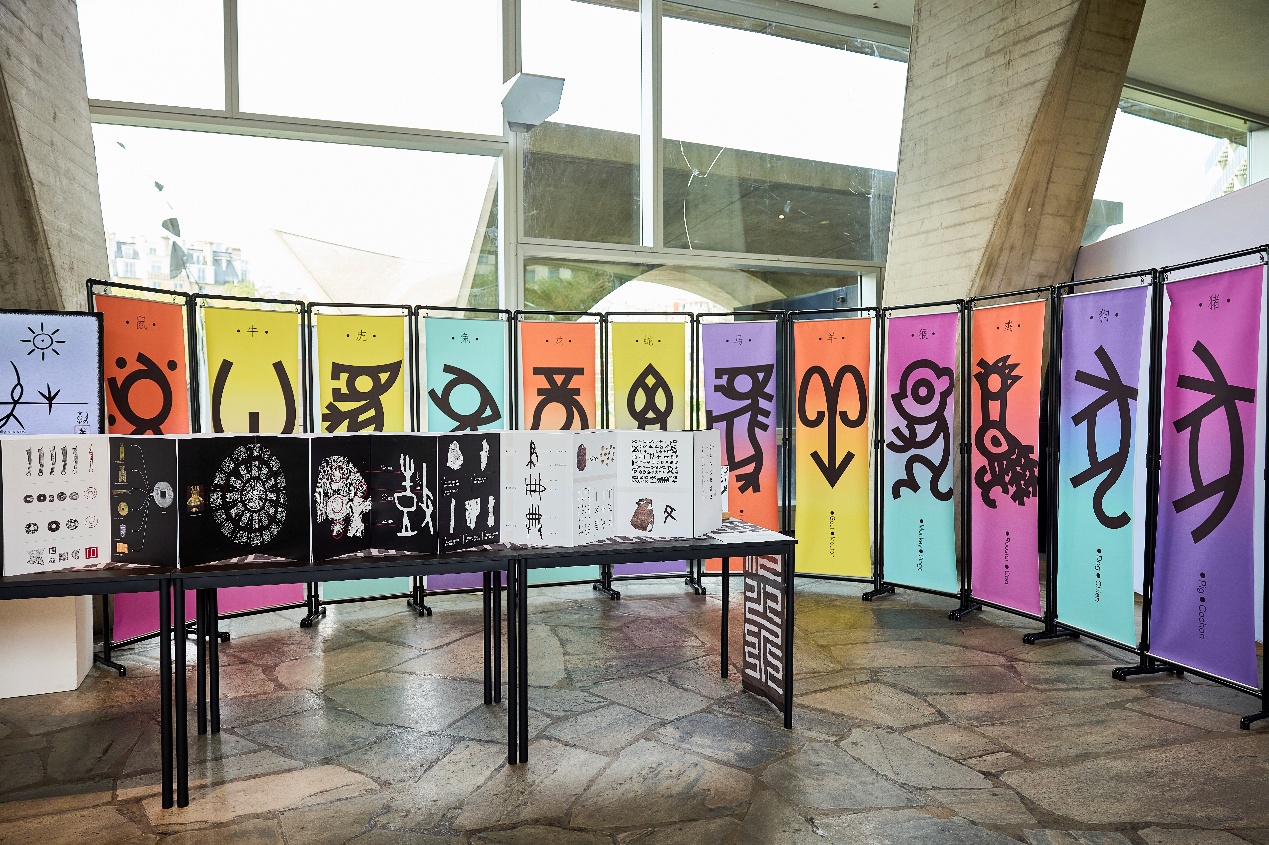
Oracle Bone Inscription art installation, “Animal World.”
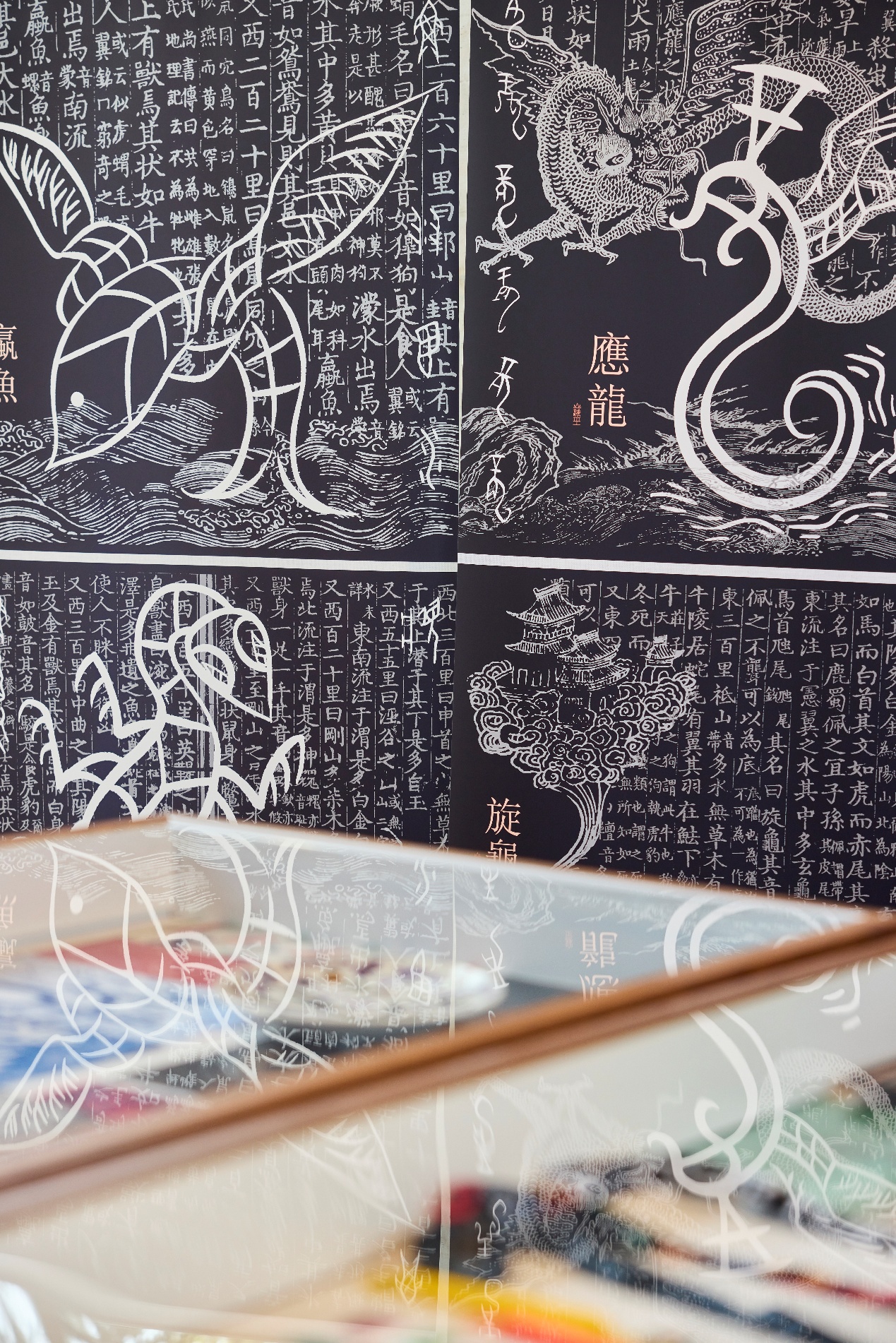
The “Oracle Bone Inscriptions: Classic of Mountains and Seas (Shan Hai Jing)” series.
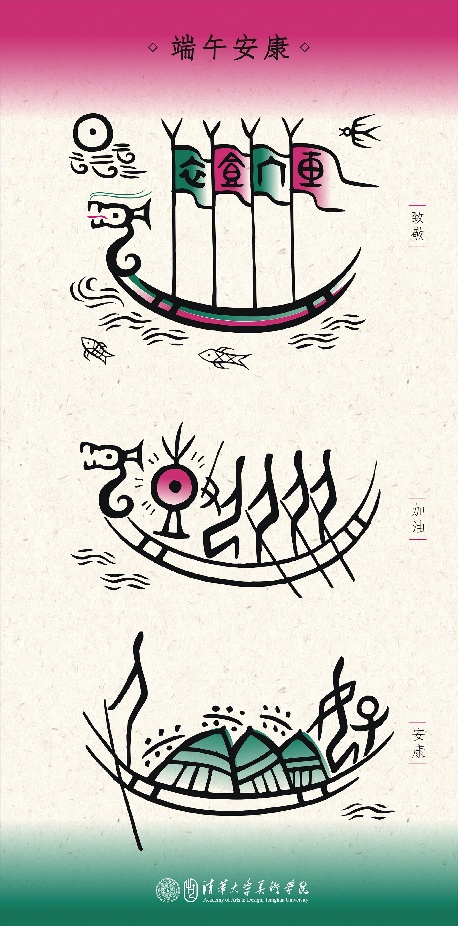
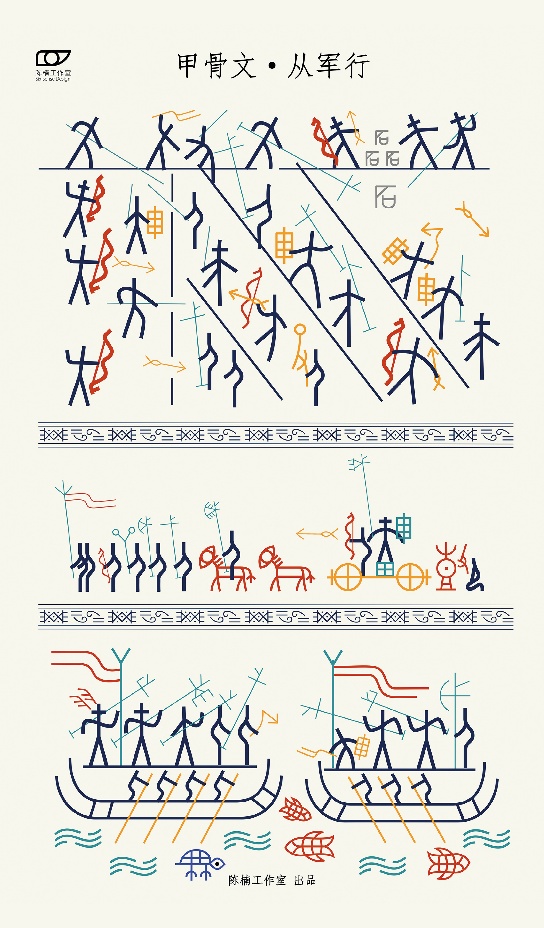
The “Oracle Bone Inscriptions: Song of Joining the Army (Cong Jun Xing)” series.
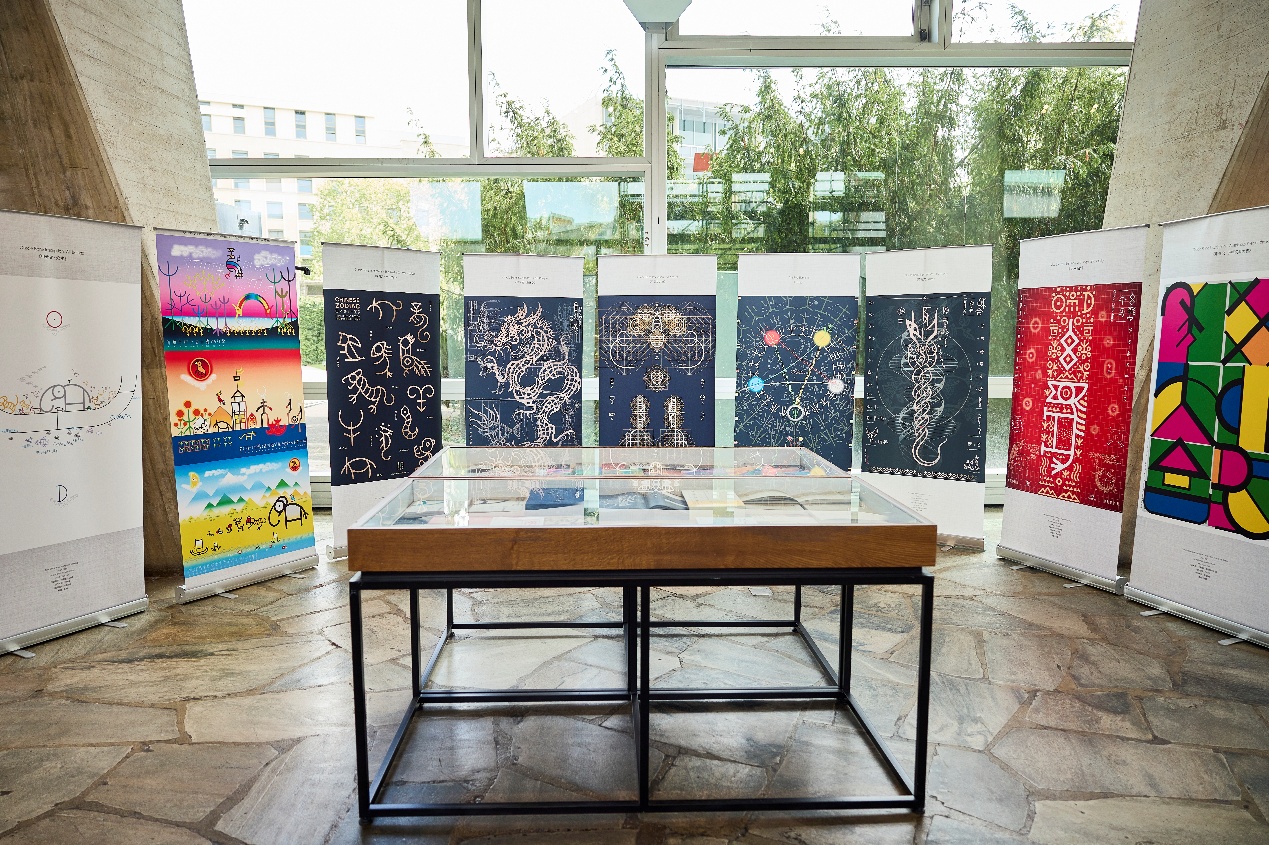
Third Part: Diverse Calligraphic Styles and Art Design of Chinese Characters
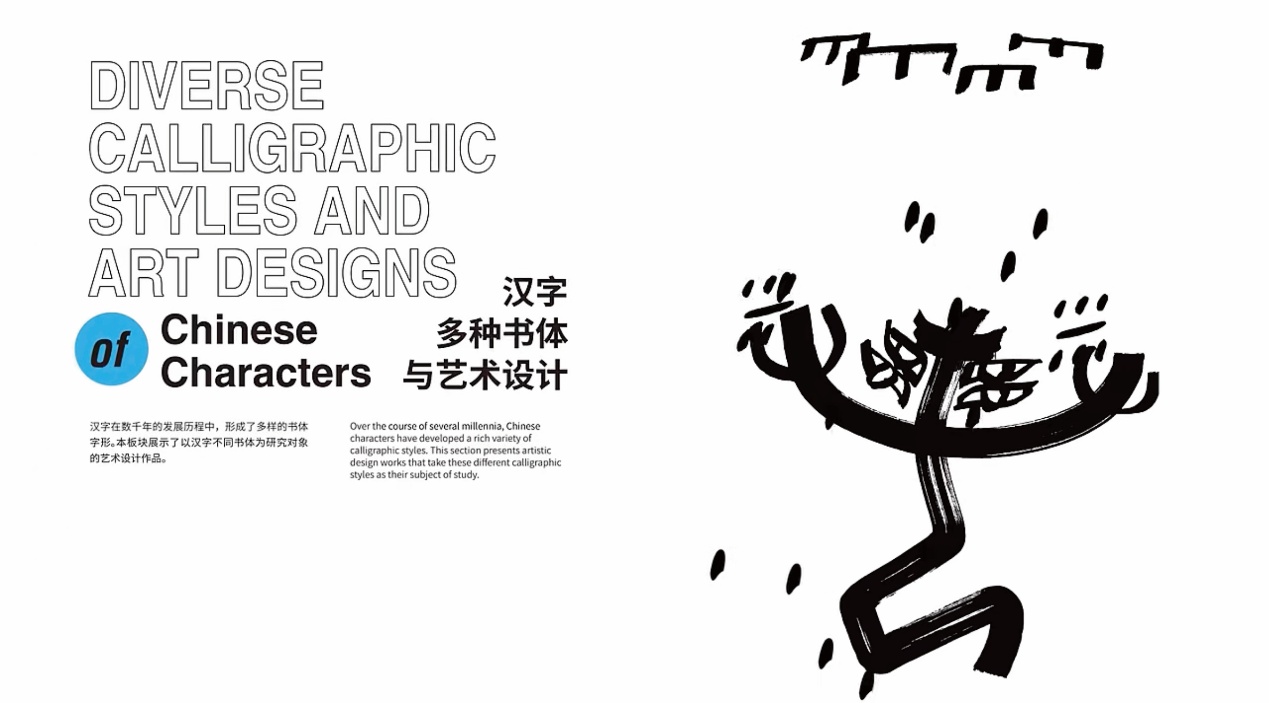
Over millennia, Chinese characters have morphed into a highly diverse array of exquisite calligraphic scripts. This segment highlights artistic typographies and modern designs that study and transform these historical scripts.
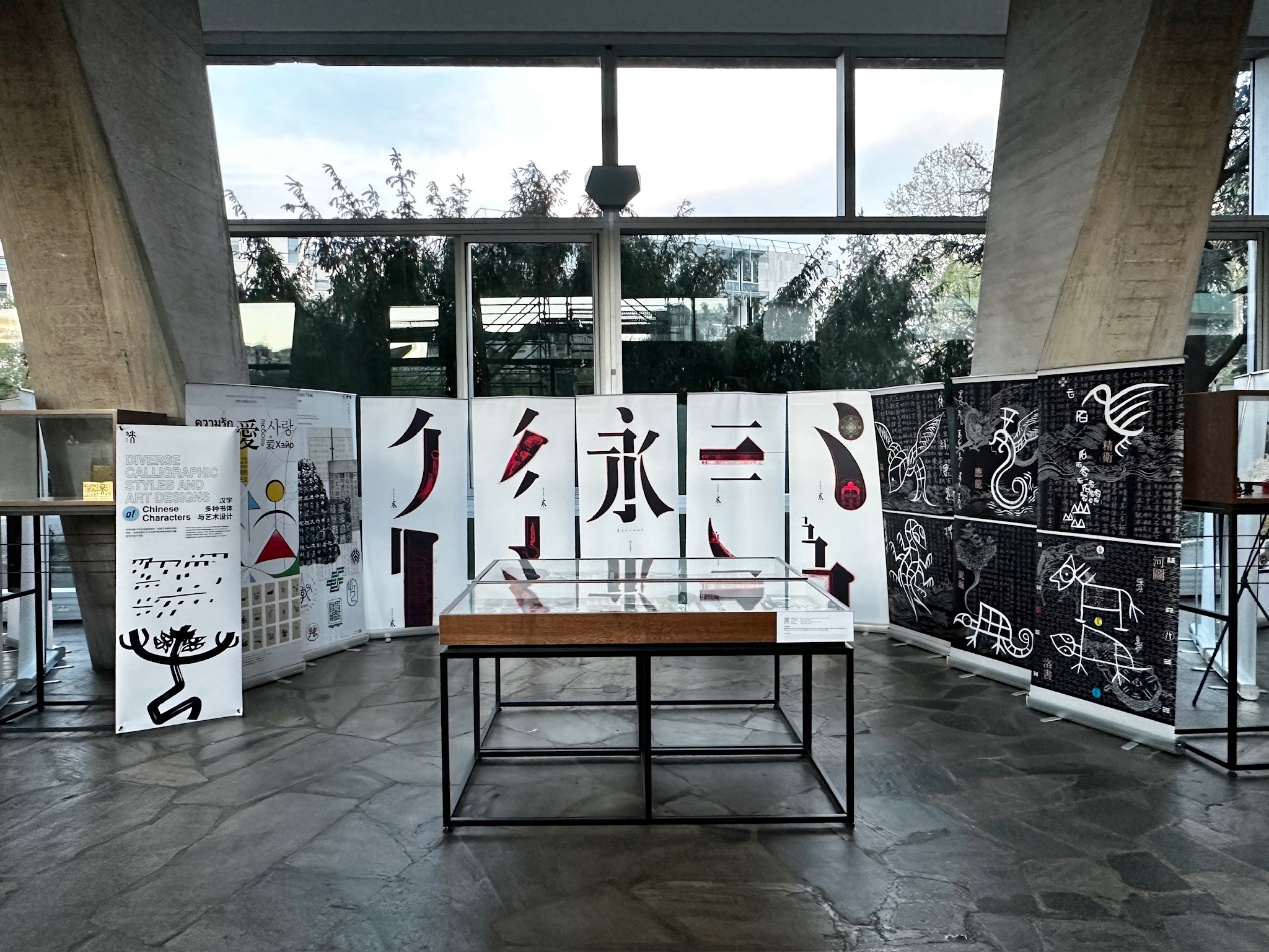
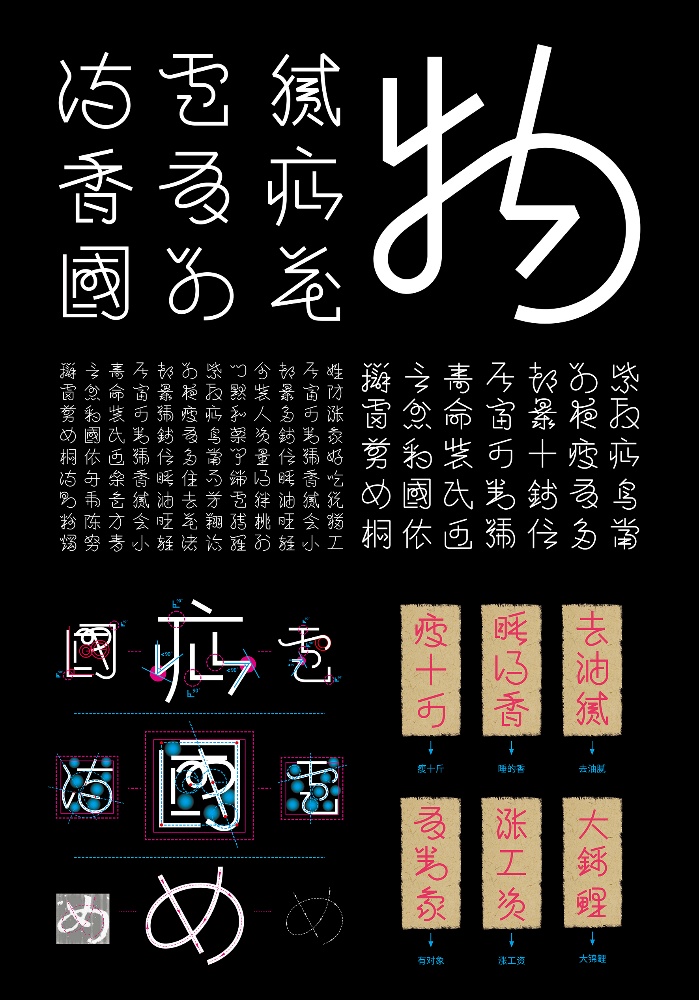
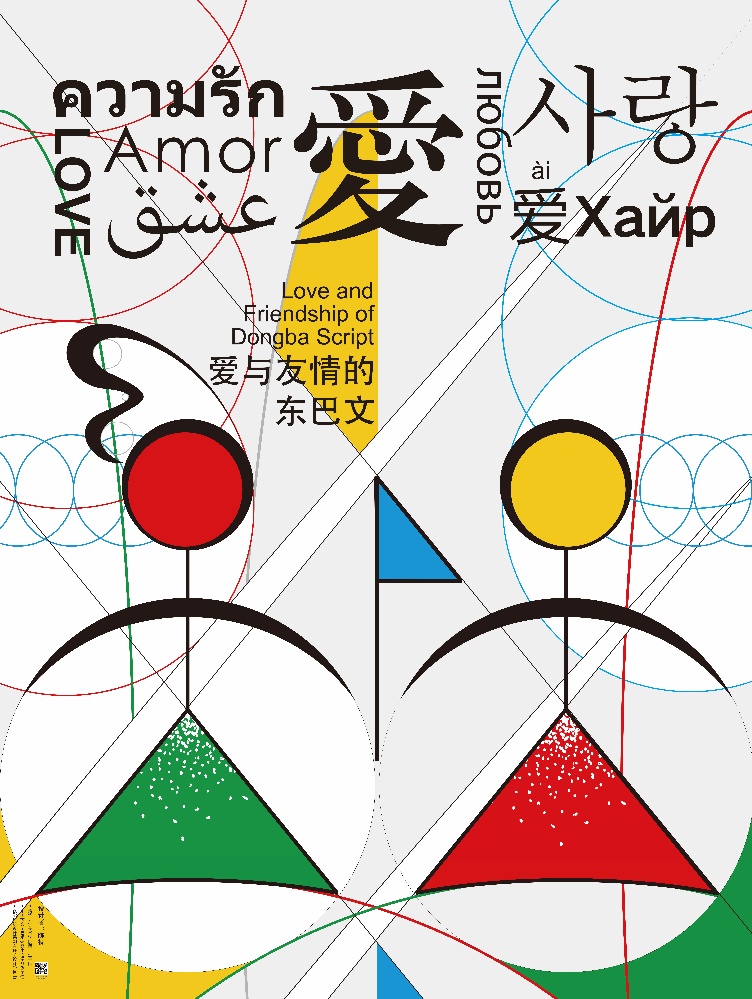
Art and design works focusing on various calligraphic styles of Chinese characters.
Fourth Part: Diverse Cultural and Creative Designs of Chinese Characters
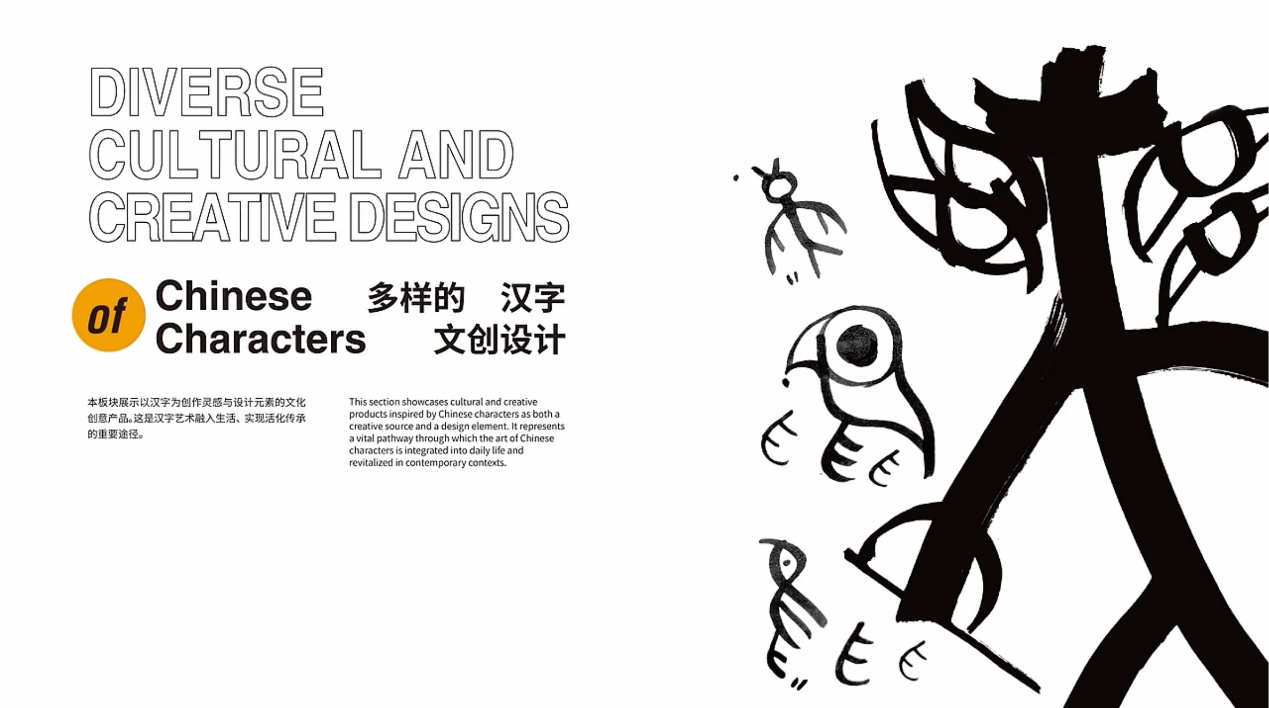
This section seamlessly integrates character art back into modern life through functional, creative merchandise designed with ancient motifs. This represents a pragmatic approach to keeping heritage continuously vibrant.
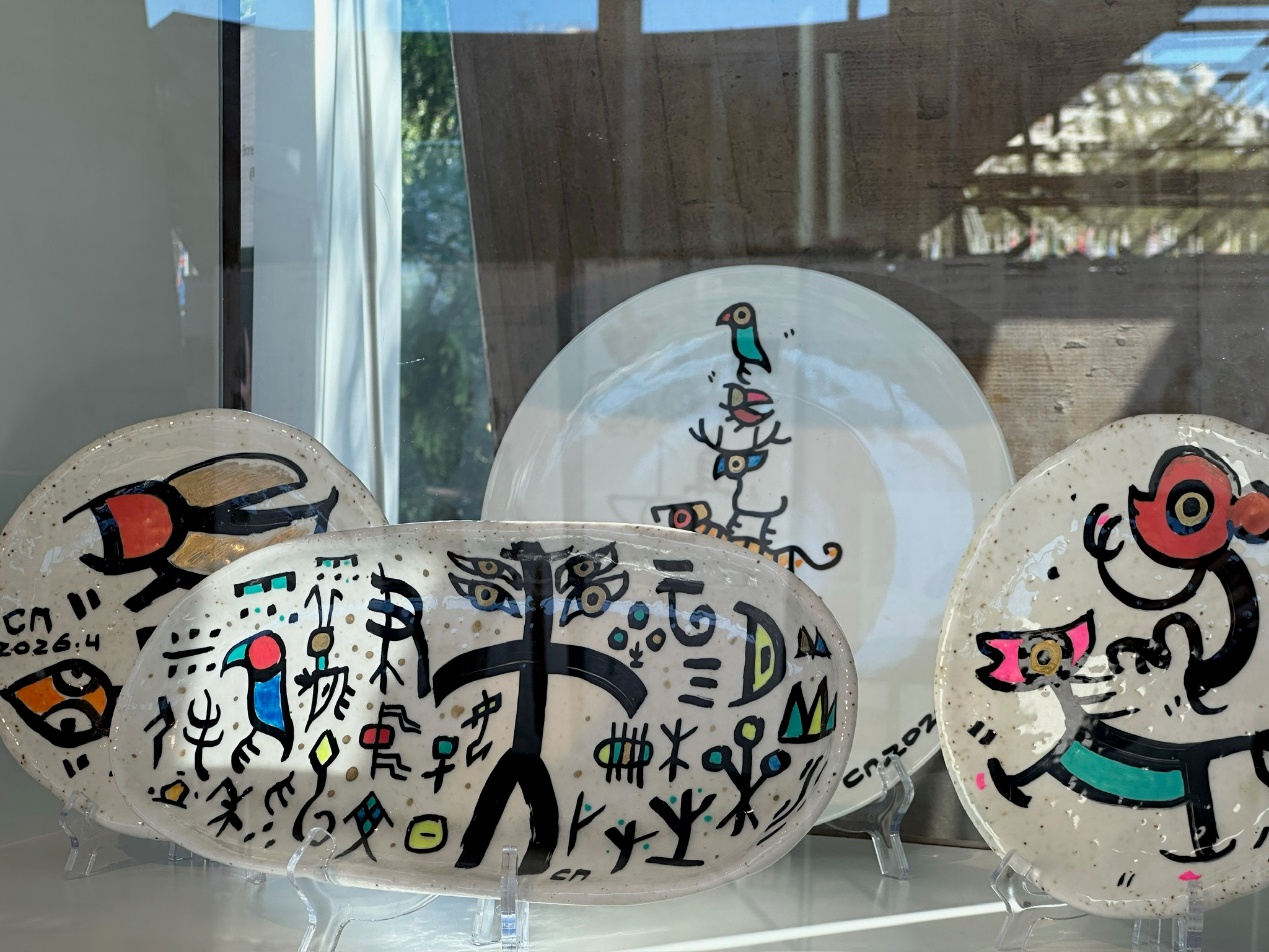
Special feature: The “Cangjie Inventing Characters” series and other hand-painted Oracle Bone Inscription art on locally handcrafted ceramic plates in France.
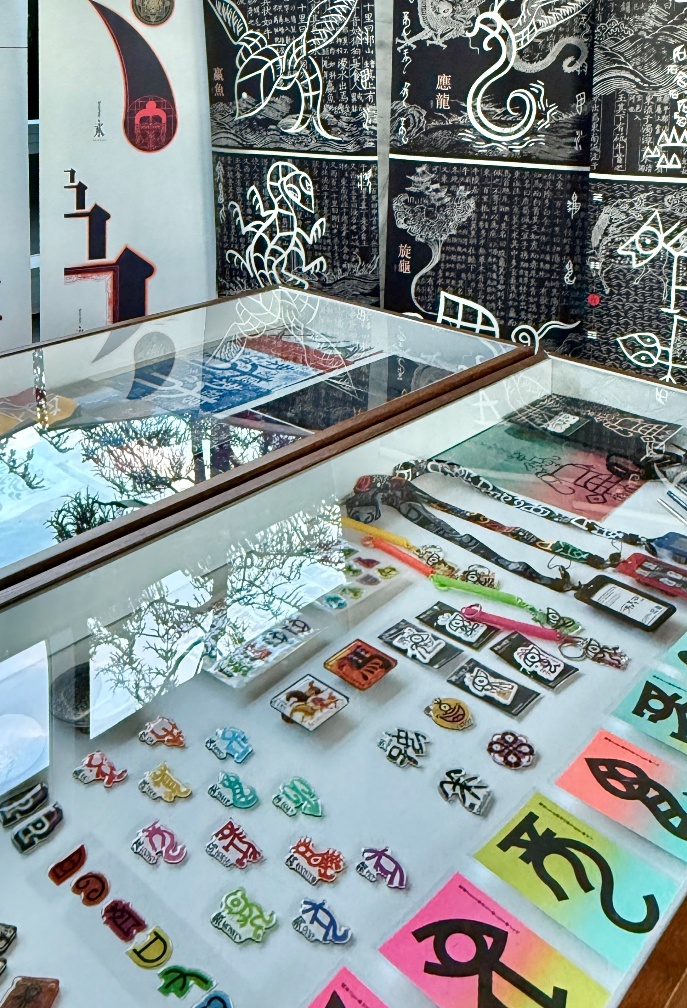
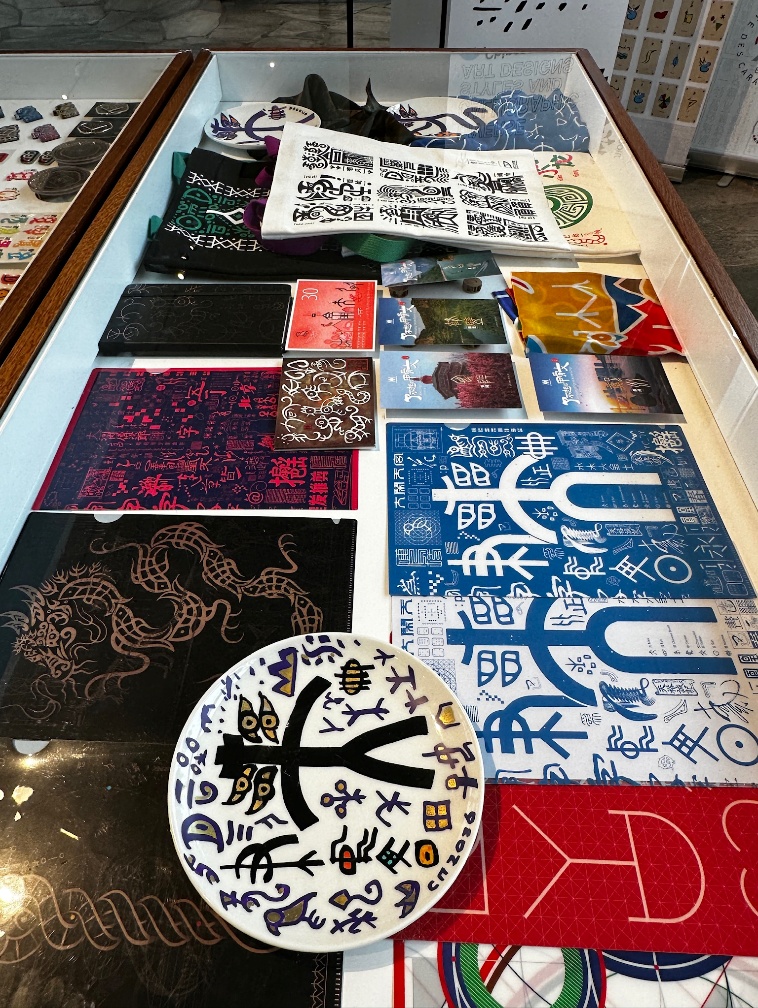
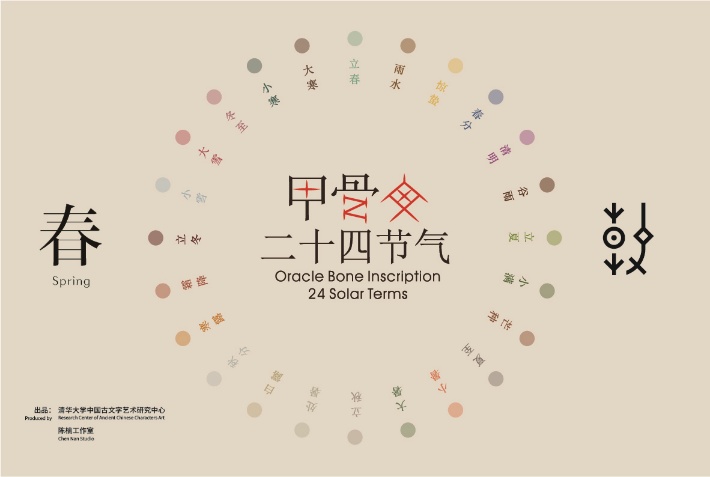
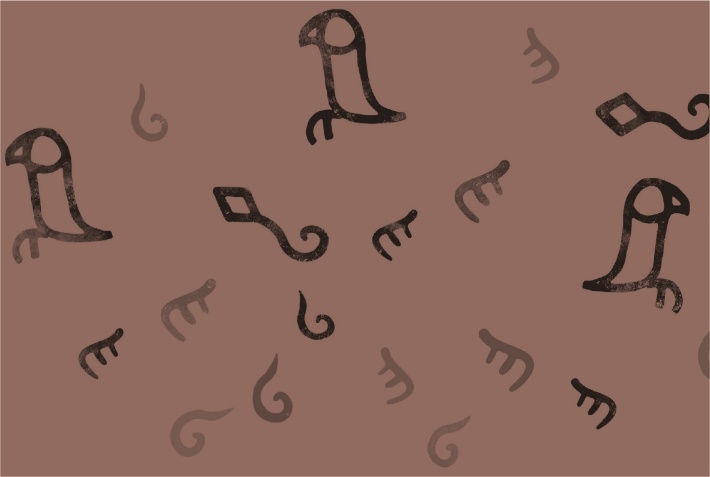
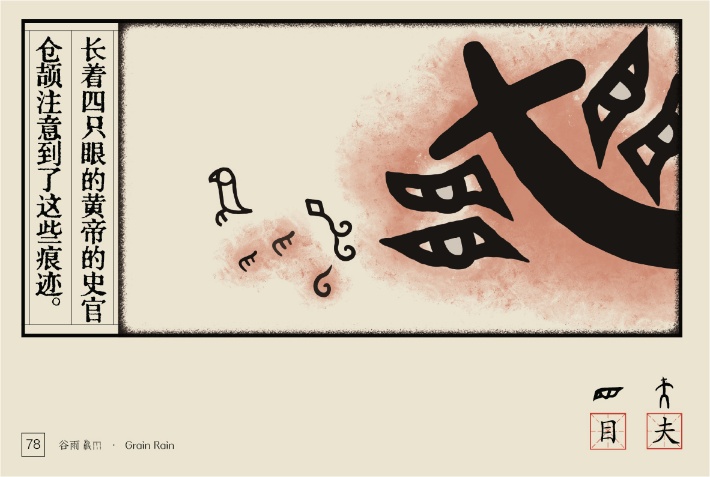
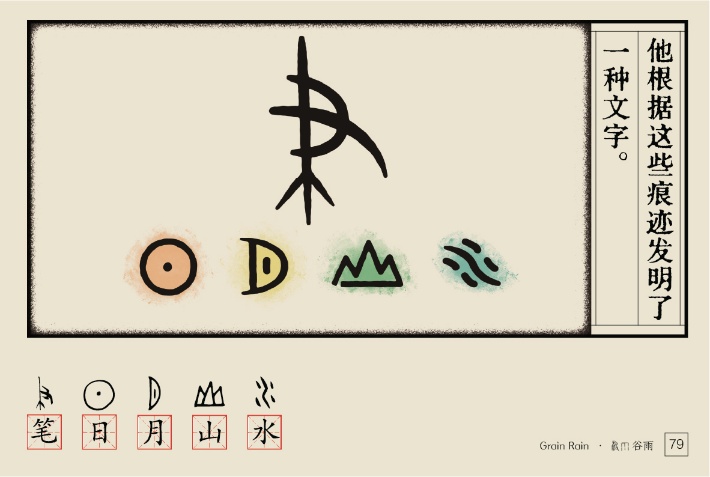
Picture book series “Oracle Bone Inscriptions: The 24 Solar Terms.”
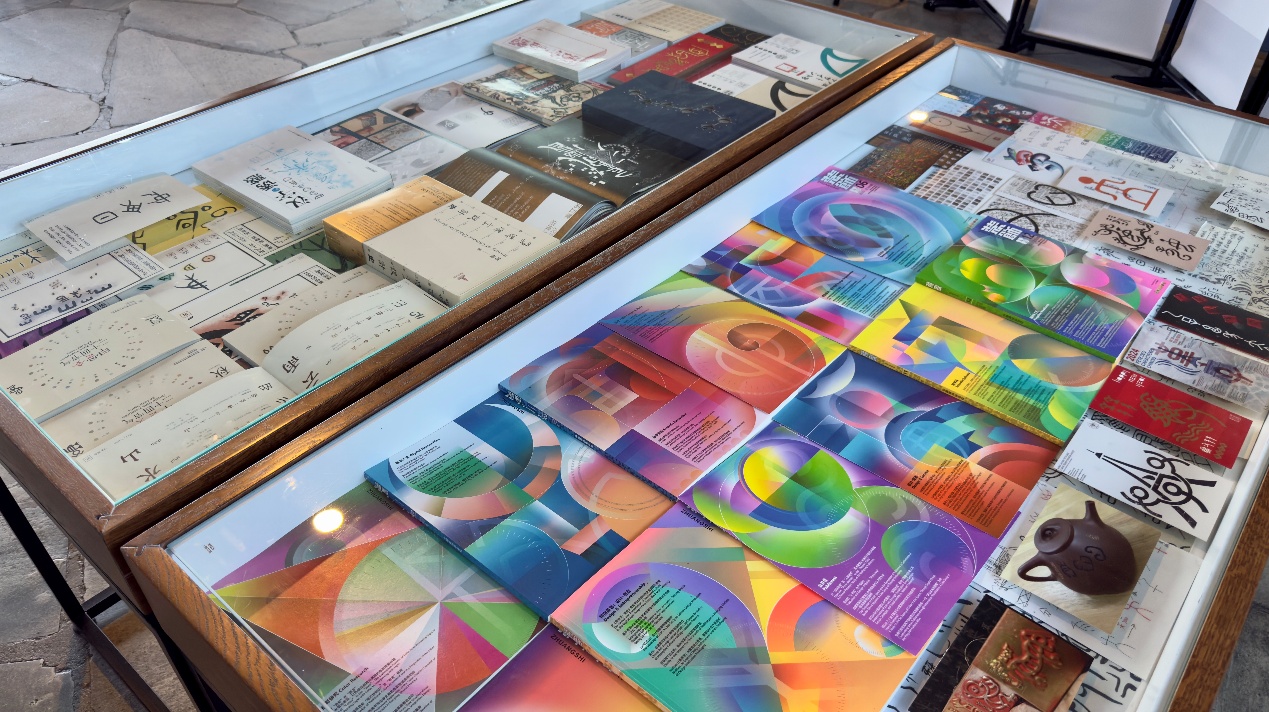
The 2025 cover design collection for “Art and Design (Zhuangshi)” magazine, utilizing the Oracle Bone Inscriptions of the Twelve Earthly Branches as a structural framework, complemented by decorative zodiac animal graphics.
Media Coverage
The globally significant event attracted prestigious international and domestic media coverage, including formal reports from official UNESCO media, CCTV’s Xinwen Lianbo (News Broadcast), Xinhua News Agency, the People’s Daily, Guangming Daily, Phoenix TV, Nouvelles d’Europe, and French Mandarin TV.
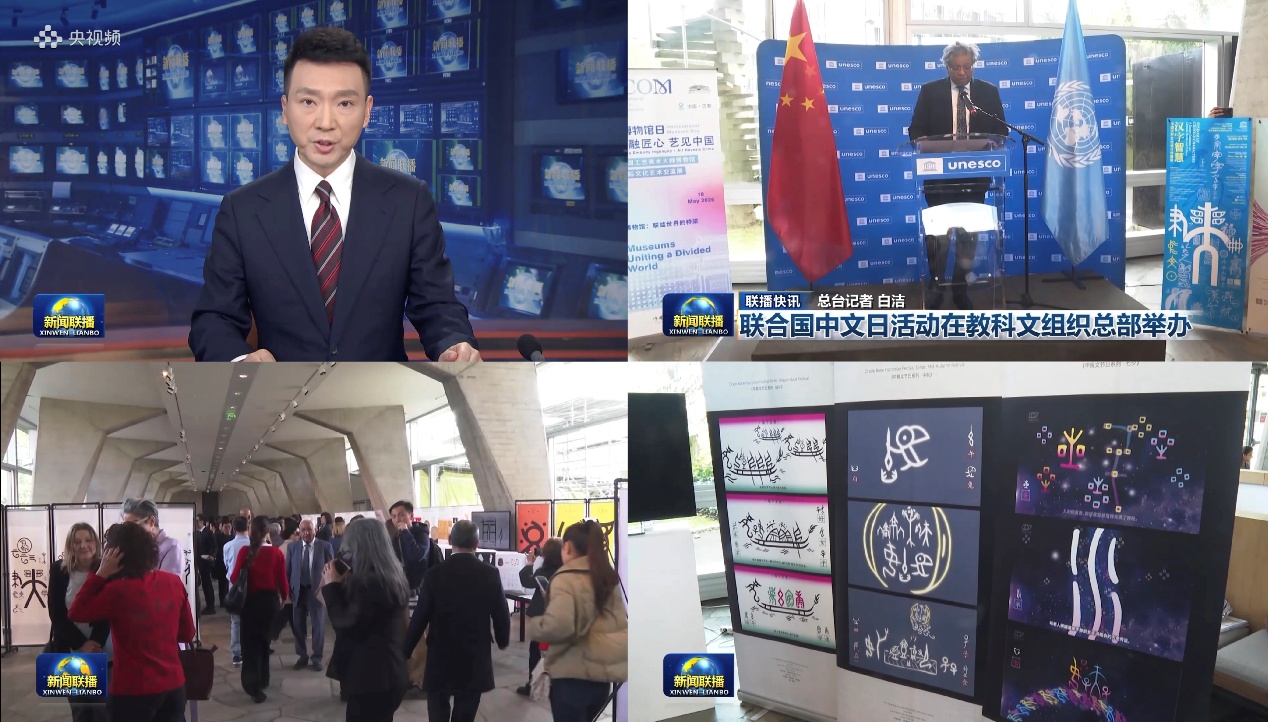
Screenshot from CCTV’s Xinwen Lianbo.
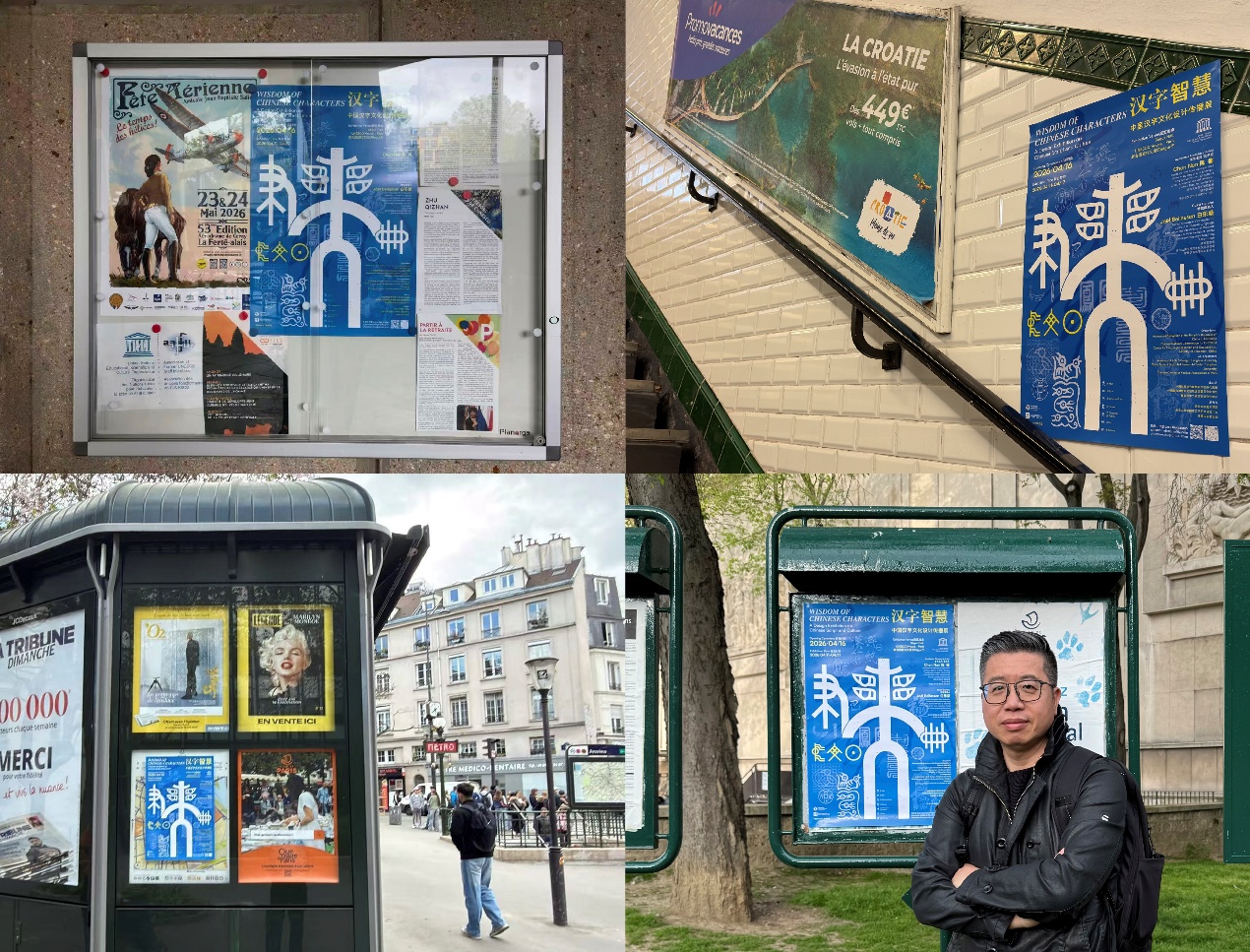
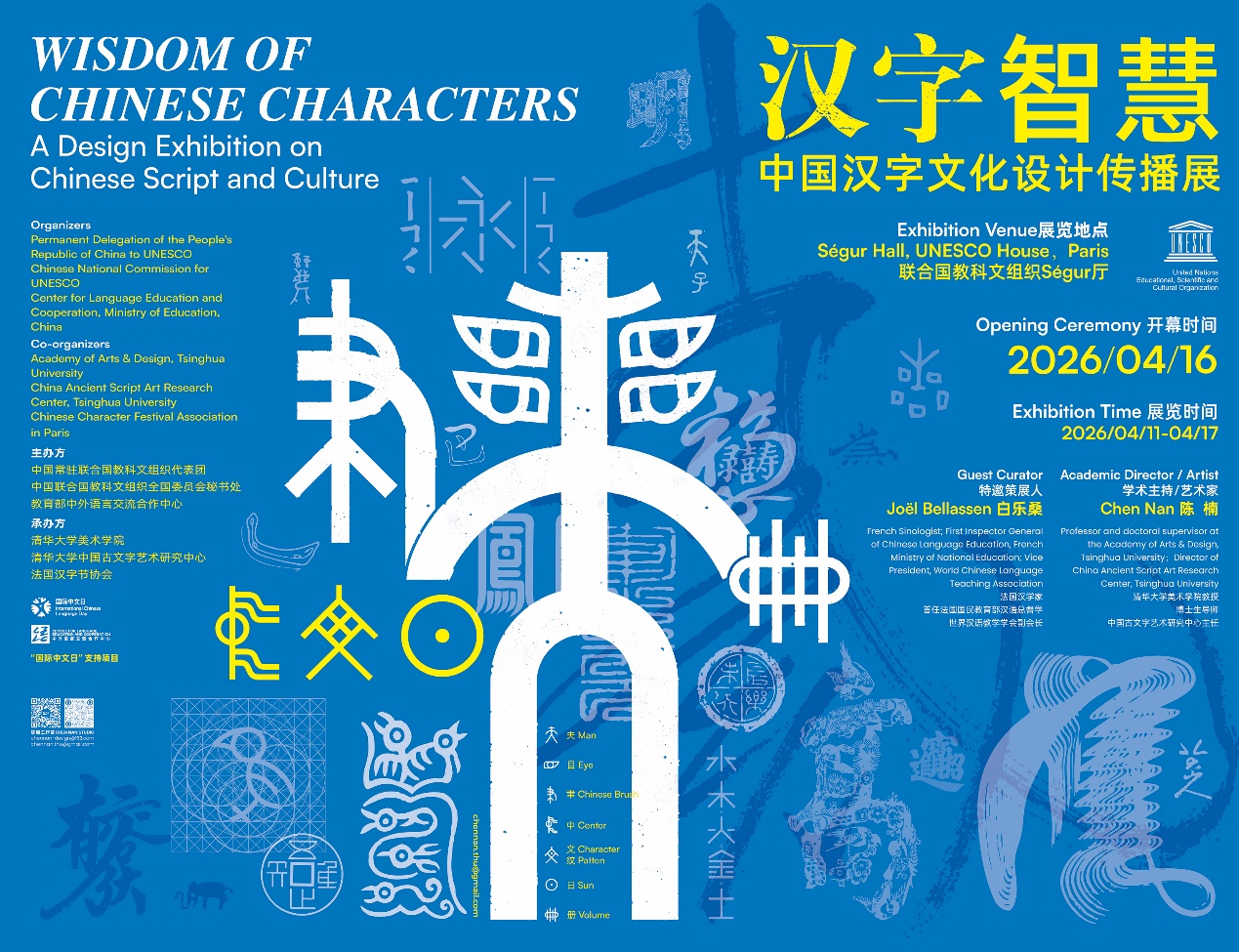
Exhibition poster promotion.
Conclusion
As global cultural exchange steadily deepens in the current era, grand manifestations of traditional Chinese resources, epitomized by Chinese characters, are confidently migrating into international public spheres through profound design translation and visual communication. This strategy anchored deeply in cultural roots yet propelled by innovative, modern design methodologies is swiftly becoming a vital paradigm for contemporary cross-civilizational dialogue and mutual understanding.