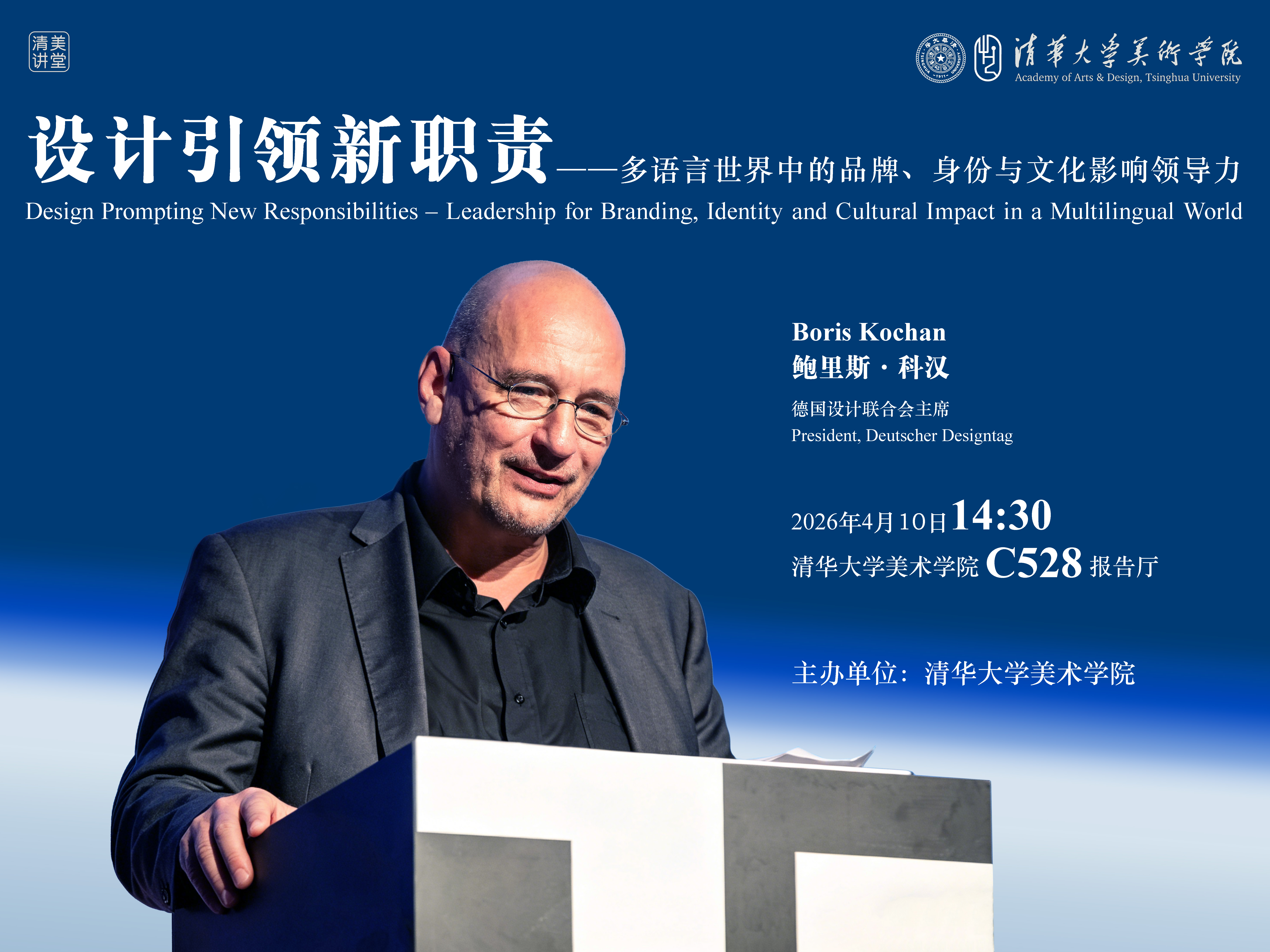
The “AADTHU Lecture” hosted by the Academy of Arts & Design, Tsinghua University, took place on April 10, 2026. The event featured Boris Kochan, President of Deutscher Designtag (German Design Day), who delivered an insightful academic talk titled Design Prompting New Responsibilities-Leadership for Branding, Identity and Cultural Impact in a Multilingual World.
Yin Hang, Deputy Director of the Department of Ceramic Art and Design at Tsinghua University, opened the lecture by introducing Kochan’s multifaceted identity: a brand strategy consultant with over four decades of experience, a key driver of Germany’s and Europe’s design sectors (as Deutscher Designtag President since 2016), and a cultural practitioner leading the “GRANSHAN” international project dedicated to preserving and advancing non-Latin scripts globally. This intersection of roles—spanning commercial practice, industry development, and cultural advocacy—formed the foundation of his talk.
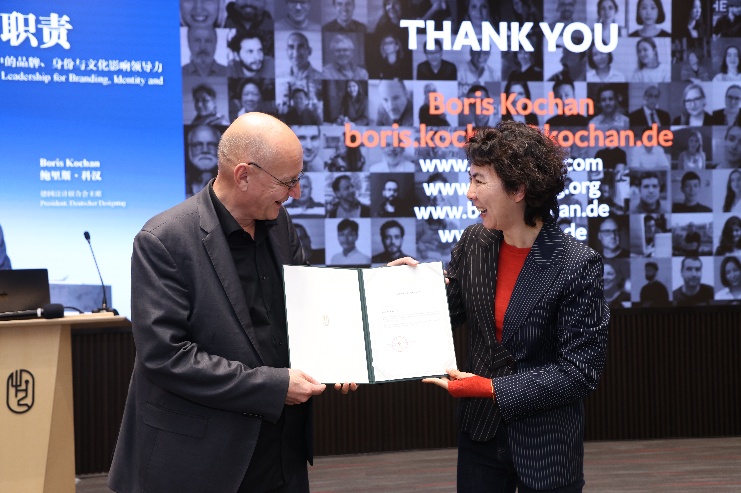
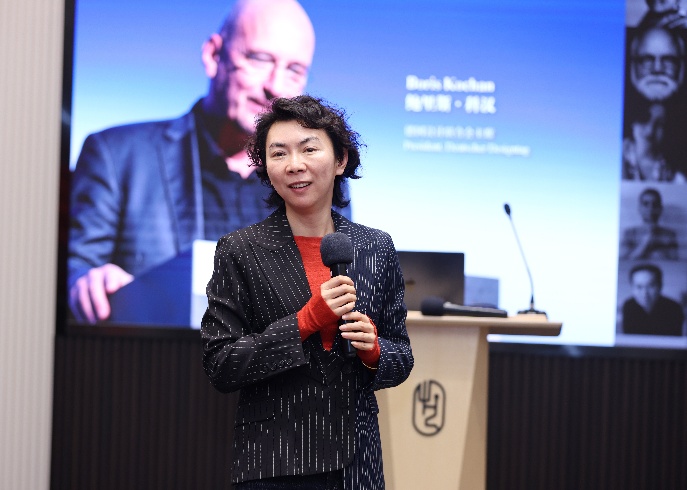
Awarding the certificate of appreciation (left); Yin Hang presiding over the lecture (right).
Lecture Highlights
Kochan structured his address to articulate designers’ evolving responsibilities in an era of complexity, beginning with a return to design fundamentals: “Rigorousness is the baseline of professionalism.” Through international case studies, including “design accidents” caused by typographic or visual coordination errors, he emphasized that design is a precision-driven discipline managing vast details, where even minor oversights erode brand trust. “Design is not arbitrary art but a rigorous discipline focused on communication efficacy,” he stressed, underscoring this as the starting point of design responsibility.
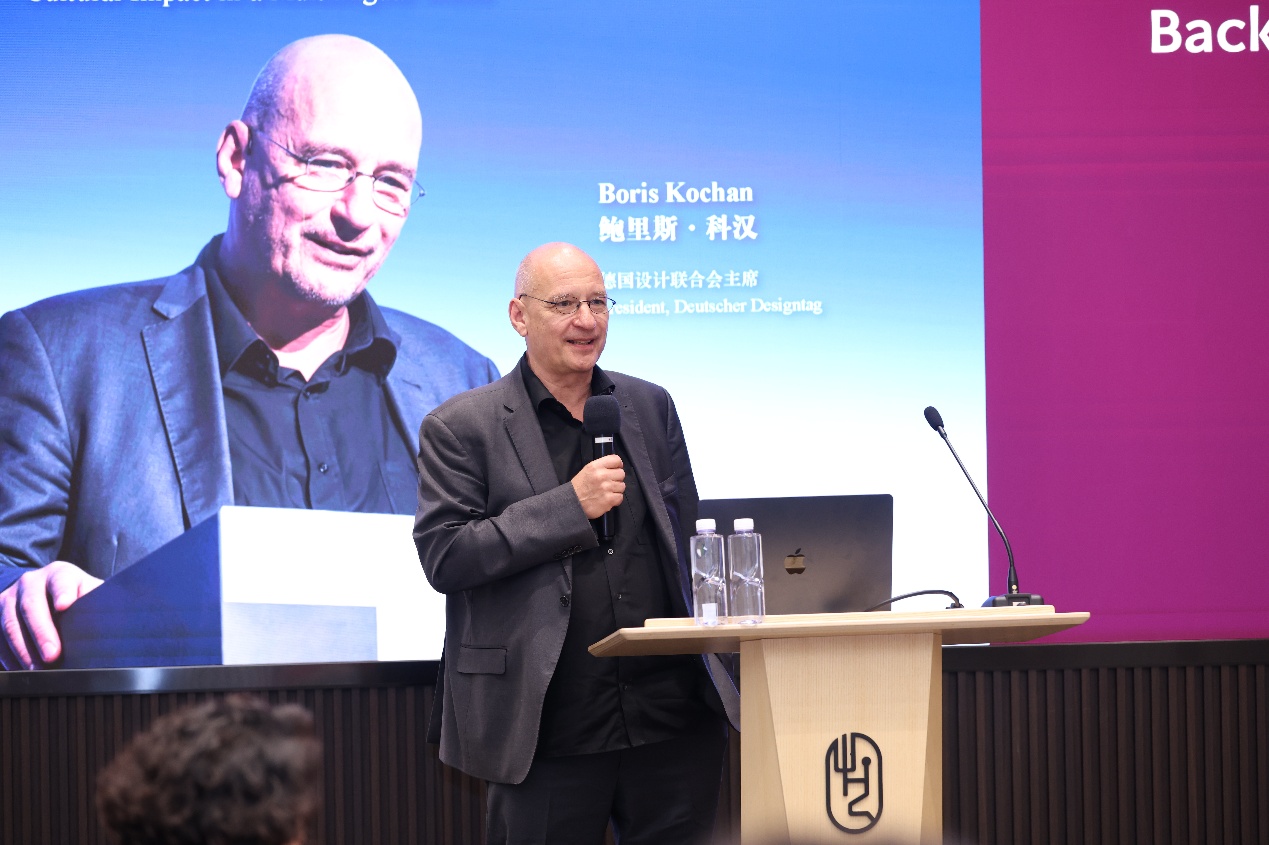
Next, he analyzed two transformative forces reshaping the industry: technological advancement, particularly AI, which is shifting design tools from creating “static visuals” to defining “interactive processes” and “user experiences”; and a paradigmatic shift in designers’ roles. Kochan noted that future designers offering mere aesthetic services will diminish in value, while those capable of systemic thinking, crafting future experiences, prioritizing “human-centeredness,” and navigating uncertainty will evolve into indispensable “strategic advisors.” Design value is thus migrating from “execution” toward “consultation” and “leadership.”
Using a decades-long case study—his team’s 30-year partnership with German cultural travel company Studiosus Reisen—Kochan illustrated brand systemicity. He explained that authentic brands are ecosystems of unified signals and behaviors, permeating products, services, communication, and organizational practices. The “visual collage” system he created for Studiosus Reisen, now in its 26th year, exemplifies how systematic design translates the ethos of “integrating diverse experiences” into enduring brand perception, demonstrating the longevity of such approaches.
A profoundly humanistic segment focused on “script” and “cultural identity.” Kochan emphasized that scripts are cornerstones of civilization and identity, noting that “Chinese is one of the world’s most powerful identity systems.” His GRANSHAN project aims to safeguard and develop non-Latin script design heritage globally. He highlighted the “GRANSHAN Bloom Award,” a groundbreaking international design prize that exclusively evaluates non-Latin script works, with native speakers as jurors, fostering an equitable, pluralistic evaluation framework. Drawing on Armenia’s history of creating a script to preserve identity, he underscored script design’s role in uniting cultures and shaping the future.
Q&A Session

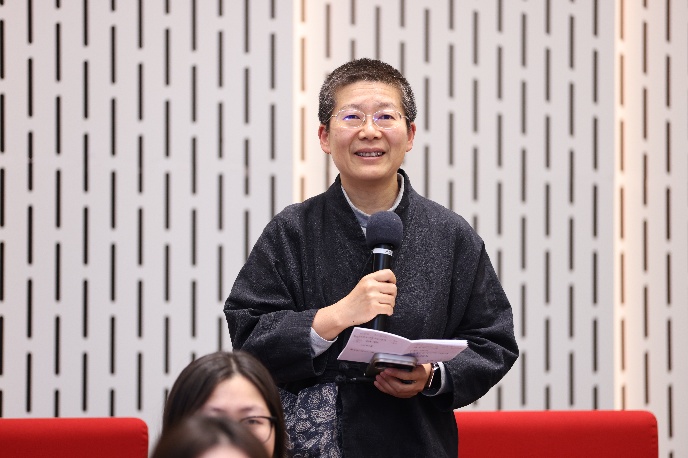

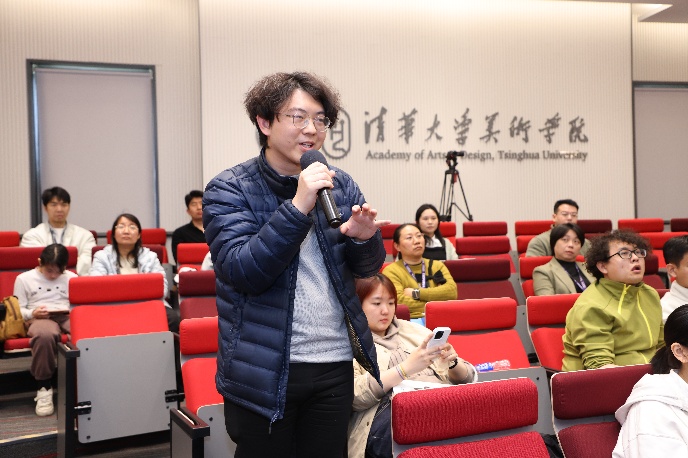
During the interactive session, Kochan offered candid insights on emerging designers’ growth, AI-era design firm models, and core future skills. He encouraged students to build professional credibility by delivering flawless results in small projects, gradually mastering “design workflows” to expand influence. Warning against AI-driven “homogenization of aesthetics and experience,” he emphasized designers’ unique value lies in providing differentiated, quality-driven, and value-based creative solutions that elevate “mediocrity” to “excellence.”
The lecture dissected the design industry’s transformation in technology, roles, and value, while elevating design to a leadership role in shaping identity, fostering cultural understanding, and driving sustainable development. Kochan’s cross-disciplinary vision—spanning business, industry, and culture—offered Tsinghua’s faculty and students a profound reflection on design’s future responsibilities, embodying the theme “Design Prompting New Responsibilities.”