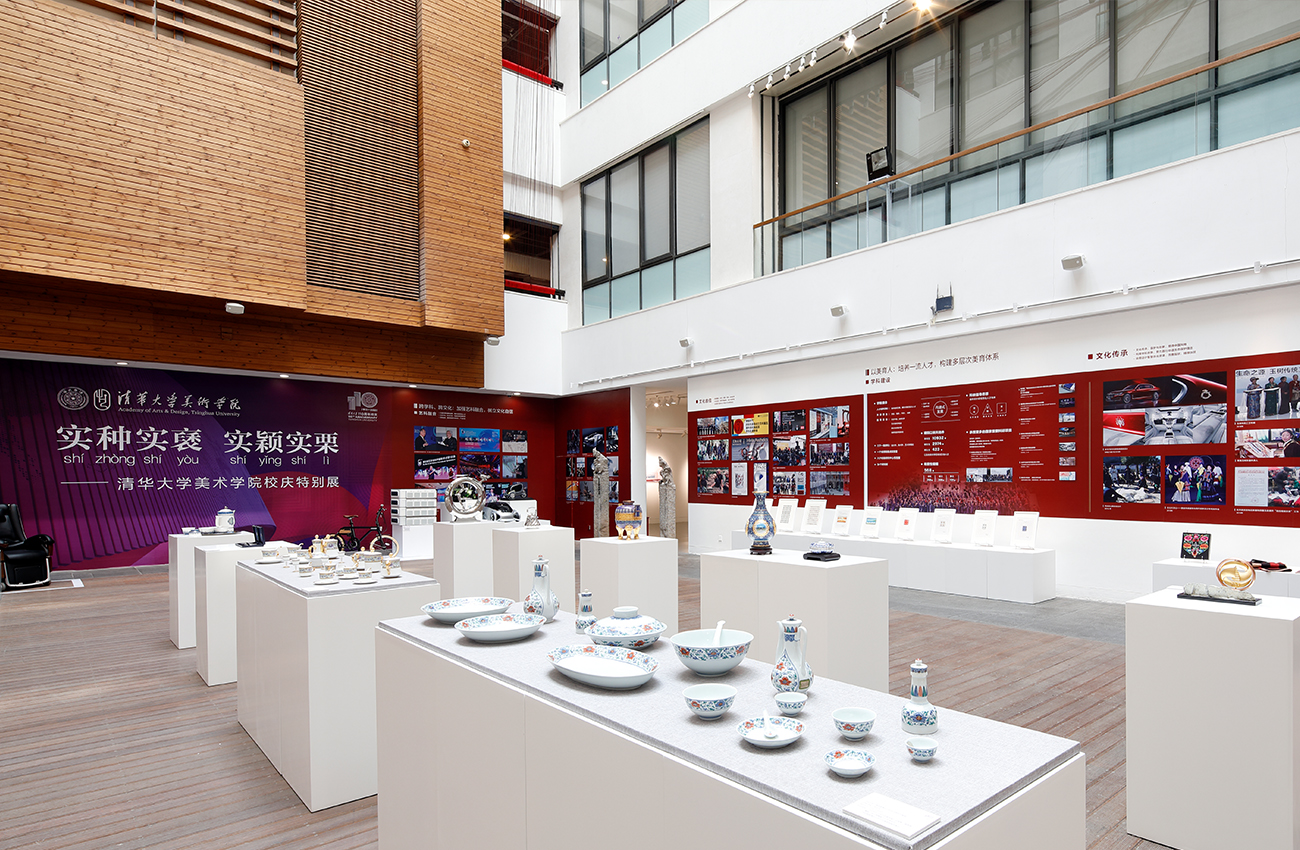
During London Fashion Week in February 2026, Hu Bing—China's pioneering supermodel and the inaugural Global Ambassador for the British Fashion Council (BFC)—alongside his Charity initiative project HUBING SELECTS, presented a special exhibition titled “Cyber Heritage X Sustainability: CYPHERITAGE” in London's premier art district. Maruyama Aya, a doctoral candidate at the Academy of Arts & Design, Tsinghua University, took center stage as the lead designer to showcase her avant-garde works at the event.
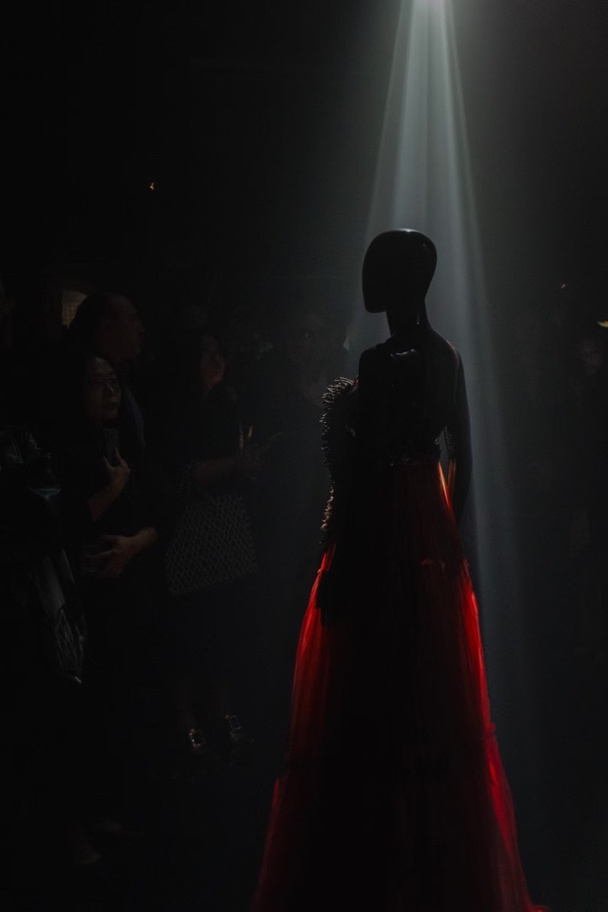
(Image: Exhibition Scene)
The International Stage: A Return to London Fashion Week
Maruyama Aya has made a transcendent return to London Fashion Week following a highly acclaimed debut. Since serving as the lead designer for the LFW closing day runway show in September 2025—where her creations garnered widespread praise from international media and industry insiders, successfully cementing her place on the official LFW designer roster—her much-anticipated comeback arrives exactly one season later.

(Image: Official Designer Roster of London Fashion Week)
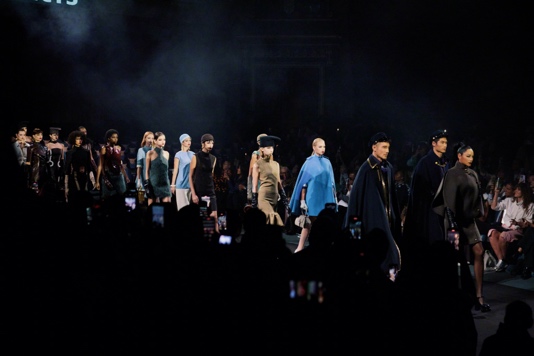
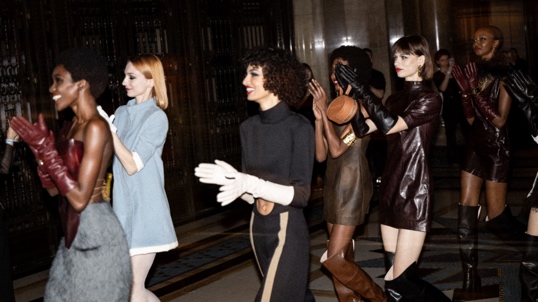
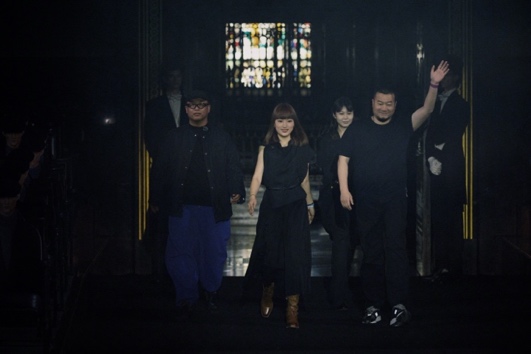
(Image: September 2025, London Fashion Week Closing Day Runway Show Finale)
An International Platform: The Context of Cultural Exchange
As a flagship cultural event during London Fashion Week, this independent gallery exhibition situated Chinese Intangible Cultural Heritage (ICH) squarely at the vanguard of modern design. By synthesizing physical garments, immersive installations, and interactive digital art, the presentation drew broad international media coverage—effectively recontextualizing ancient craftsmanship for today's global creative industry.
Cyber Heritage: The Contemporary Translation of Traditional Craftsmanship
Anchored by the core concept of “Cypheritage” (Cyber + Heritage), the exhibition emphasizes the profound re-encoding of ancient culture against the backdrop of a digital civilization. Maruyama's featured pieces are fundamentally rooted in Chinese intangible cultural heritage, specifically traditional botanical dyeing and Bai ethnic tie-dye techniques.
By utilizing contemporary technological mediums such as 3D-printed structures and digitally generated imagery, she executed a structural translation of these ancient techniques. This innovative approach elevates traditional motifs and material aesthetics from two-dimensional dyed and woven textiles into three-dimensional architectures and dynamic videos, thereby achieving an authentic contemporary expression within a modern technological paradigm.
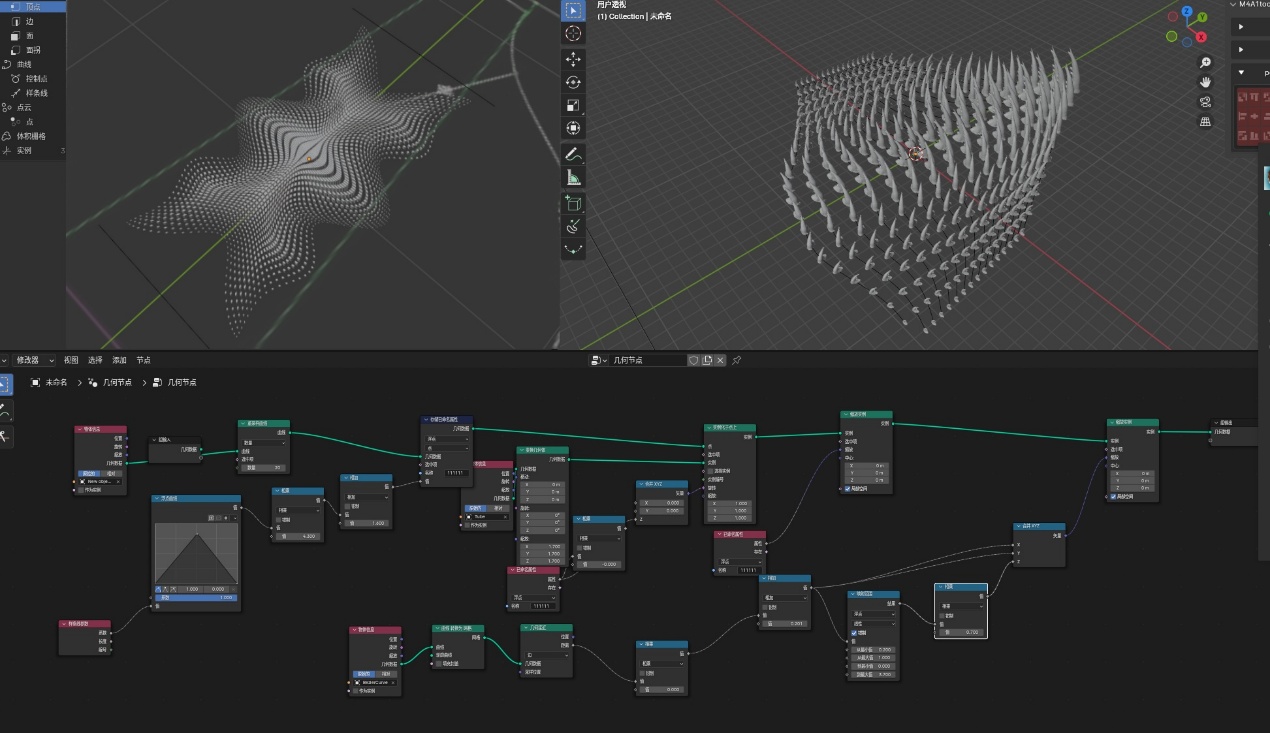
(Image: Scanning the tie-dye texture for 3D modeling translation)

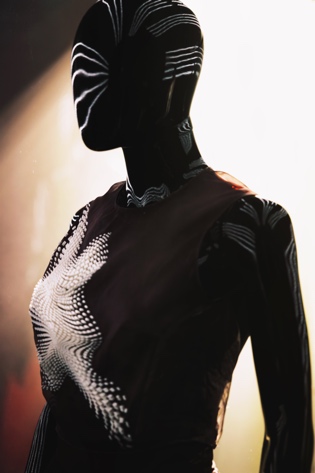
(Image: 3D printing on silk, infused with color through botanical dyeing methods)
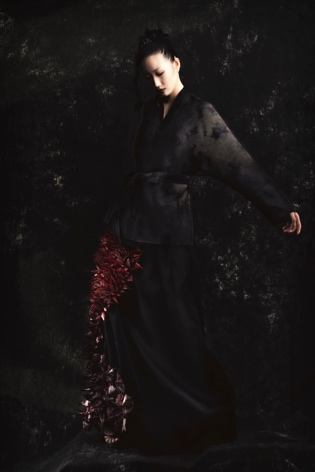
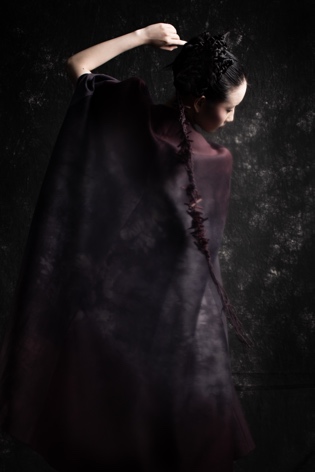

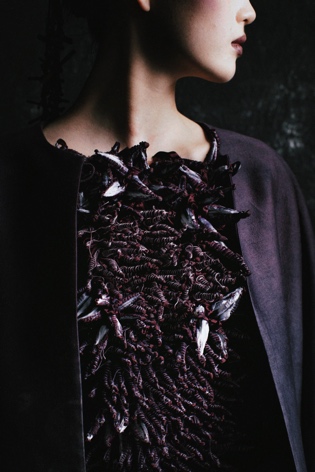
(Image: Selected garments from the exhibition integrating Bai ethnic tie-dye and botanical dyeing)
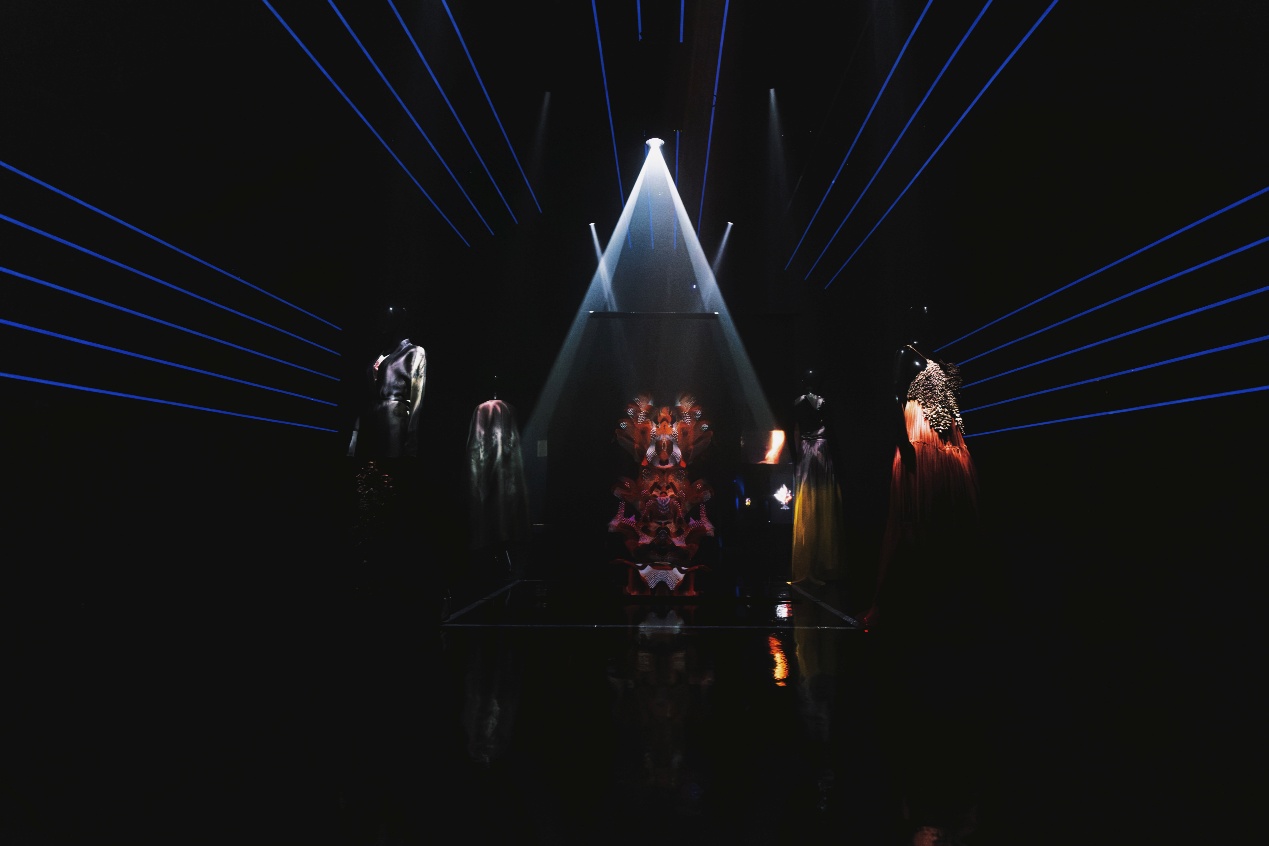
Digital Interaction: Generative Expressions of Intangible Cultural Heritage
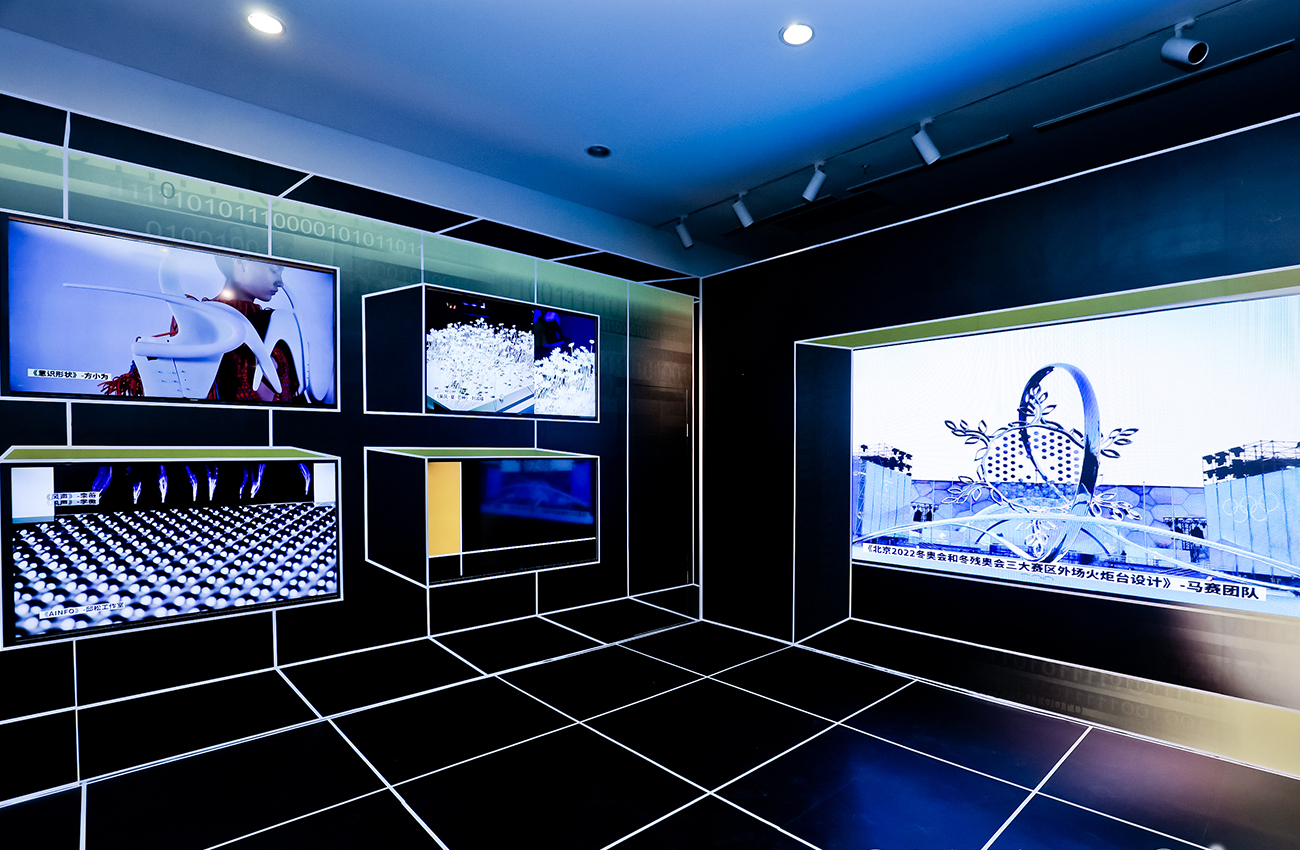
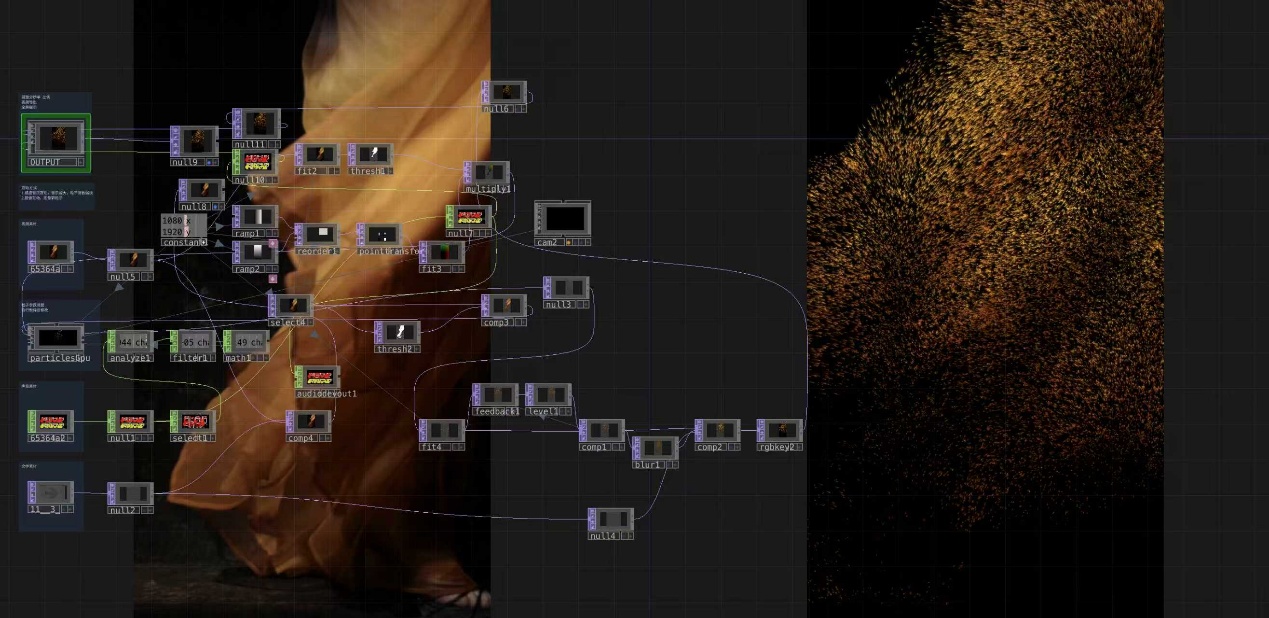
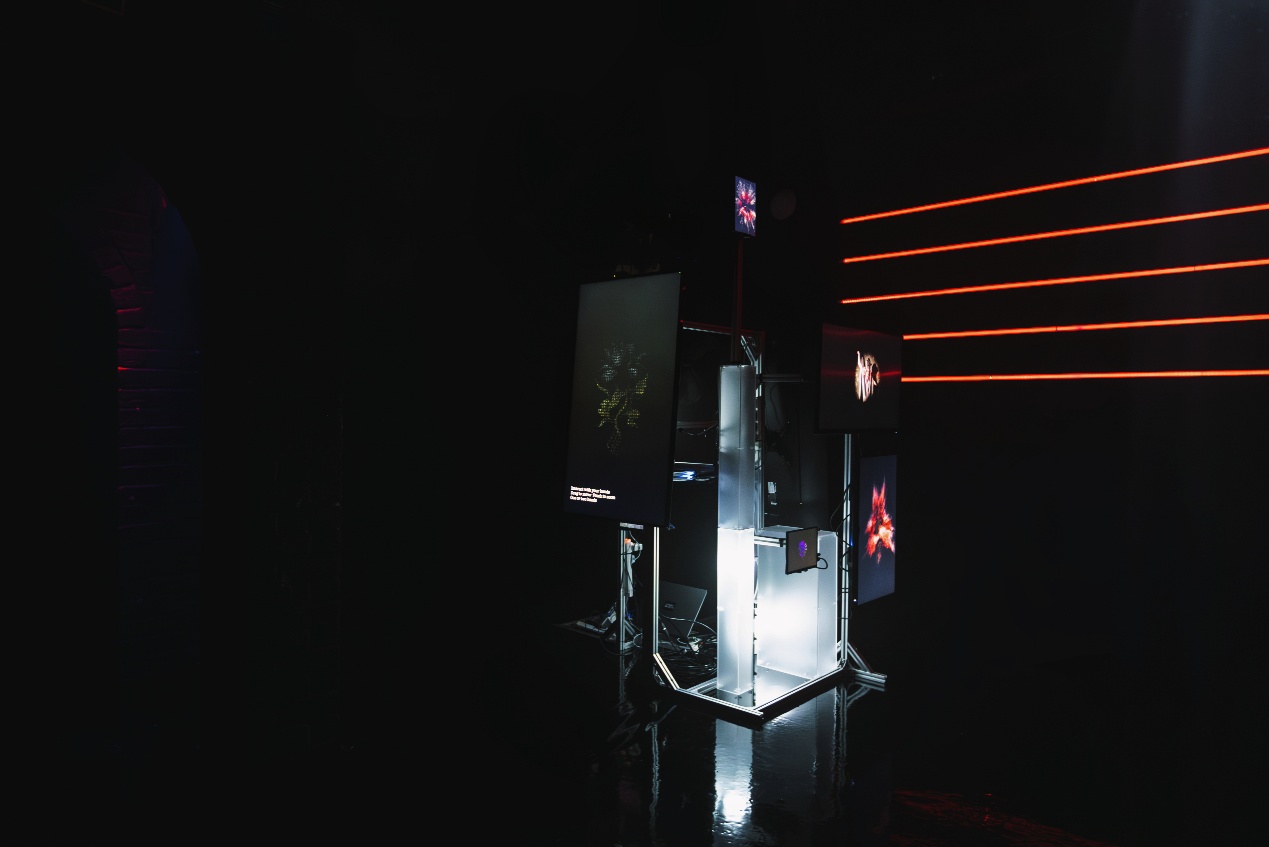
Beyond the tangible garments, the physical exhibition unveiled a state-of-the-art digital visual system perfectly synchronized with both the clothing and an accompanying musical score.
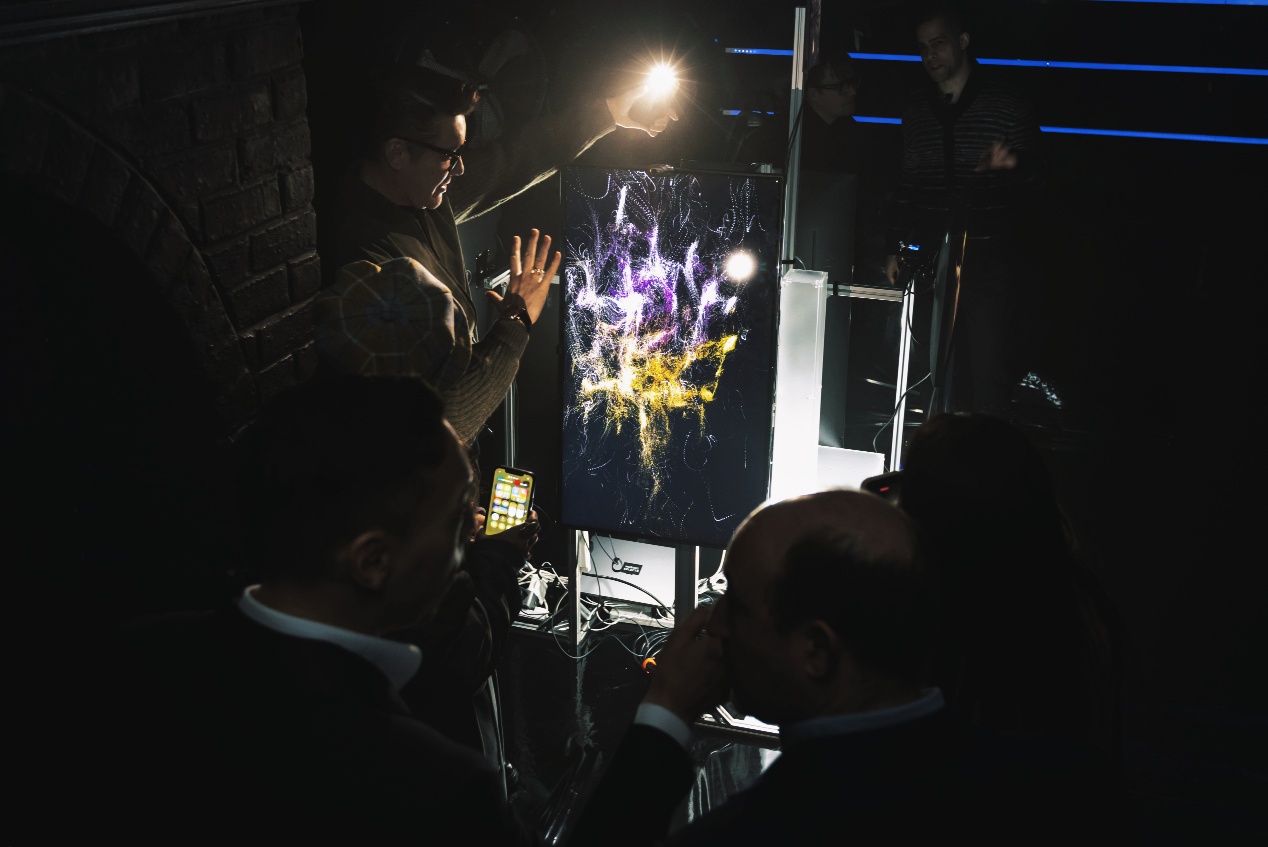
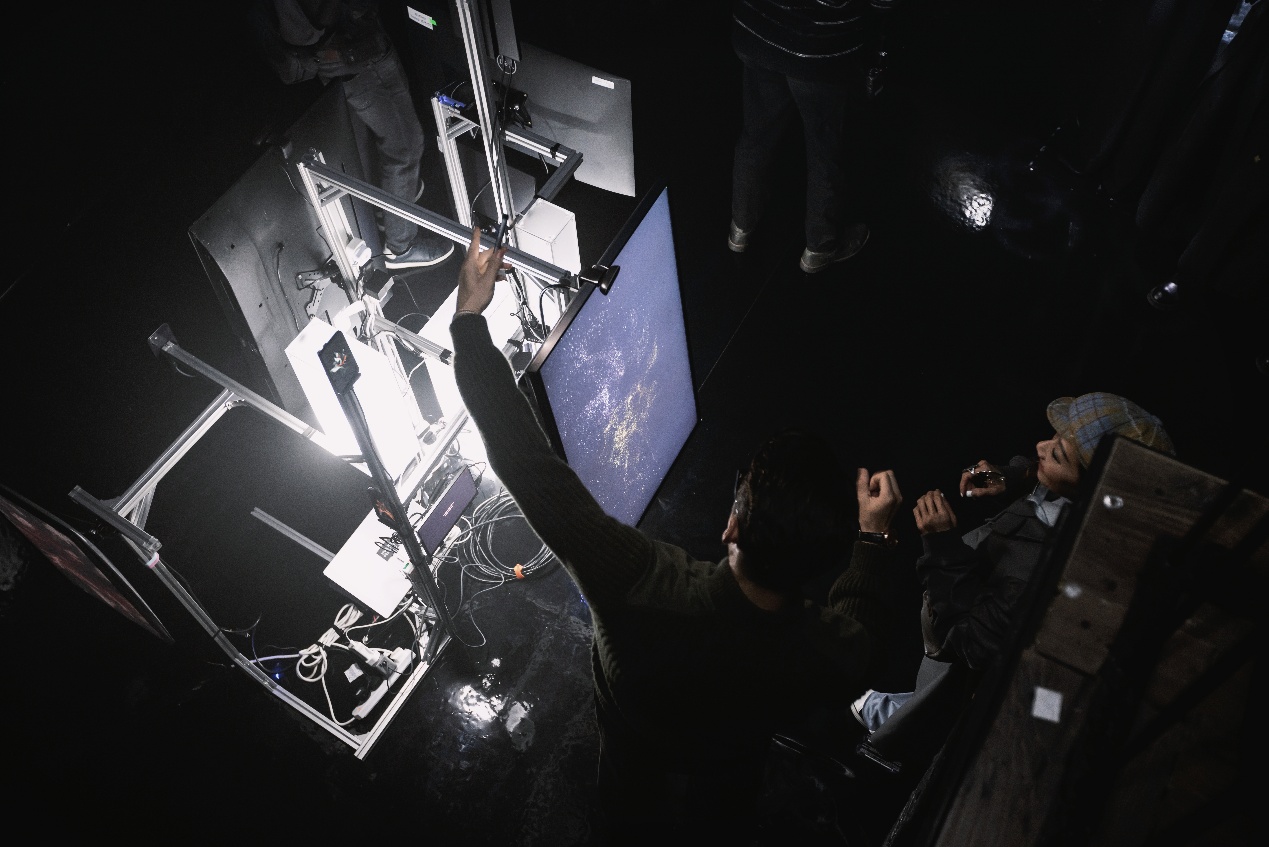
Establishing a timecoded audiovisual score strictly mapped to the music's phrasing, rhythm, melody, and timbre, the system translated the organic textures of tie-dye into dynamic particle constructs. The aggregation, flow, density, and transitions of these particles were meticulously choreographed to correspond with sound structures across time, pushing the continuous evolution of traditional motifs within an interactive digital ecosystem. Audiences were invited to seamlessly interact with the generative system via hand gestures, altering the spatial trajectories of “digital dyes” within the established audiovisual framework—an immersive mechanism precisely designed to let viewers experience the “controllable randomness” inherent in traditional handcrafting.
This cutting-edge digital media component was developed with the assistance of Tao Xiaotong, a doctoral candidate from the Department of Visual Communication Design at the Academy of Arts & Design, Tsinghua University.
Spatial Narrative: A Transcendent Cross-Disciplinary Art Collaboration
In orchestrating the holistic environment, the lighting and spatial narrative were masterfully designed by Zaha Hadid resident artist Darren Johnston.
Having previously helmed experiential presentations for top-tier brands at London Fashion Week, Johnston seamlessly synthesized industrial metallic architectures, dynamic lighting ecosystems, and fluid digital particle streams. Leveraging a contemporary installation language, he cultivated an exhibition environment that was simultaneously immersive and inherently futuristic. This collaboration successfully realized a profound cross-disciplinary integration of traditional crafts, high fashion, and avant-garde spatial art, inaugurating innovative modalities for presenting Chinese intangible cultural heritage on the global stage.
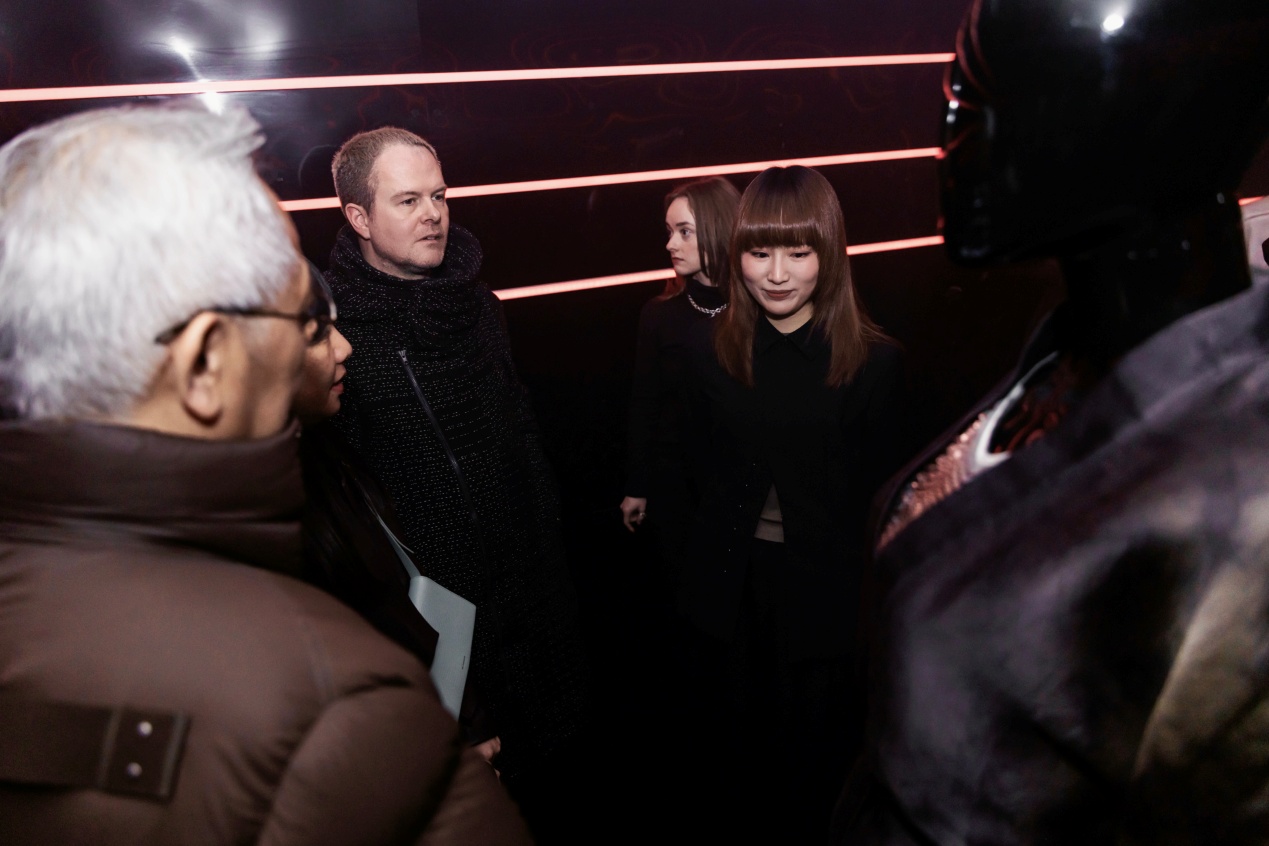
(Image: Darren Johnston, left)
Chinese Culture: A Contemporary Voice for the Global Era
During an interview, Maruyama Aya articulated that traditional culture is far more than a historical relic relegated to preservation; it is destined to become a seminal resource within future design systems.
“When tradition enters the digital era, it ceases to be merely a static object on display; rather, it actively participates in generating new production structures and aesthetic frameworks,” Maruyama noted. Ignited by the fusion of design and digital technology, traditional Chinese craftsmanship is carving unprecedented pathways of expression within emerging technological landscapes.
In recent years, as the international influence of Chinese culture continues to surge, decoding and articulating traditional heritage within contemporary contexts has materialized as a paramount dialogue across art and design disciplines. Galvanized by a cross-boundary convergence of design, technology, and art, the “Cypheritage” project projects Chinese ICH techniques into the global spotlight through a fiercely contemporary prism, unlocking expansive new frontiers for the worldwide resonance of traditional Chinese culture.

(Image: Maruyama Aya, right)