In recent years, climate change and health have emerged as focal points of global concern, driving accelerated low-carbon transitions across energy, transportation, industry, agriculture, and urban infrastructure. Yet, a critical challenge remains: how to deepen public awareness and emotional resonance regarding the health risks of climate change, and break the cycle of “cognition without action” that plagues climate communication. Art is increasingly emerging as a pivotal force in addressing this gap.
Since 2023, the “Environmental ‘Theatre’” research team, guided by Professor Cui Xiaosheng from the Academy of Arts & Design, Tsinghua University, has collaborated extensively with the “Lancet Countdown Asia Center,” led by Professor Cai Wenjia from the Department of Earth System Science at Tsinghua University. Focusing on issues such as extreme precipitation, drought, flooding, heatwaves, and sea-level rise, the partnership explores cross-disciplinary artistic practices to forge climate narratives that are tangible, interactive, and thought-provoking.
I. Climate Narratives and Localized Experience
For most, climate change is a slow, invisible process. Professional scientific formulas and abstract charts often distance the public from tangible engagement with the climate crisis. Thus, translating scientific data into sensory, visual narratives and interactive media has become key to bridging cognition and action.
In recent years, frequent global extreme rainfall and drought events have intensified health risks and strained urban living environments. Against this backdrop, the artwork The Next Moment employs “scientific data × visual symbols × environmental soundscapes” as its medium, transforming climate projections into a multi-dimensional emotional experience. Through overlapping visual narratives and a scroll-like interactive installation, viewers turn a hand-cranked wheel, causing particles of future climate data to “wash” over unfolding scenes of daily life—accompanied by digitally manipulated ambient sounds—metaphorizing that “the next moment is in our hands” and underscoring the global and universal nature of climate change.
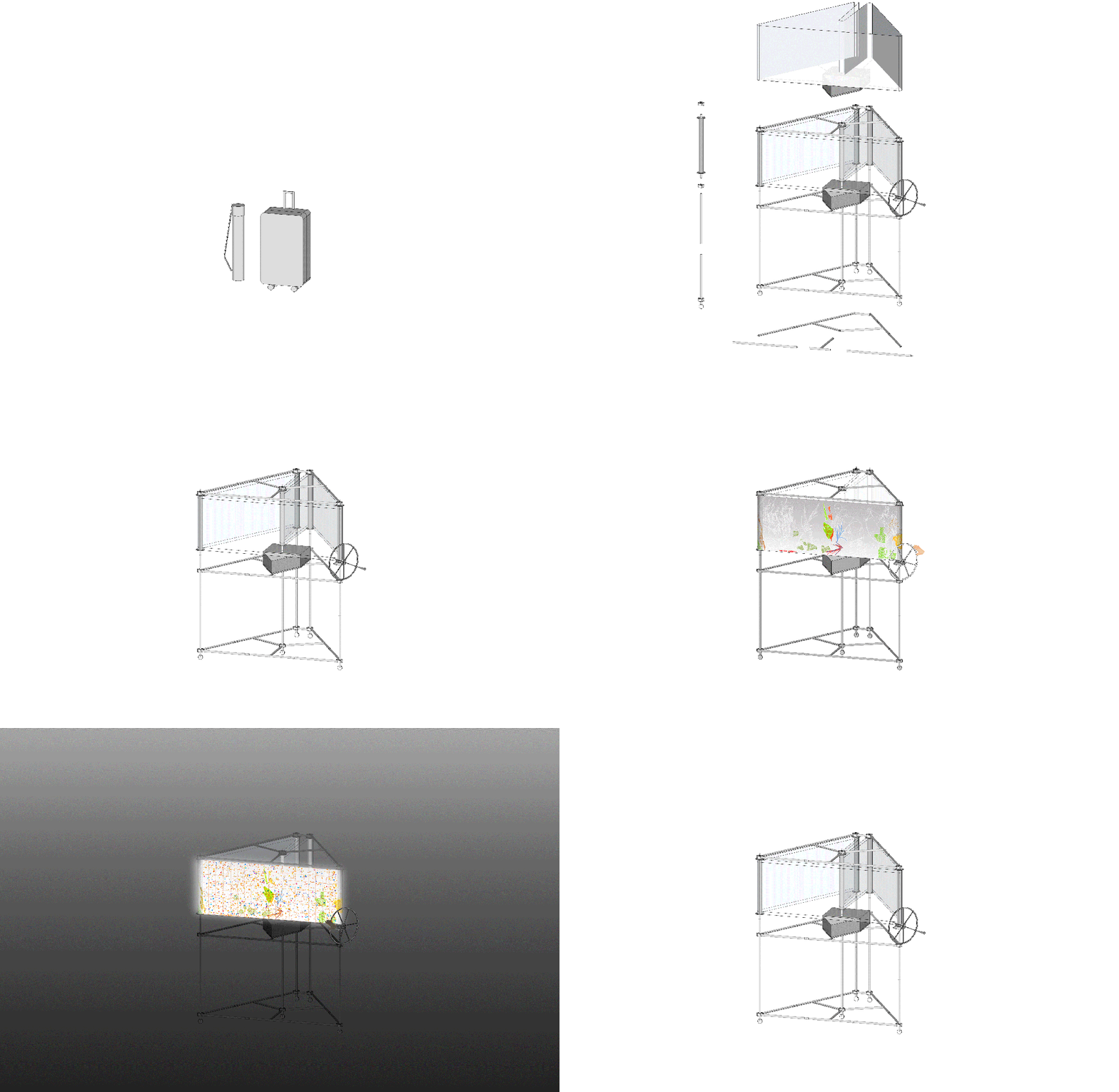
Concept Sketch of the Installation
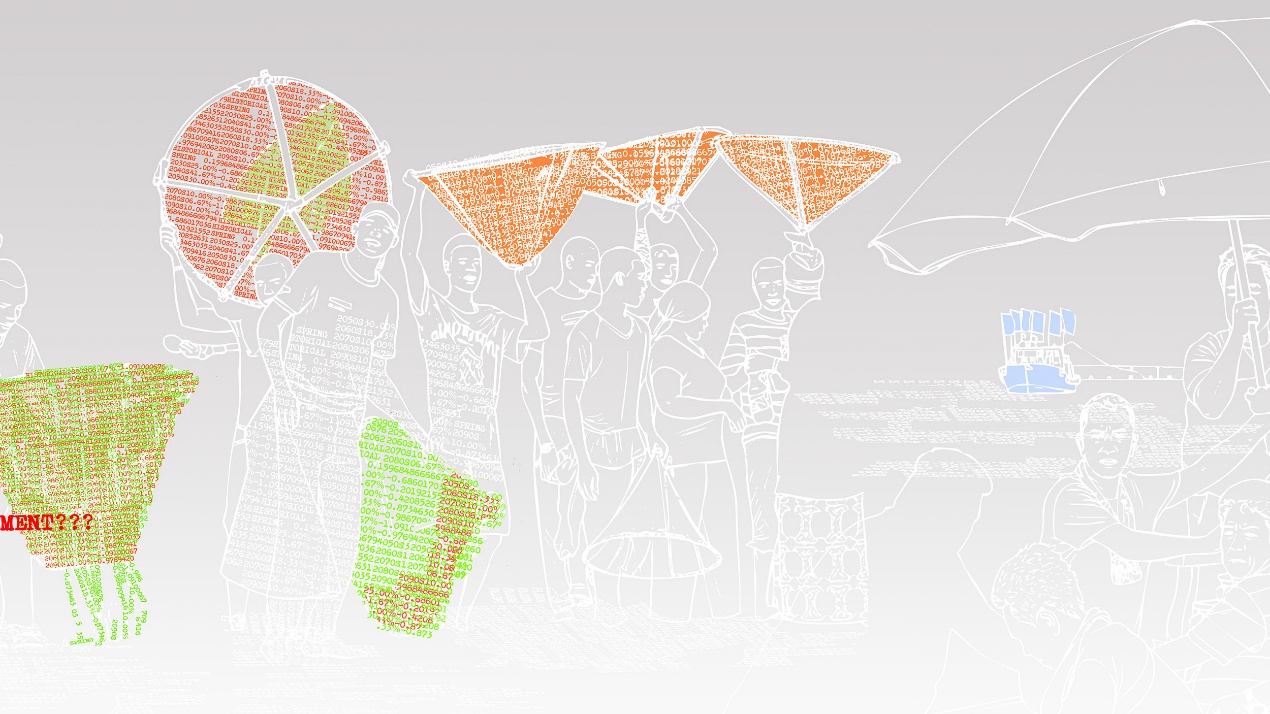
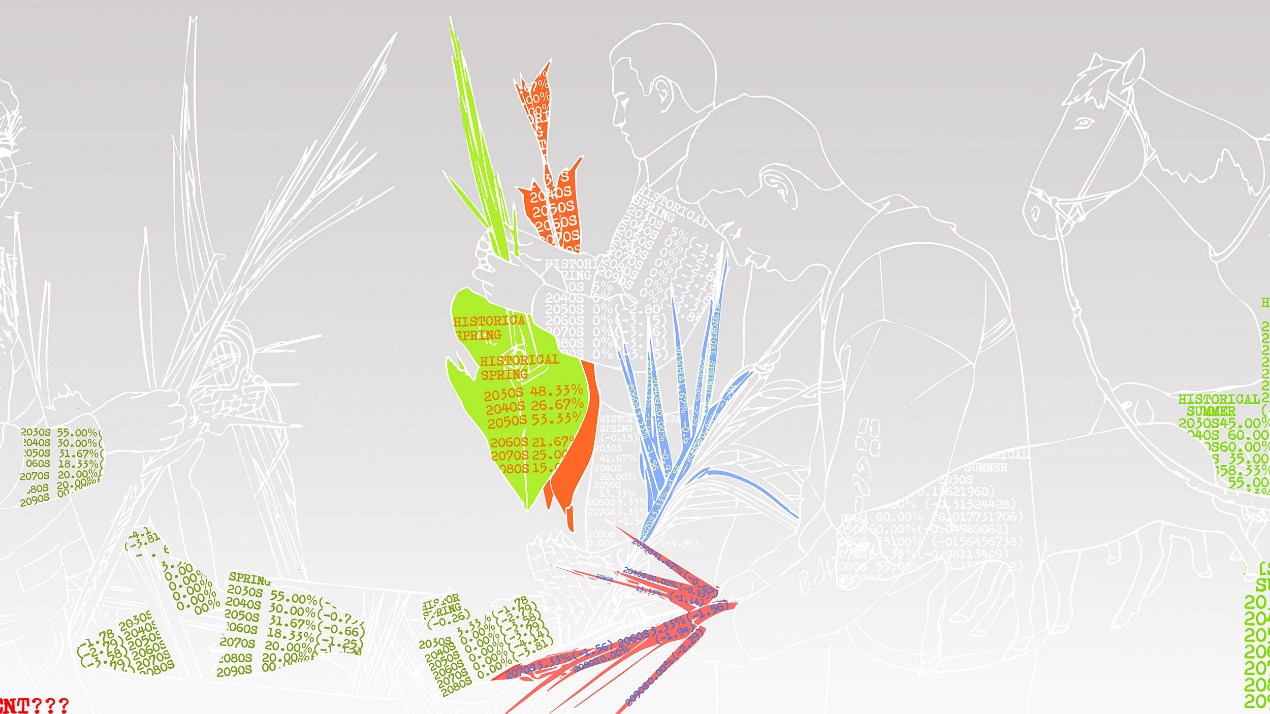
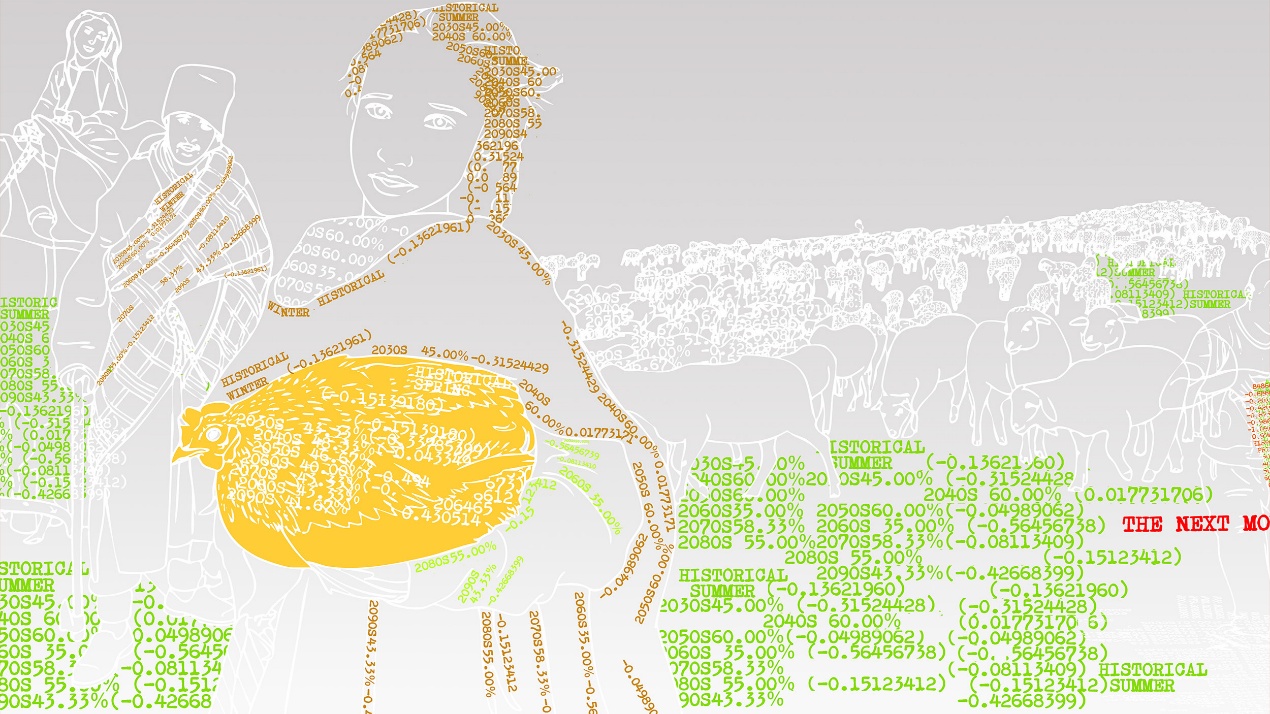
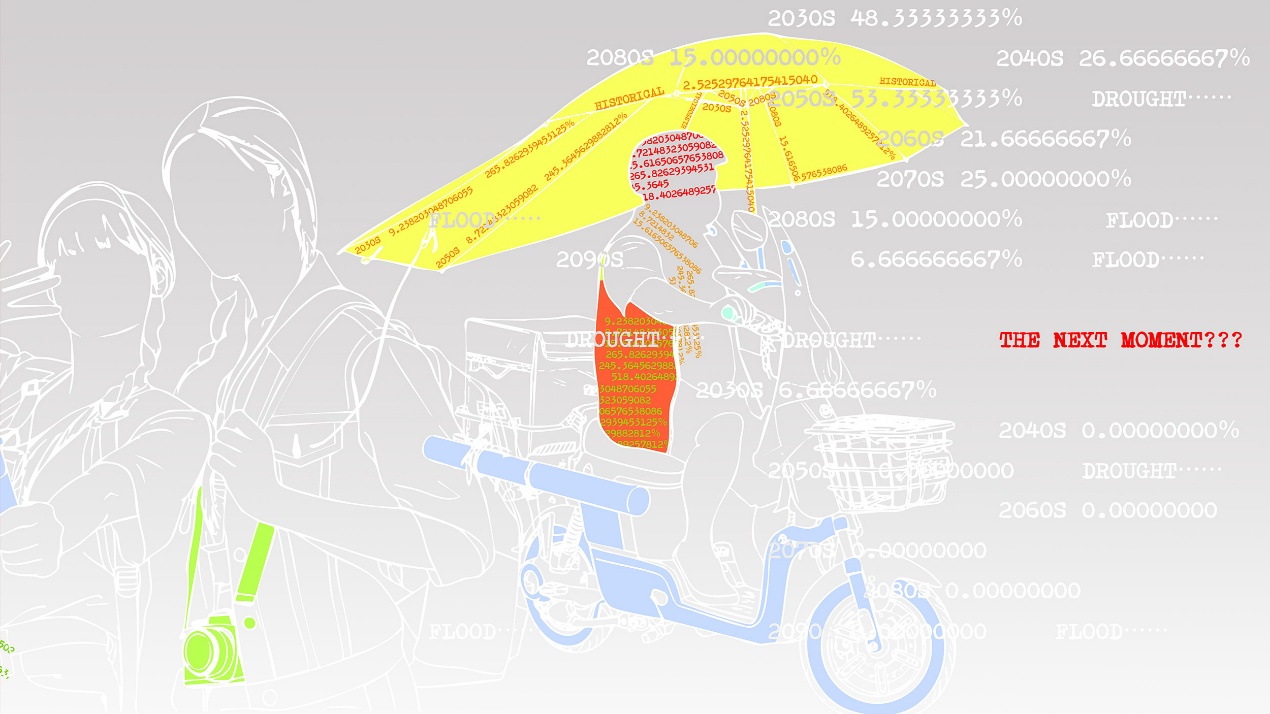
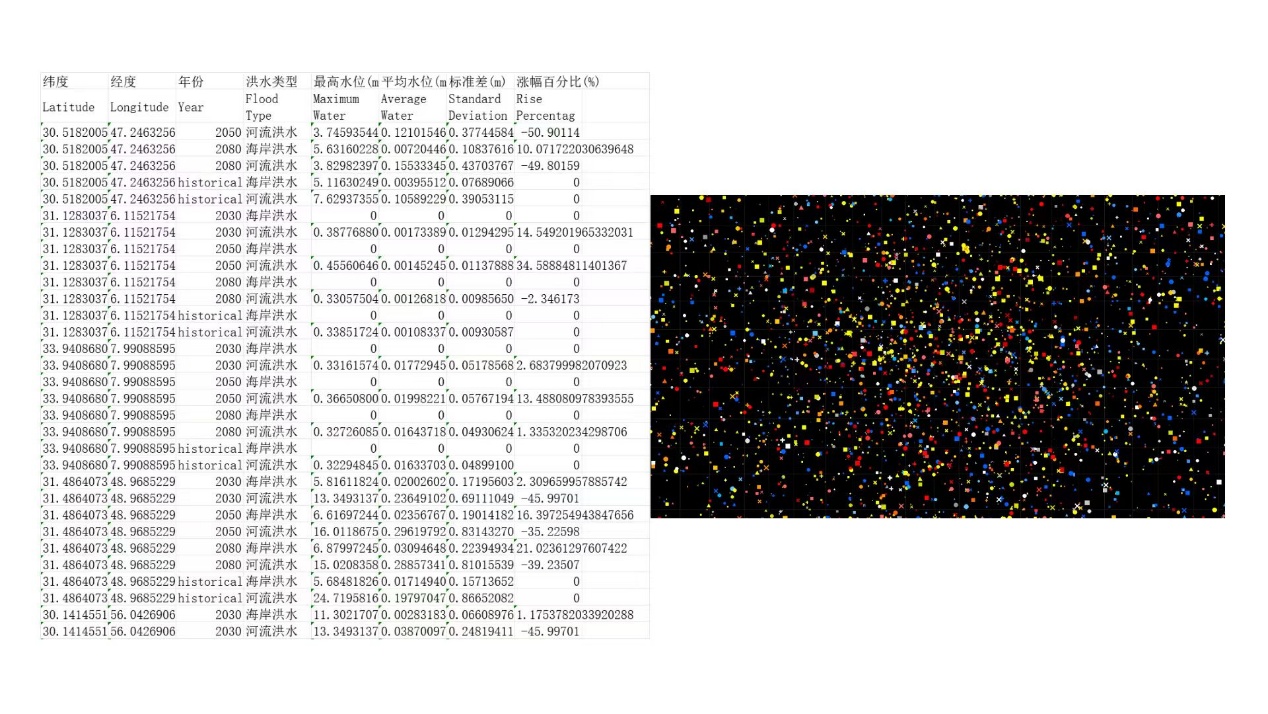
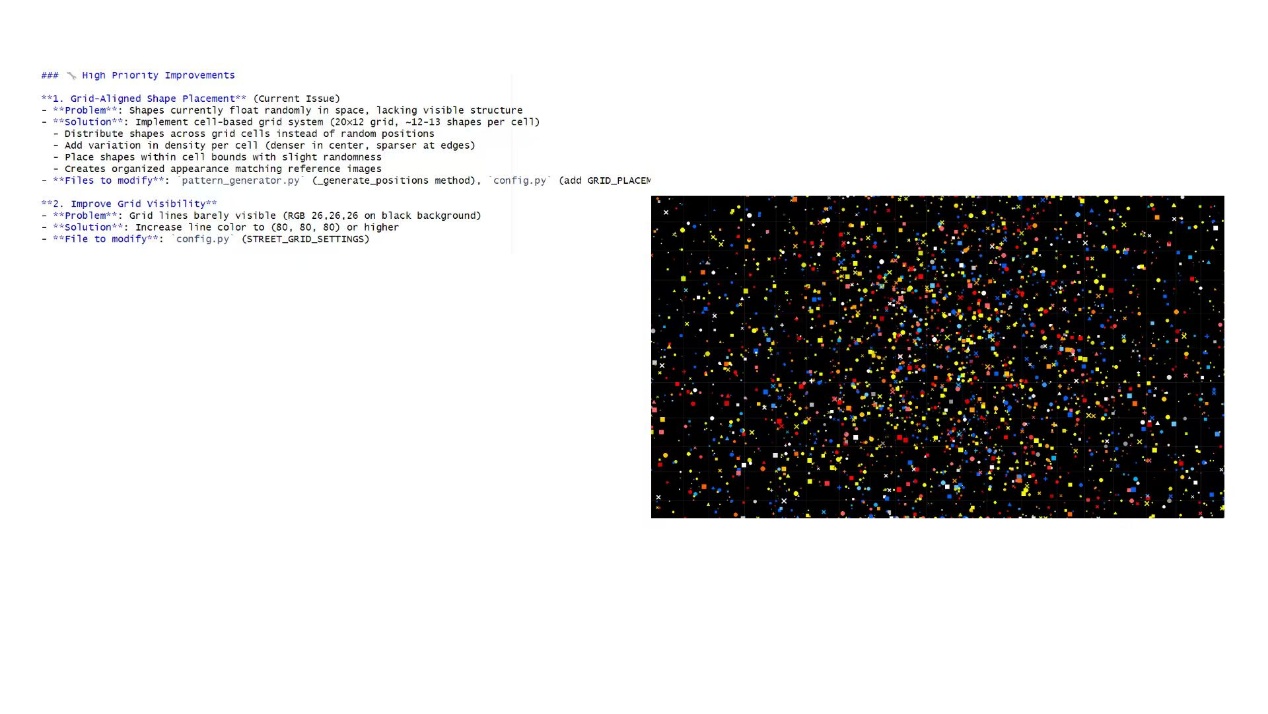
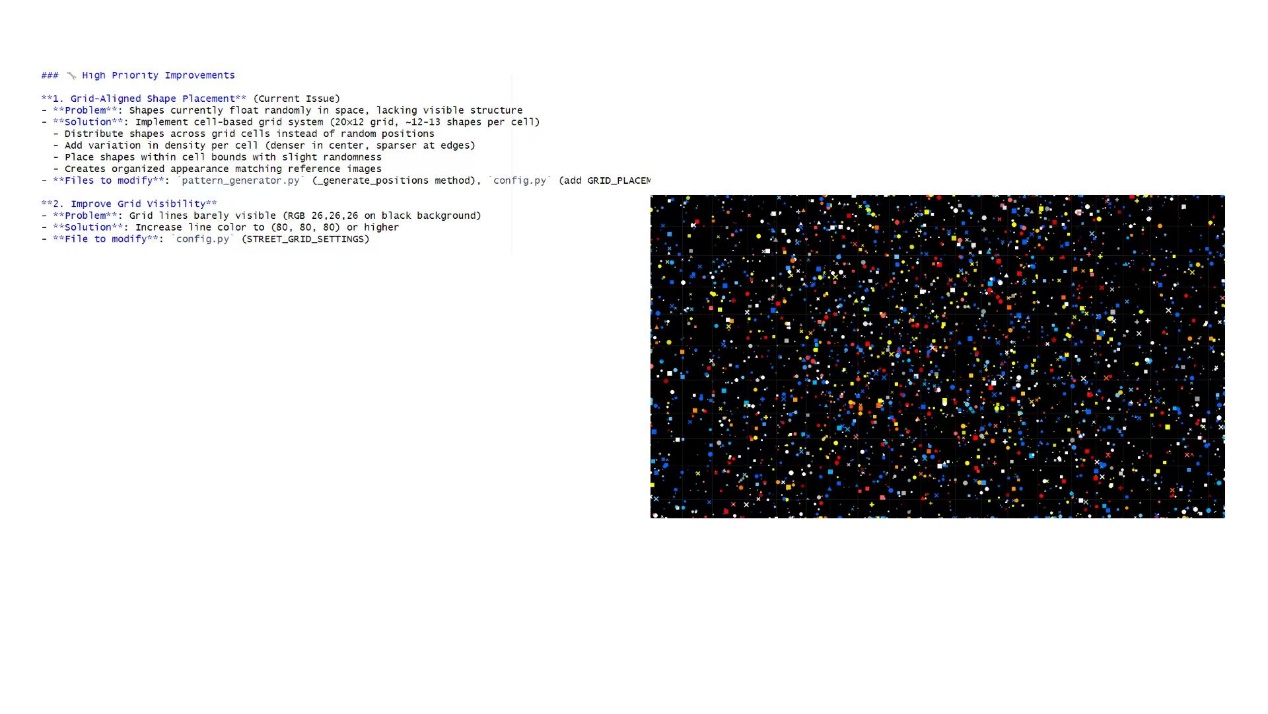
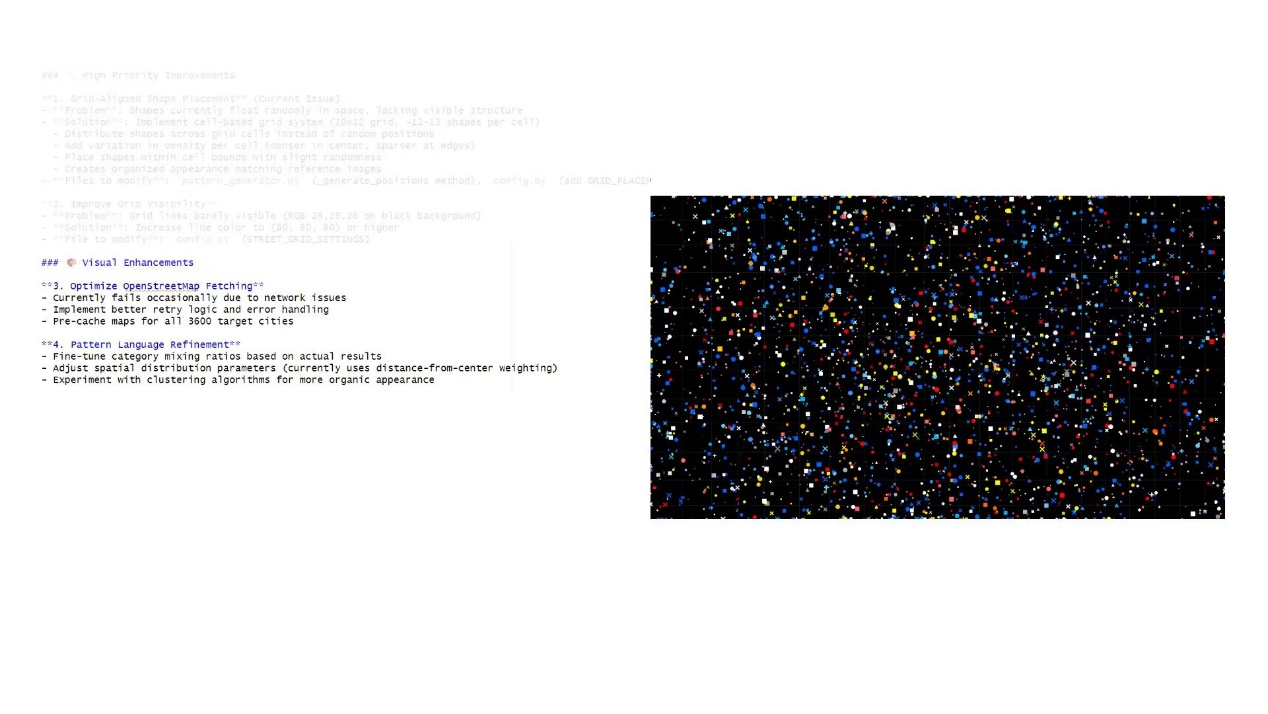
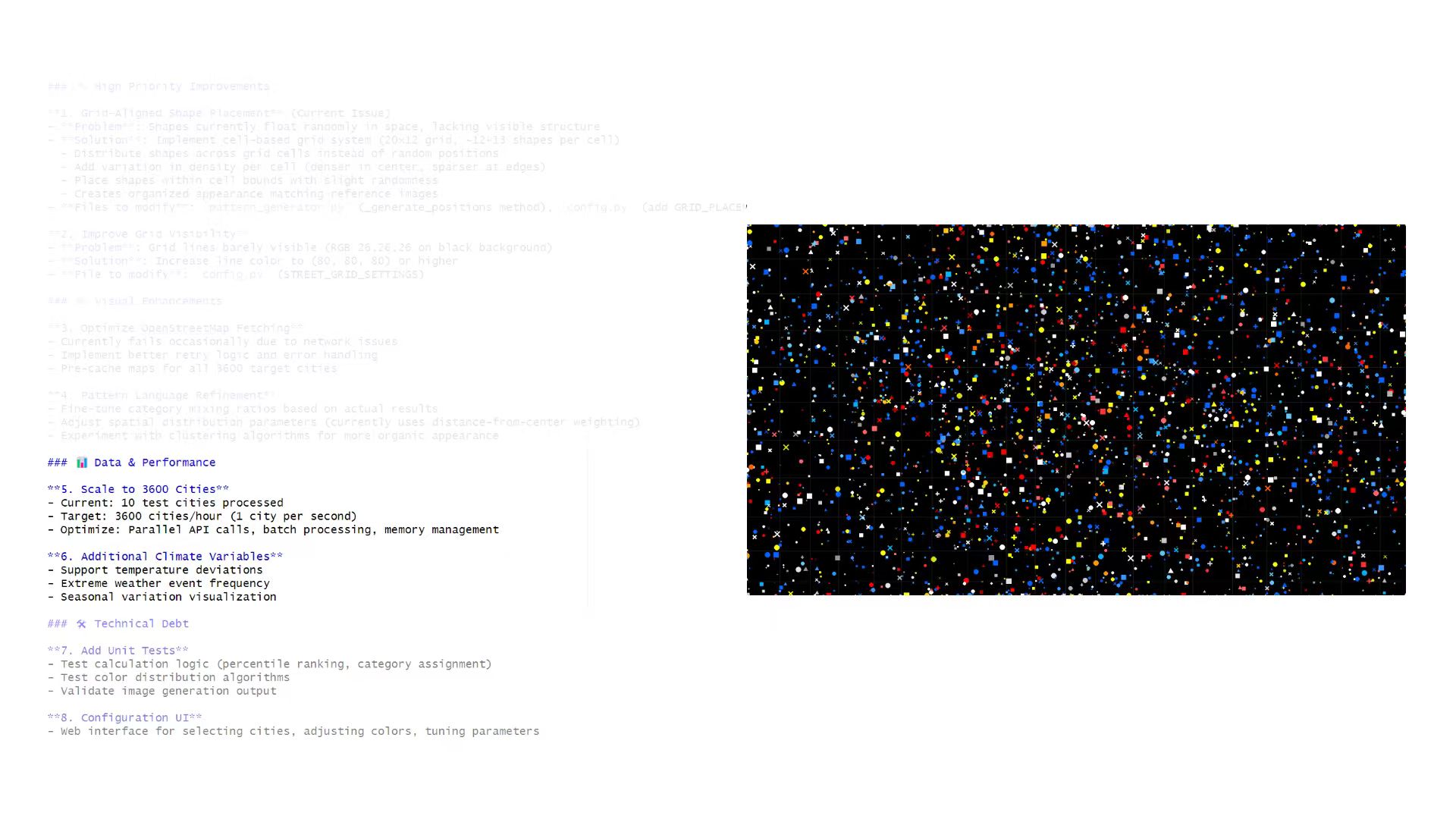
The foreground features a collaged ensemble of life scenes vulnerable to precipitation, while the background dynamic imagery, derived from future climate data, visualizes global urban precipitation trends: red for extreme change, yellow for significant change, and white/blue for moderate change. Sound samples from rivers, rainforests, rice paddies, and deserts are digitally fragmented and time-stretched. (Data source: global precipitation projections compiled by the Lancet Countdown Asia Center.)
To balance global climate narratives with localized expression, the work was exhibited at the China Pavilion during the 30th Conference of the Parties (COP30) to the UNFCCC in November 2025. Inspired by the Amazon rainforest ecosystem of Belém (the host city), the artists adopted high-saturation colors, echoing the visual language of climate research charts. The modular design ensures ease of international transport, rapid assembly, and structural stability, with the entire installation collapsible into a single suitcase.
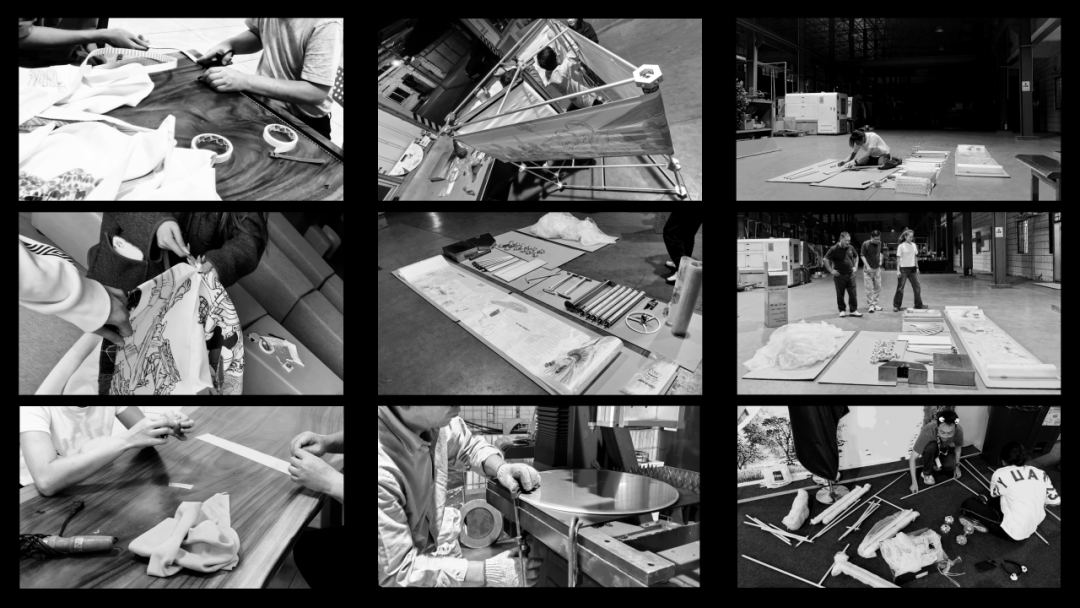
Installation Structure Experiments and Testing
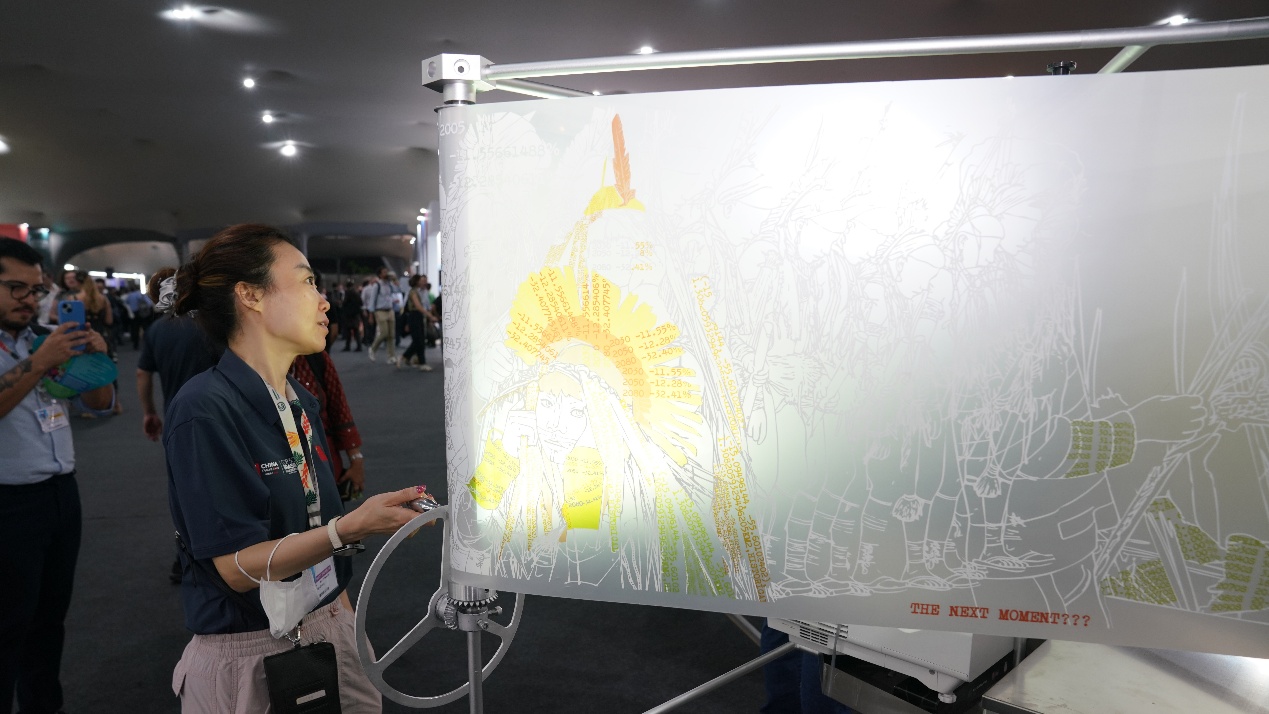
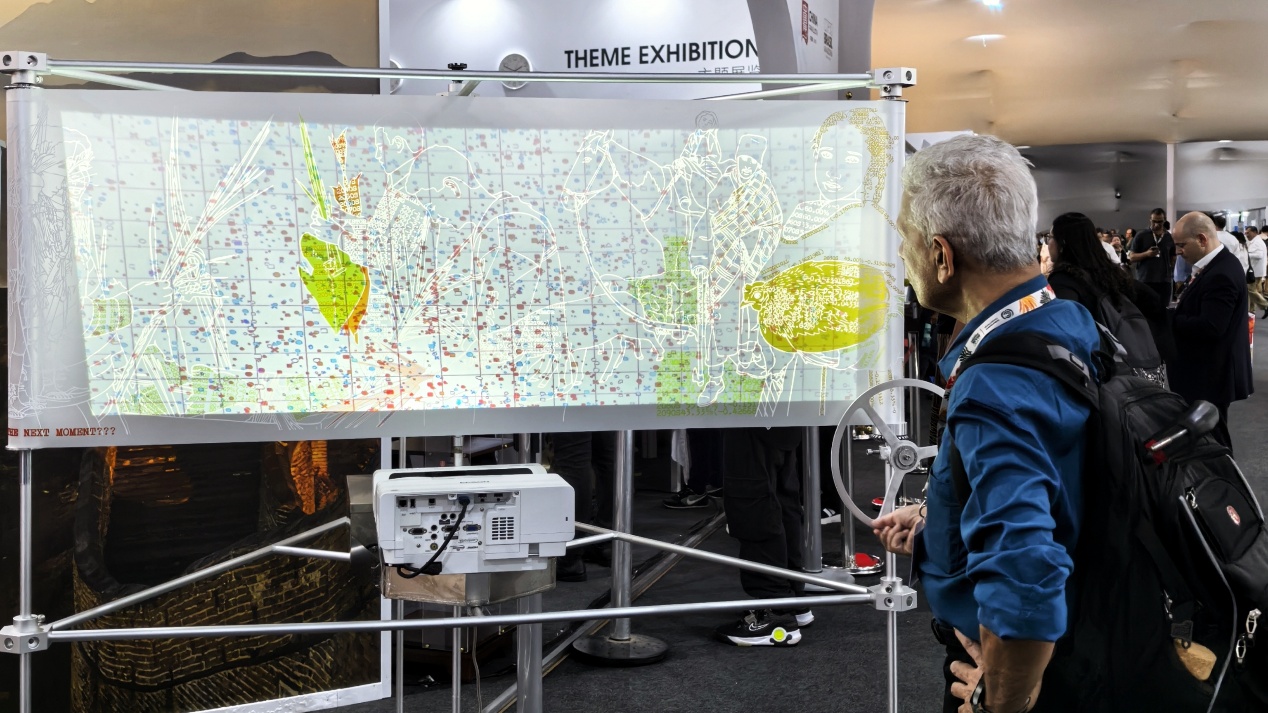
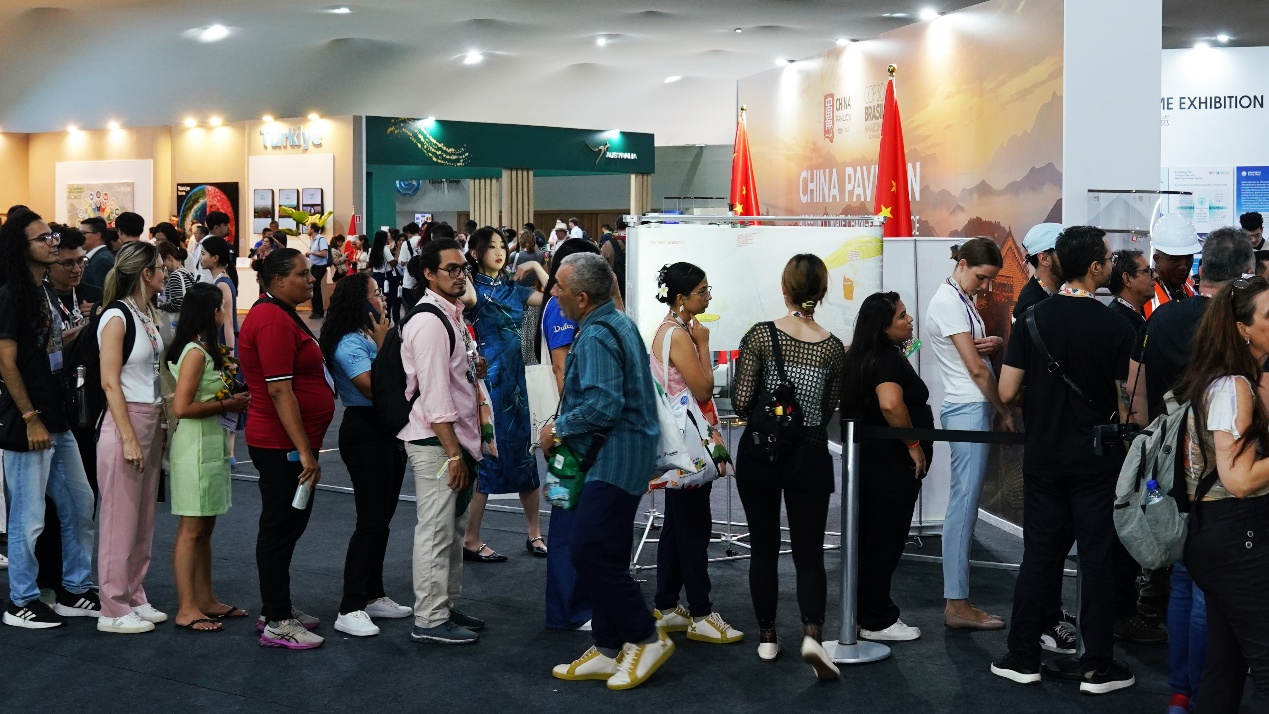
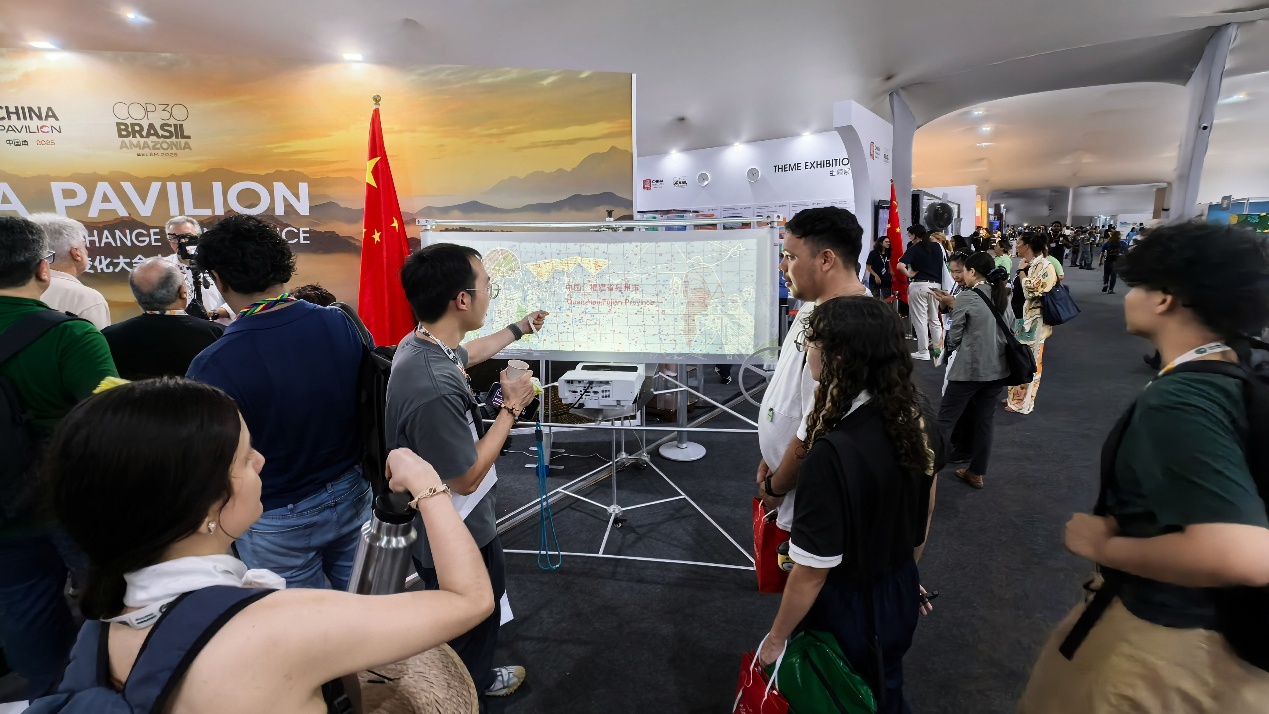
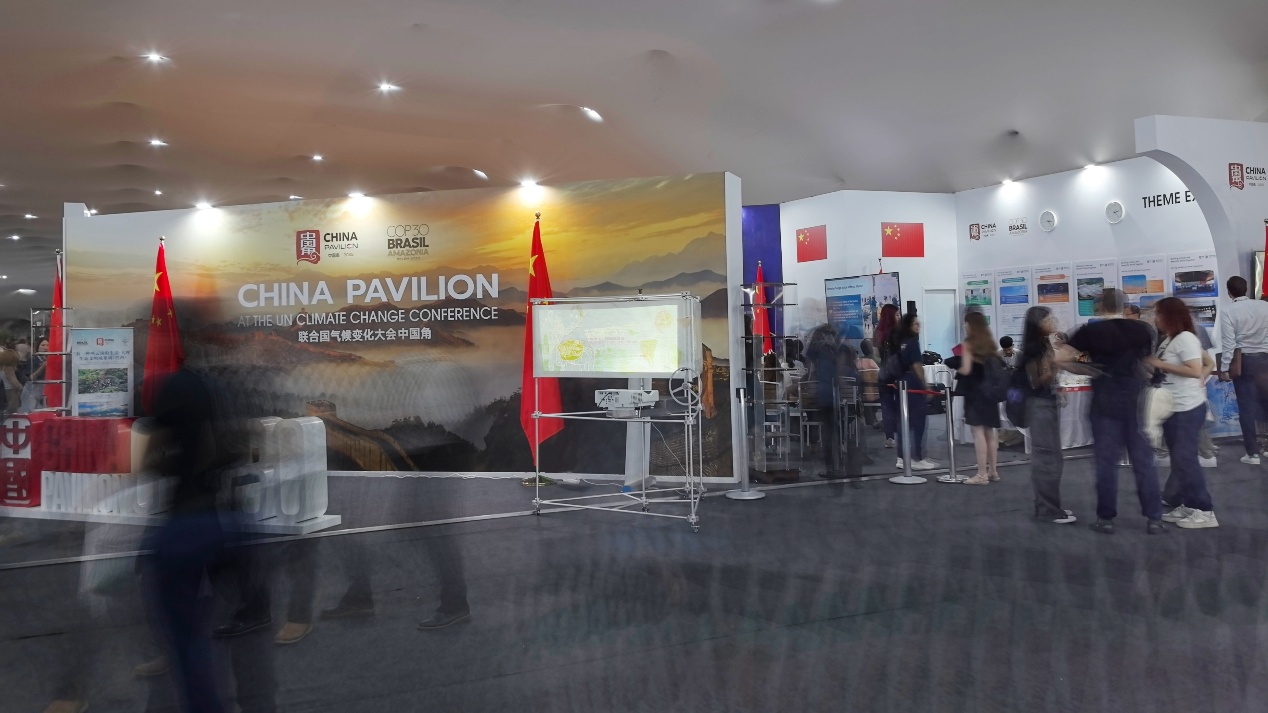
The Next Moment was showcased at the “Climate and Health Forum” within the China Pavilion at COP30, hosted by Tsinghua University’s Department of Earth System Science.
·Installation Design: Luo Jia
·Sound and Algorithm Design: Wang Zilu, Luo Jia
·Climate Data: Zhang Shangchen, Wu Hanyi, Zhu Yuhan
·Testing and Assembly: Ke Yibo, Liao Weiyi, Ding Zitong
·Fabrication: Fu Tingsheng
II. Climate Change and Bodily Perception
How can the grand narrative of climate change be made concrete through physical sensation? As extreme heatwaves increasingly disrupt daily life, their impact on outdoor health, labor safety, and societal functions extends beyond data-driven warnings. Sirius, an art installation, seeks to foster a sensory dialogue between the human body and environmental crisis.
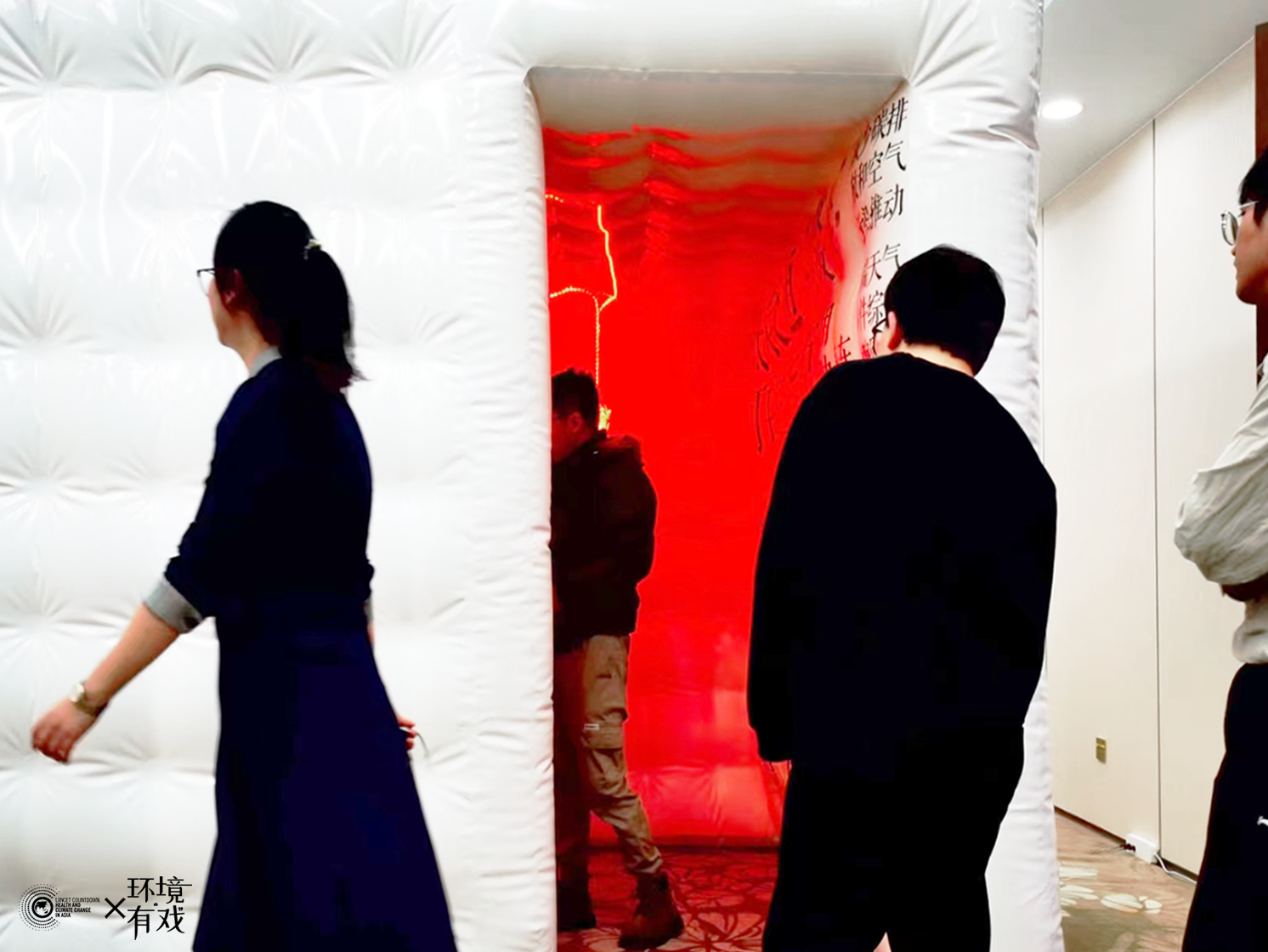
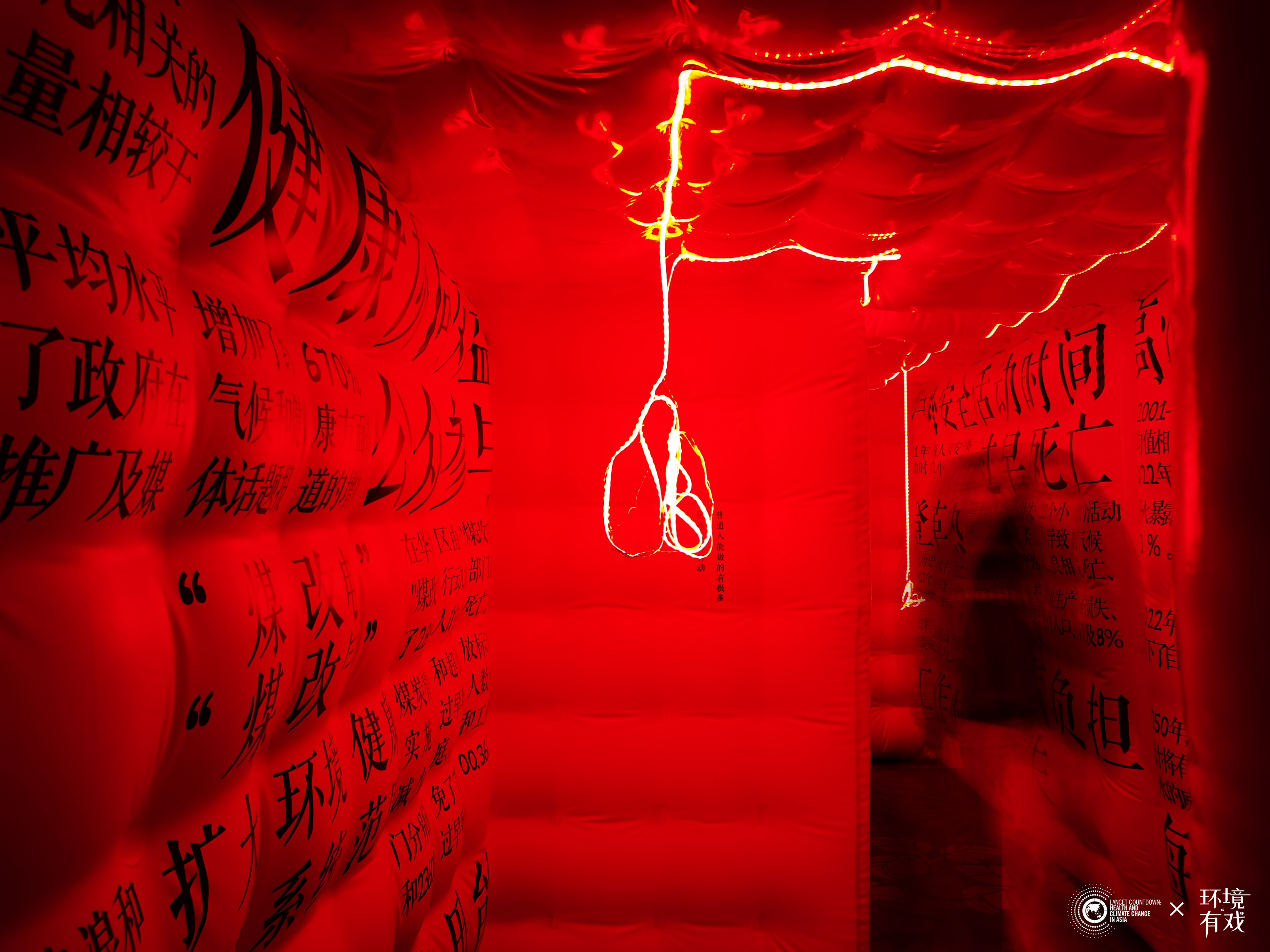
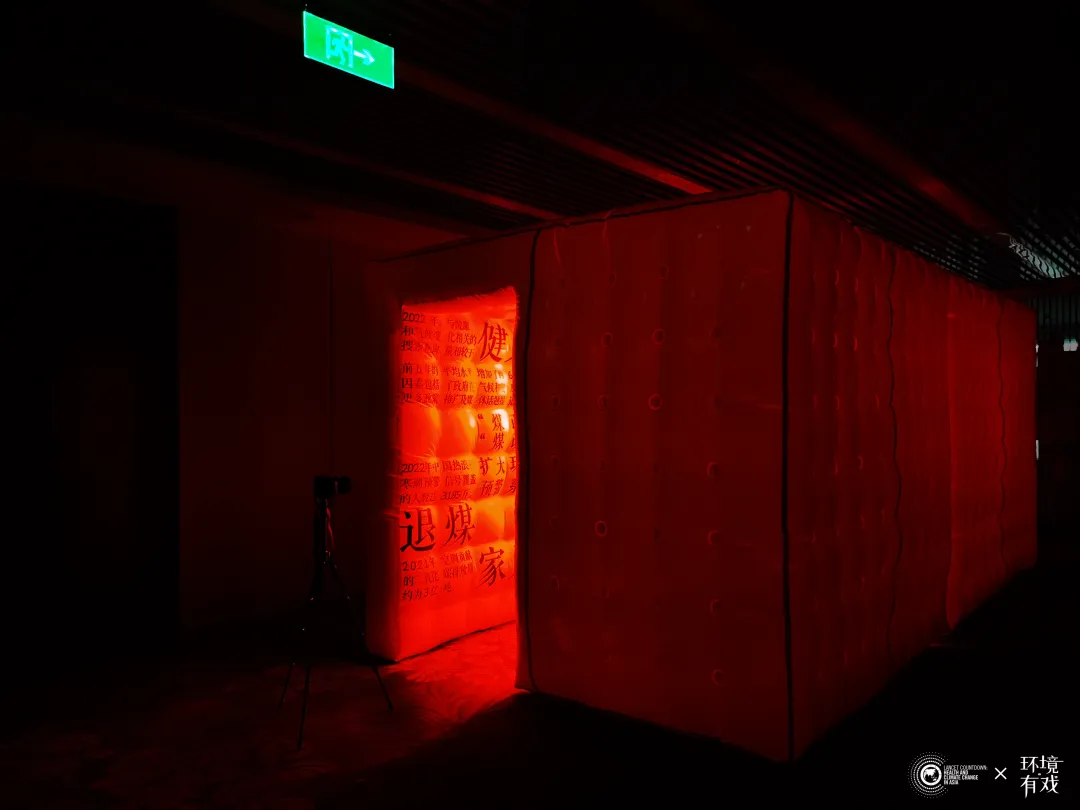
Exhibition View of Sirius
The art installation Sirius, product design Walking Thermometer, and food art Parched Earth—created by Luo Jia, Zhang Xueying, and Zhou Hanxiang—were featured at the 2023 launch event of the Lancet Countdown report.
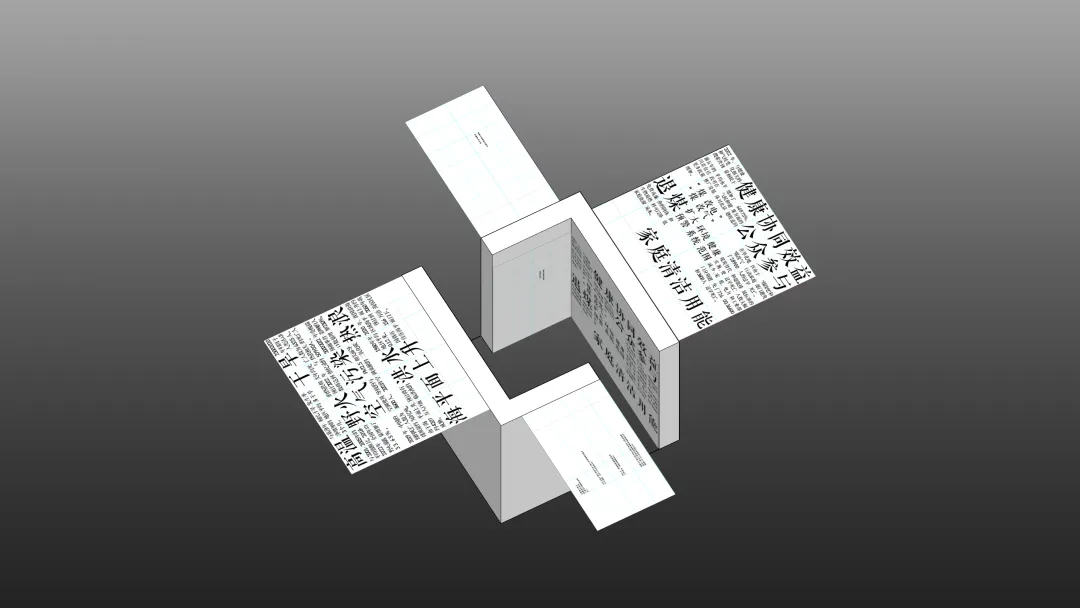
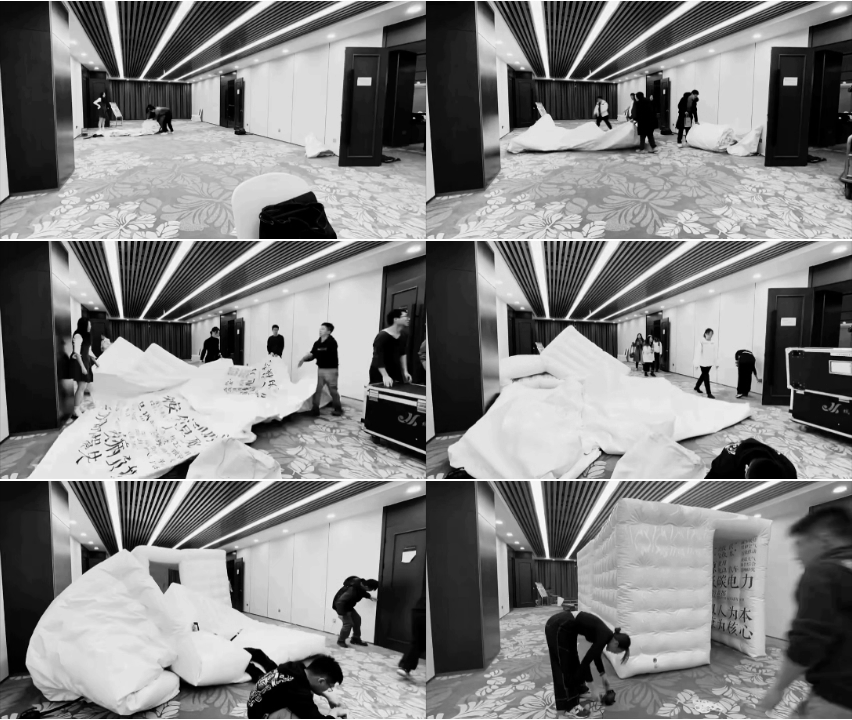
Sirius simulates a space mirroring the human body’s stress response to extreme heat. Named after the brightest star in the night sky, it symbolizes the intensity of extreme temperatures. The installation is designed as a narrow, red-lit environment, evoking acute physiological and psychological alertness. Inside, forms symbolizing bodily functions and scientific mitigation advice are embedded, transitioning the narrative from “warning” to “call to action.” Guided by principles of temporality, portability, and reusability, the installation uses inflatable membrane structures, enabling mobile exhibitions that evolve into a “moving archive” on climate and health.
Designed around bodily experience and spatial interaction, the installation comprises two 270cm×270cm×240cm cubes. Each sealed unit inflates in 20 minutes, maintains its form for at least three weeks, and can be assembled by three adults. The modular design allows flexible adaptation to diverse venues, facilitating future exhibitions.
III. Climate Action and Everyday Design
By creating engaging media that trigger public recognition of climate issues, risk association, and social participation, art and design transform abstract problems into perceptible daily experiences. Walking Thermometer and Parched Earth exemplify this approach: the former integrates climate action into daily life through wearable technology, while the latter leverages ritualized communal dining to evoke resonance from perception to action.
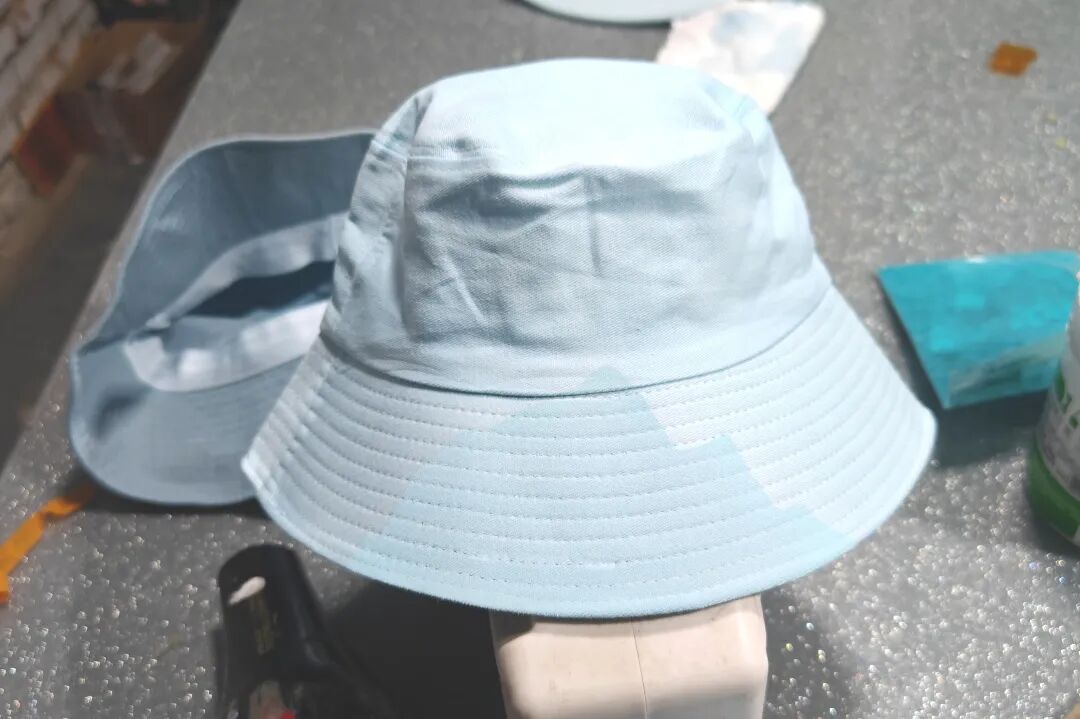
Walking Thermometer embeds global warming warnings into everyday attire. Designed as a bucket hat using thermochromic ink, it displays serene glacier and penguin patterns at normal or low temperatures. When ambient temperatures exceed 31°C—a threshold for health risks—the “glaciers” fade, visually mapping the microscopic impacts of global warming. Wearers become mobile messengers of the slogan “GLOBAL WARMING IS NOT COOL,” raising awareness of fragile polar ecosystems and the urgency to protect vanishing ice worlds.
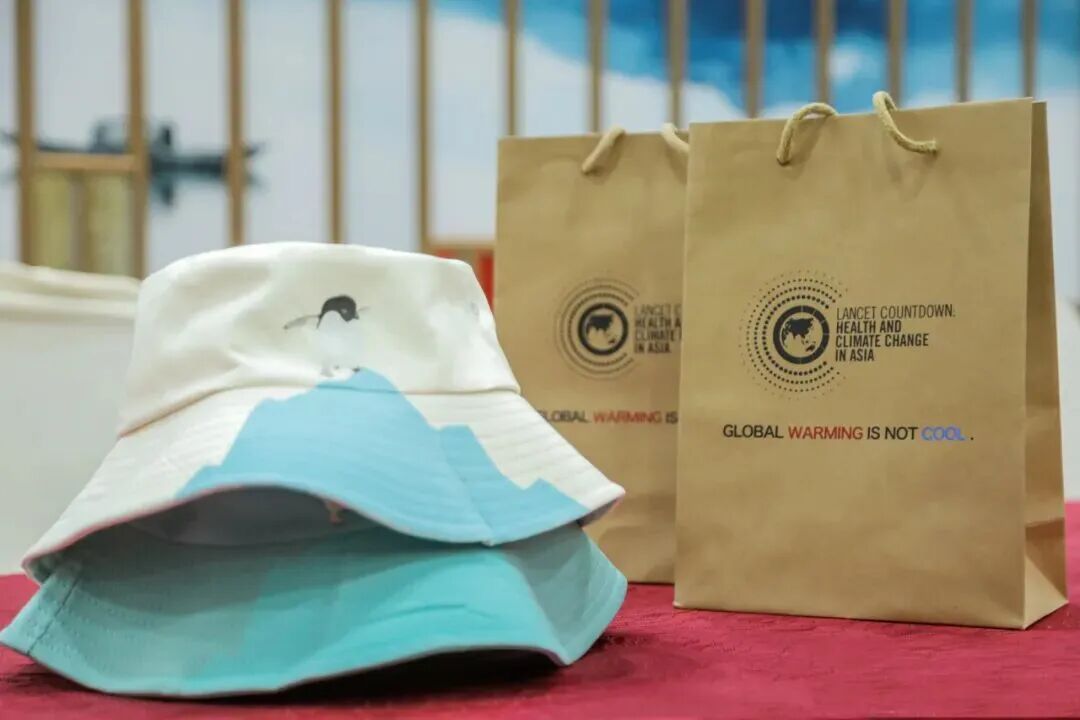
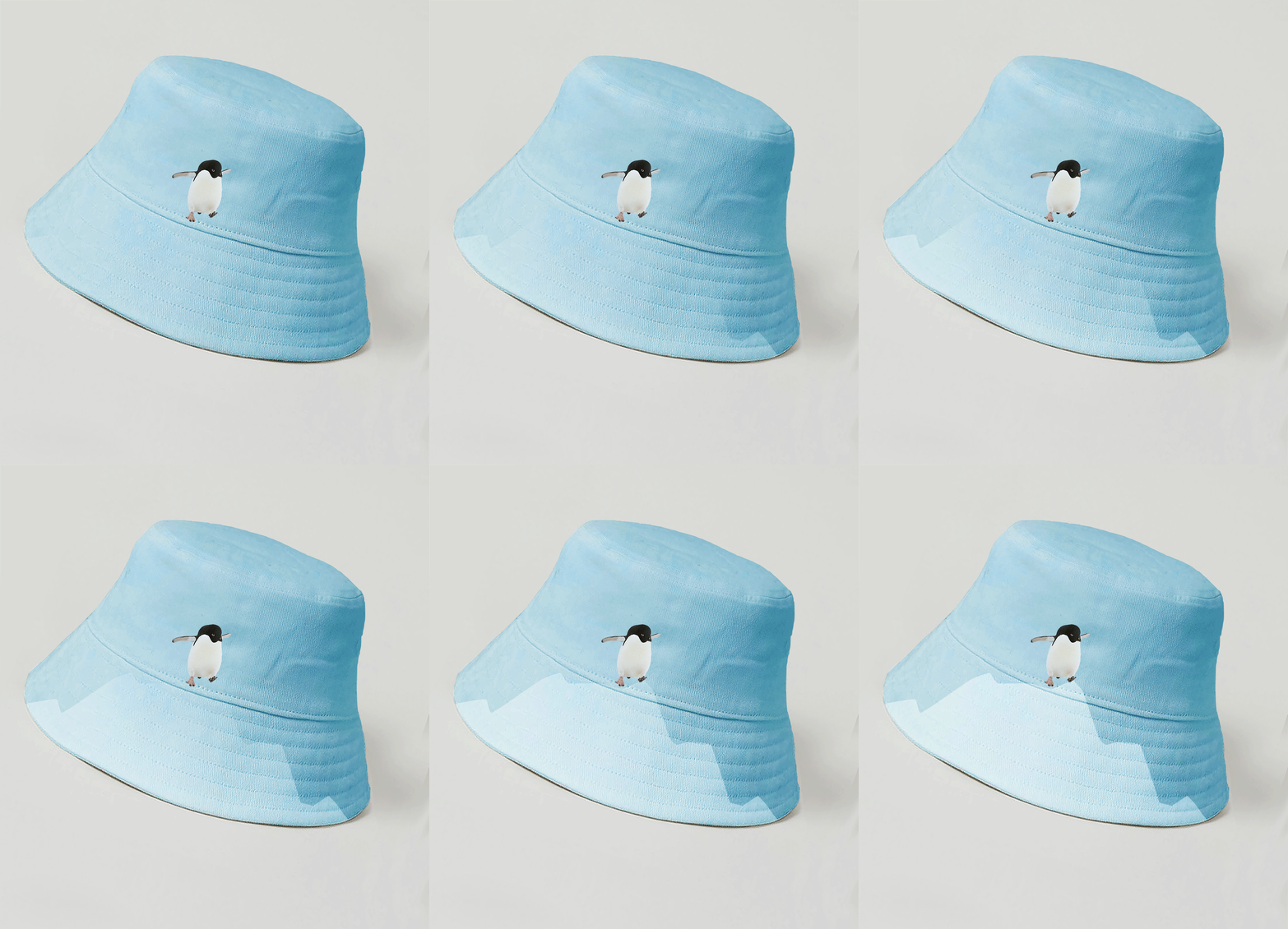
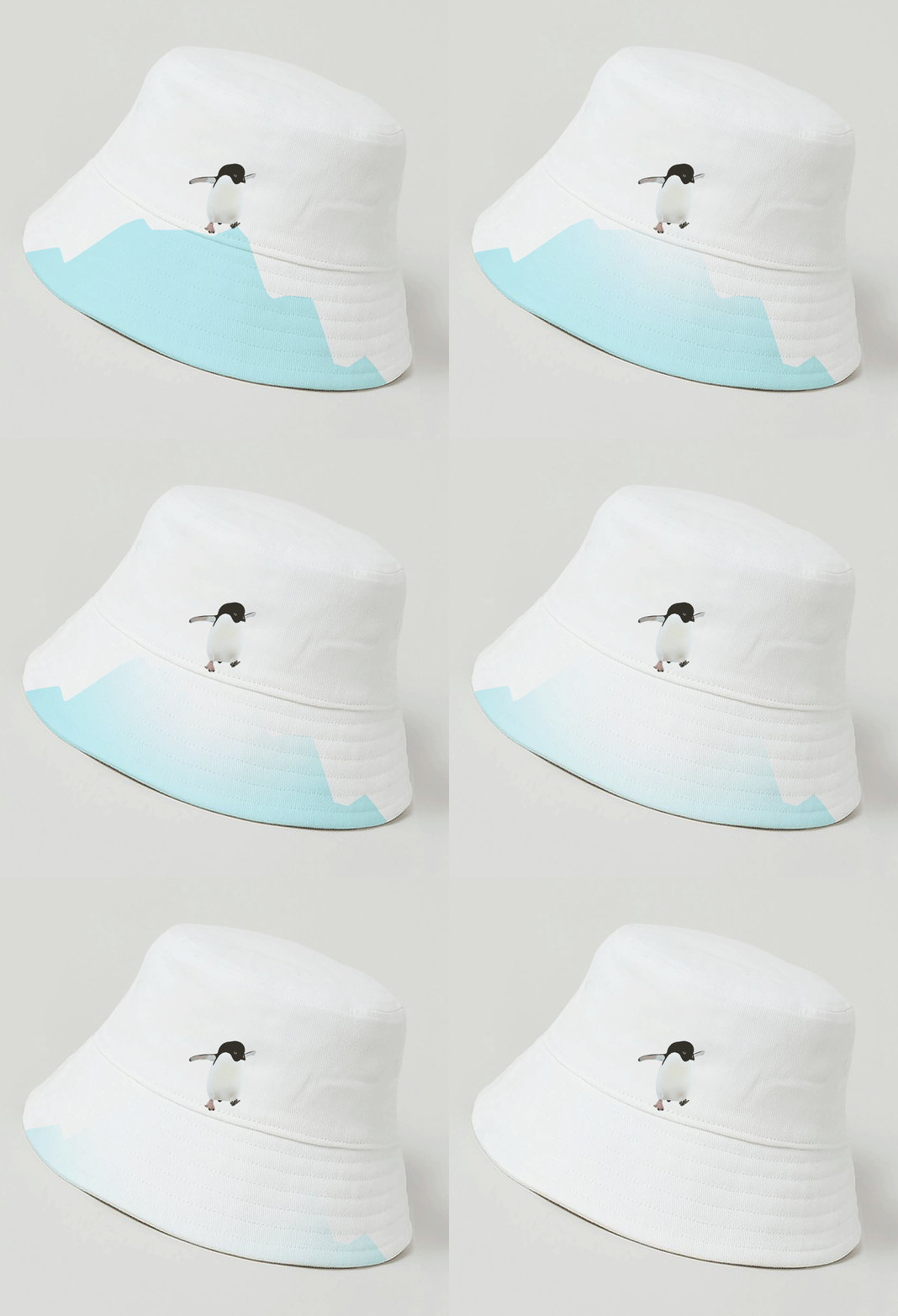
Thermochromic Iceberg Effect
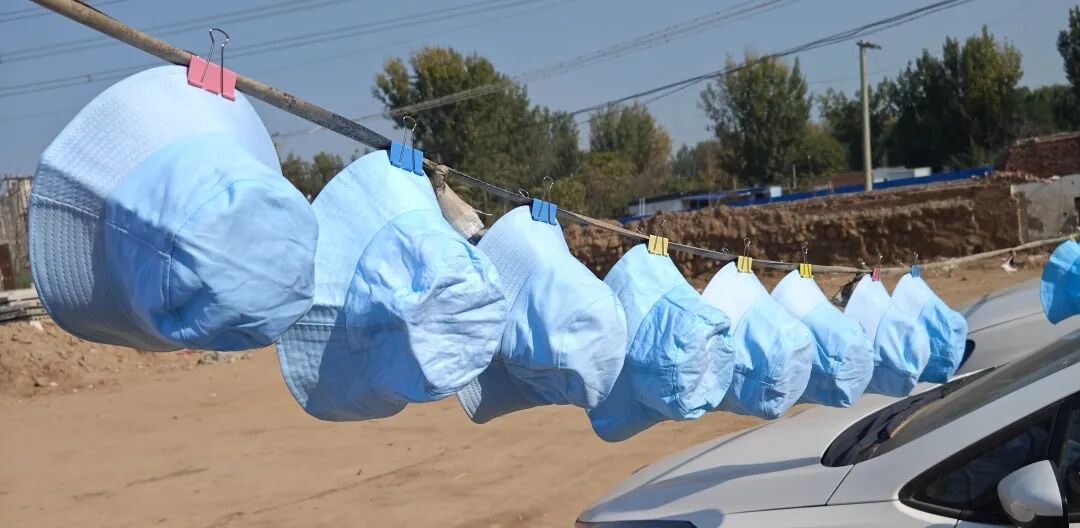
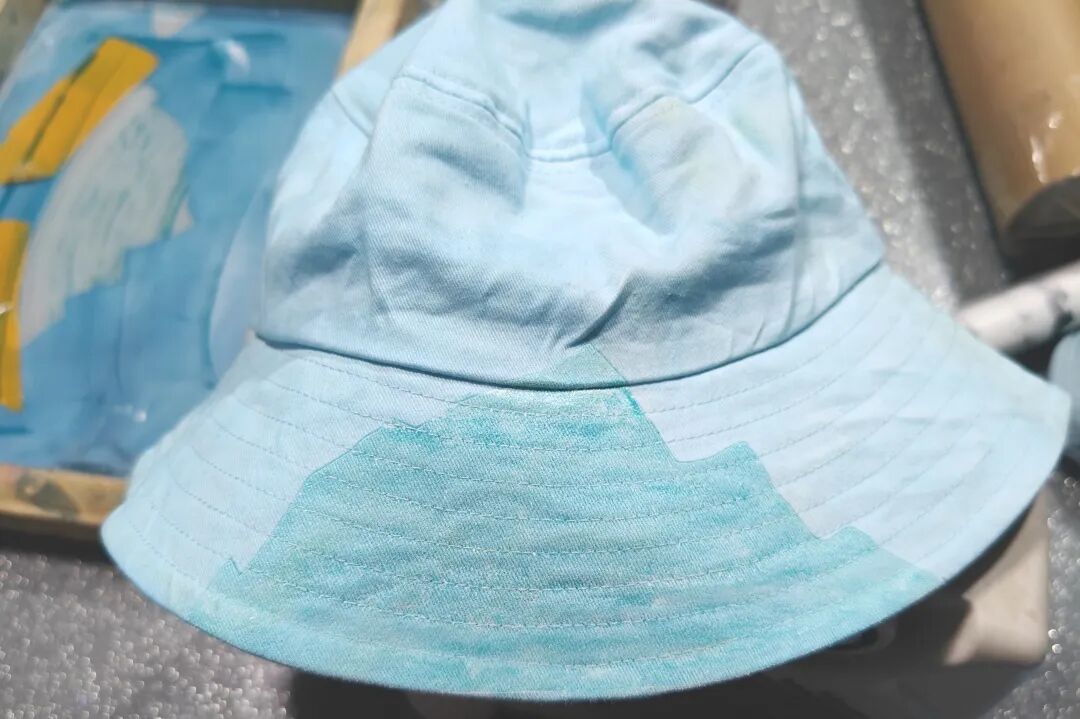
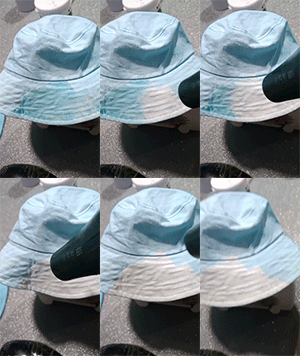
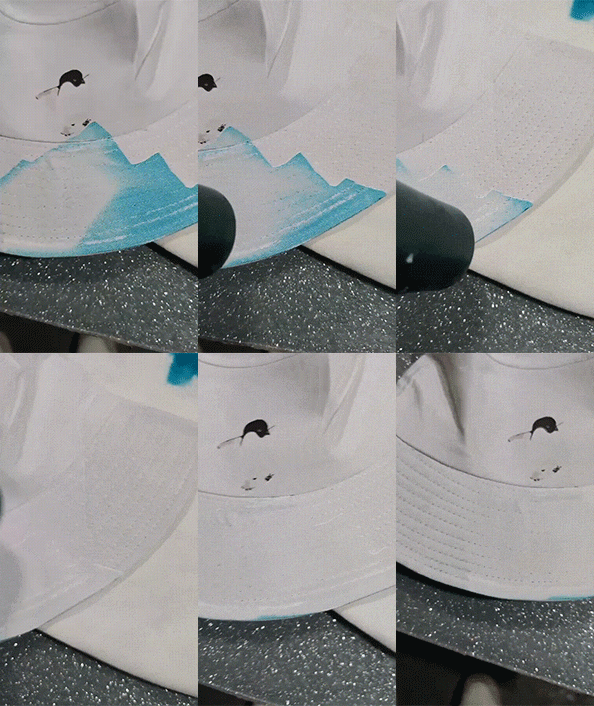
Color Matching and Thermochromic Testing
Three key challenges shaped the “thermometer” prototype: (1) calibrating thermochromic powder sensitivity through precise pigment ratios to balance hue and transition speed; (2) optimizing ink application to minimize fabric layers for a lightweight aesthetic; (3) mitigating unavoidable color and texture discrepancies between the hat’s base and thermochromic patterns through iterative testing.
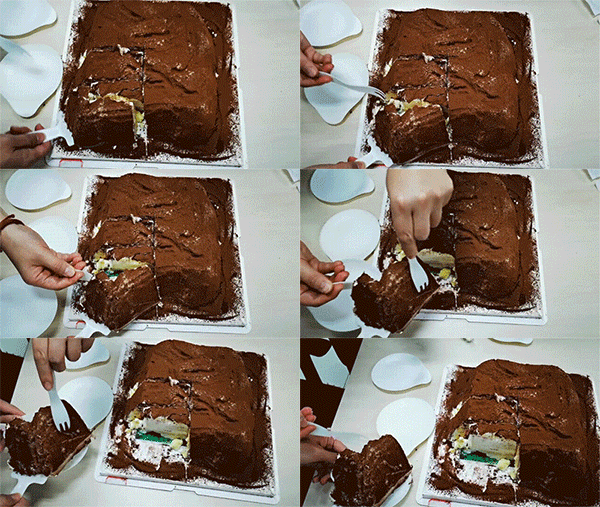
The food design Parched Earth transforms drought-induced land cracks into an edible cake. Through a ritualized “sharing” invitation, viewers witness the cake’s dry surface cracks dissolve as they slice it, revealing an “oasis” of life and hope beneath. This multi-sensory experience metaphorically illustrates that sustained attention and collective action can mitigate environmental crises.
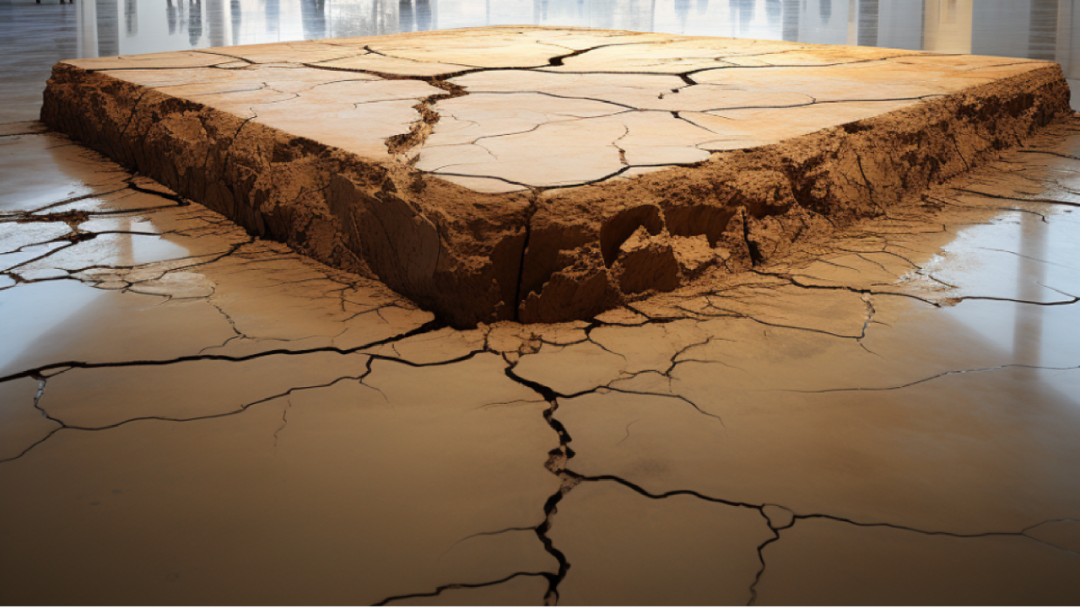
Concept Rendering of “Parched Earth”
Experimental Process and Base Design
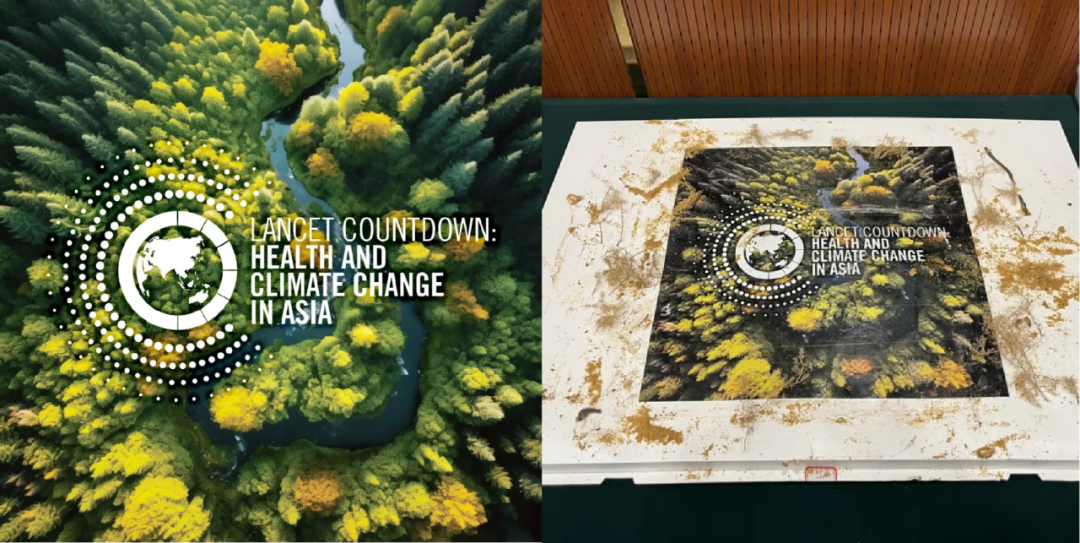
A 25cm×25cm prototype was developed to study visual, psychological, and textural transformations during slicing. The cake was shaped into a rigid cube to emphasize cross-sections, with a dark interior and cocoa-powdered exterior mimicking earthy tones.
In these interdisciplinary practices, art transcends data-driven argumentation, instead using engaging, reflective, and participatory methods to convey concern for climate change and human health. A hat, a piece of cake, or a turn of the hand—these small acts may spark reflection and resonance. Art is fostering a bridge between science and the public, making rigorous research emotionally resonant and reminding us that climate change is not a distant issue, but a daily reality intertwined with every life.