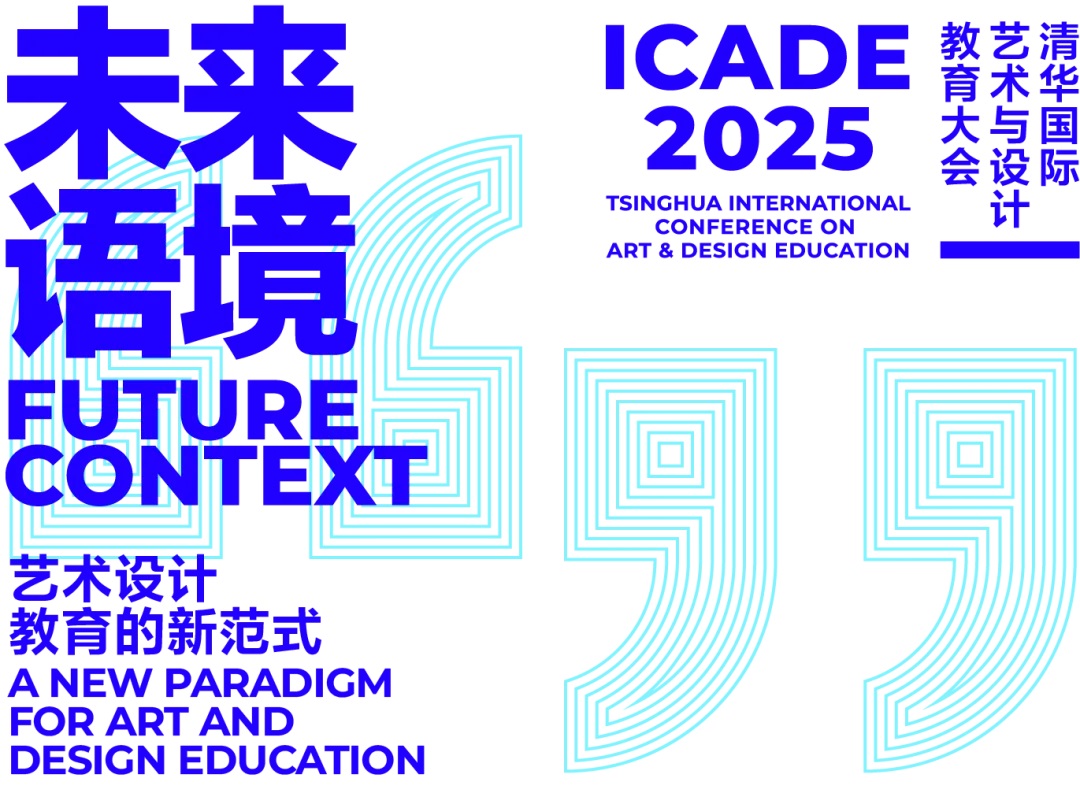
The 2025 Tsinghua International Conference on Art & Design Education (ICADE 2025), hosted by Tsinghua University and organized by the Academy of Arts & Design, Tsinghua University, the Tsinghua Arts and Design Institute in Milan, and the China-Italy Design Innovation Hub, was recently held in Milan, Italy.
Under the theme Future Context: A New Paradigm for Art and Design Education, the conference brought together over one hundred participants, including deans, professors, scholars, and industry representatives from both domestic and foreign art and design institutions. The conference featured eight keynote speeches, two leaders’ roundtables, four thematic forums, two parallel seminars, and a series of international art and design workshops. Participants engaged in deep cross-disciplinary and cross-cultural dialogue, shared insights spanning from theory to practice, and collectively explored the evolution and transformation of art and design languages in the AI era—reflecting on how to reconstruct educational paradigms within this emerging context.
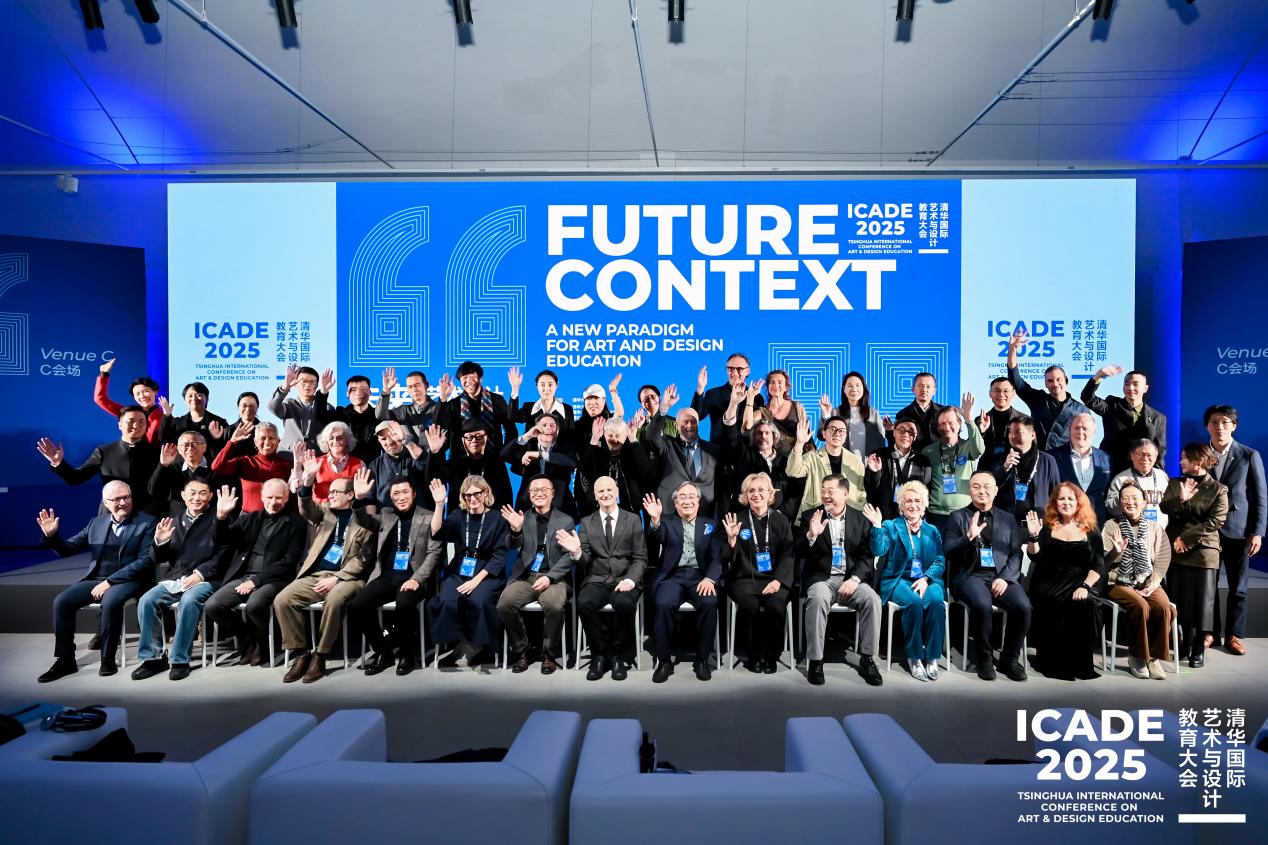
Participants gather for a group photo during the opening ceremony
At the opening ceremony, remarks were delivered by Qin Chuan, Party Secretary of the Academy of Arts & Design, Tsinghua University; Anna Barbara, dean of POLI.design, Politecnico di Milano; Dalia Gallico, executive vice president of the World Olymp’Arts Council; Lorenzo Imbesi, president of CUMULUS; and Wu Jian, head of Haier Innovation Design Center. A letter of congratulation was sent by Wu Qiong, dean of the Academy of Arts & Design, Tsinghua University. The ceremony was hosted by Shi Danqing, vice dean of the Academy of Arts & Design, Tsinghua University.
The morning keynote sessions featured presentations by Anna Barbara, Rebecca Wright, dean of S School, Central Saint Martins, University of the Arts London; Rachel Dickson, deputy director of The Glasgow School of Art; and Qin Chuan. In the afternoon session, keynotes were delivered by Francesco Zurlo, head of the School of Design at Politecnico di Milano; Yang Dongjiang, chair of the Academic Committee of the Academy of Arts & Design, Tsinghua University; Kun-Pyo LEE, dean of The Hong Kong Polytechnic University School of Design; and John Ochsendorf, founding director of the MIT Morningside Academy for Design.
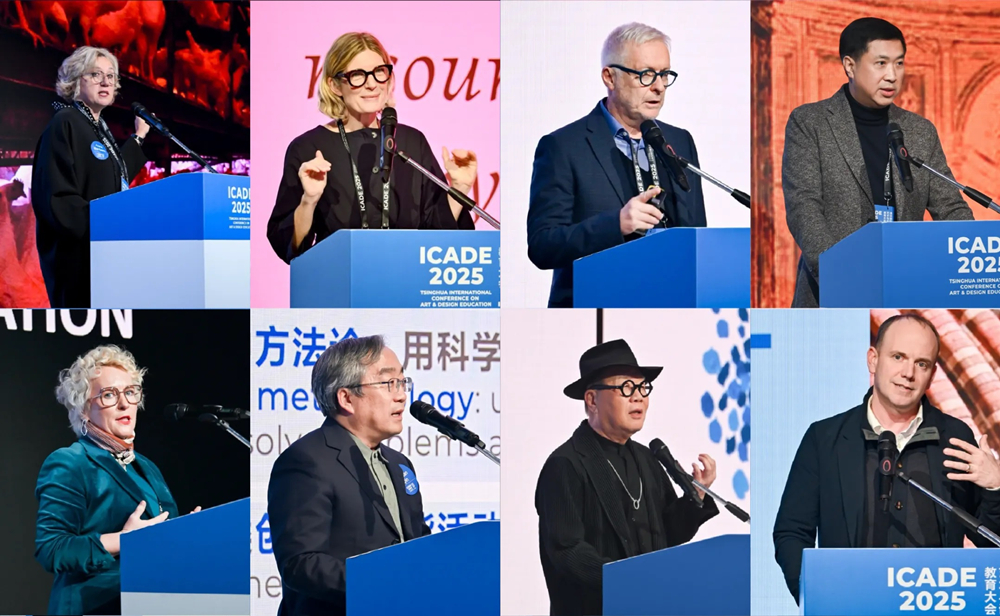
Speakers give keynote speeches at the opening of the Tsinghua International Conference on Art & Design Education (ICADE) in Milan, Italy, Nov. 15, 2025.
Barbara called the digital revolution a "revolution of time," urging designers to focus on shaping time rather than just physical space. She said AI will serve as a tool to harmonize human needs with the environment, helping to resolve the conflicts of a digital world and create a more sustainable shared economy.
Wright said that in the face of an uncertain future, design education needs to maintain a positive mindset, and constructing a new "design language" is key to addressing challenges. She emphasized that the real challenge lies not in whether to adopt AI, but in how to integrate technology with uniquely human wisdom.
Dickson said design education should break through traditional disciplinary frameworks and promote educational innovation through cross-field collaboration. She proposed building future design education on a balance of tradition and innovation, with curiosity at its core. She also called for a more inclusive, interdisciplinary system capable of solving global challenges like sustainable development.
Francesco Zurlo elaborated on the concept of interdependent design in his speech, emphasizing that design education must confront complexity rather than simplify problems. He said contemporary design needs to reunite humanistic values with technology. This philosophy, he argued, is essential for training designers who can address complex social challenges and build a sustainable future.
Yang discussed how design education must transform in the AI era. He said the field needs to shift its fundamental value from being technology-oriented to thinking-oriented. He emphasized the need to break through traditional linear knowledge structures and build new teaching systems that maintain professional skill training while focusing on developing students' innovative thinking and systematic reasoning capabilities.
In his speech, Lee traced the historical evolution of design paradigms to reveal the transformation direction of design education in the AI era. He proposed that designers should become "final decision-makers" or "ultimate stewards," urging educators to focus on sharpening students' critical thinking and value judgment.
Ochsendorf emphasized that university education needs to accelerate its transformation. He said every student should possess fundamental design capabilities and complete a personal project portfolio, noting that designers need to lead the application of AI technology while ensuring it serves human needs.
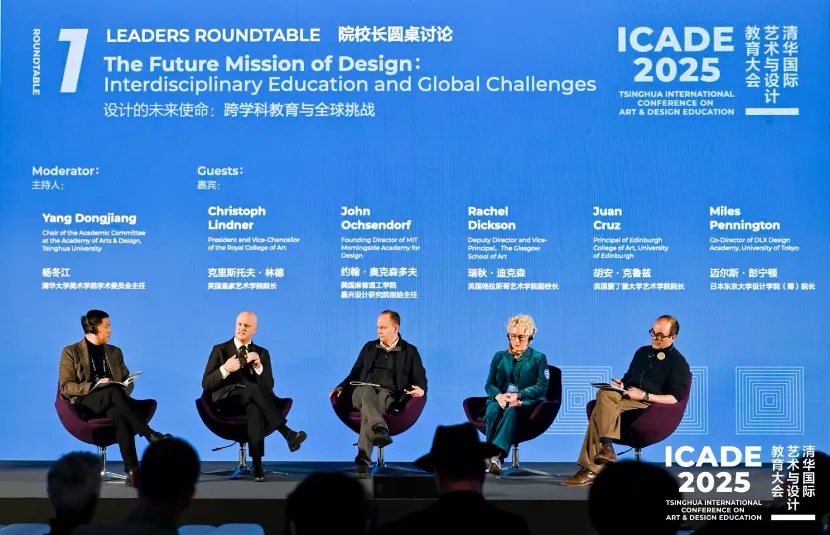
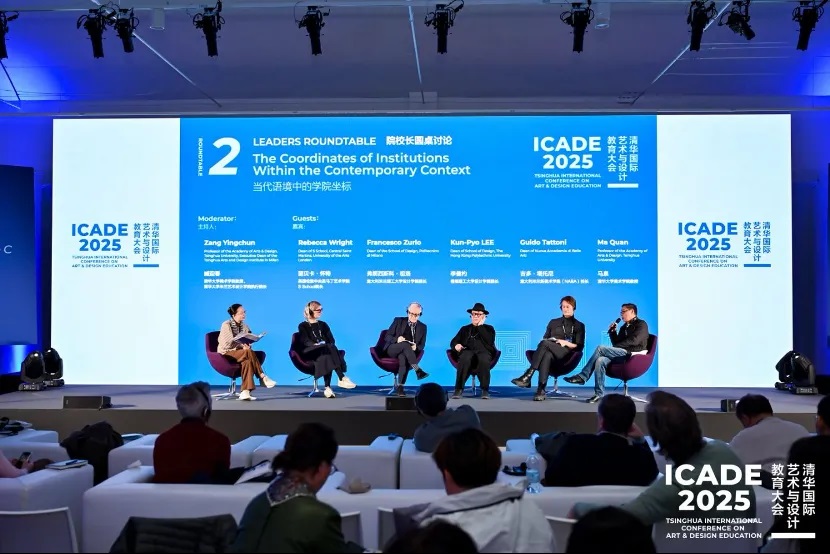
Renowned university and design school leaders participate in roundtable discussions during the Tsinghua International Conference on Art & Design Education (ICADE) in Milan, Italy, Nov. 15, 2025.
Later that day, two roundtable discussions were held with leaders focusing on the themes "The Future Mission of Design: Interdisciplinary Education and Global Challenges" and "The Coordinates of Institutions Within the Contemporary Context."
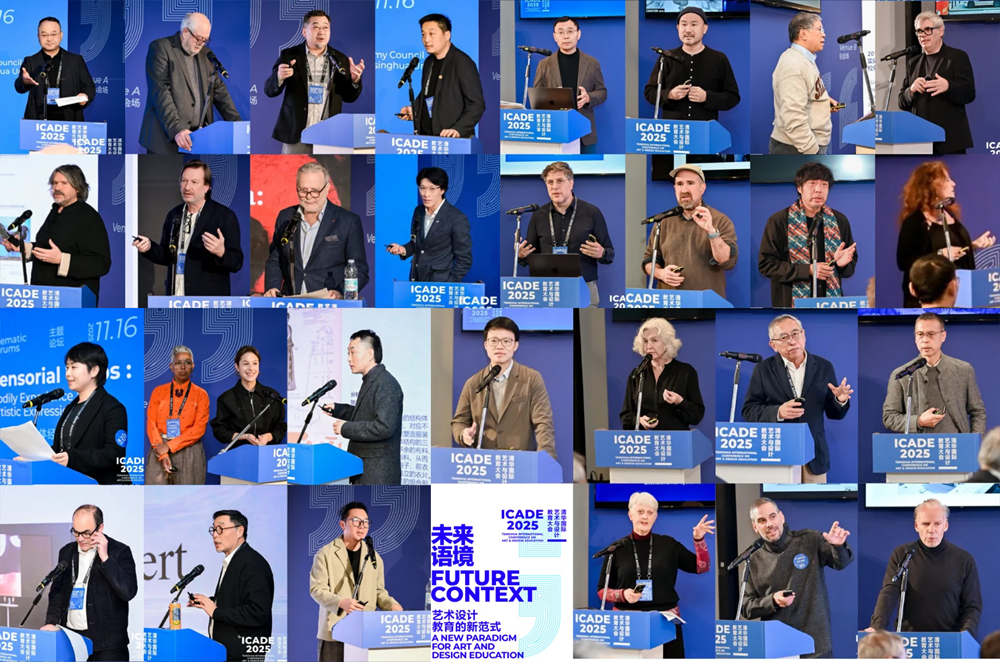
Experts speak during thematic forums at the Tsinghua International Conference on Art & Design Education (ICADE) in Milan, Italy, Nov. 16, 2025.
The second day of conference featured the thematic forums and parallel seminars within diverse disciplinary and industrial contexts. Experts and scholars from fields including spatial environments, fashion design, industrial design, information design, and intelligent manufacturing engaged in dialogues around the following topics: Rhetorical Translation: Aesthetic Resonance Across Cultures; Dual Subjects: Human-Machine Collaboration and Interdisciplinary Integration; Sensorial Verbs: Designing Through Bodily Experience; and, Plural Space: The Narrative Tension of Multi-dimensional Experience.
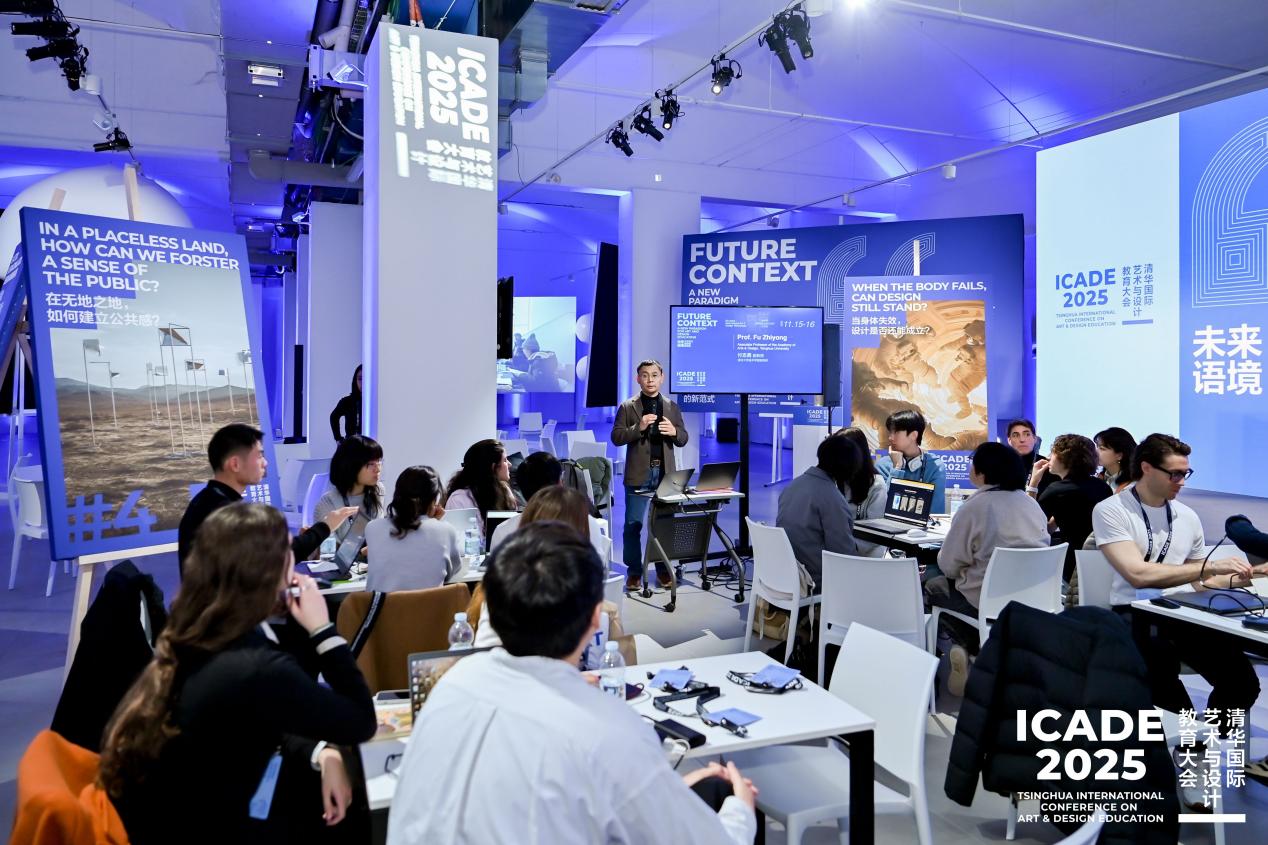
Conference participants during the RE-ACTOR International Art & Design Workshops
Concurrently, the RE-ACTOR International Art & Design Workshops took place, focusing on the theme AI Protocols for New Space: Embodied Experiences and Ritual Habitats. Speakers delivered specialized presentations exploring this concept in depth.